On the Last Flight out of Tehran: The Forgotten Israeli–Iranian Wildlife Partnership
Against the backdrop of unrest in Iran and memories of the pre-1979 era, here is the remarkable story of a dream that became reality: a pair of the rare Persian fallow deer boarded the last flight from Iran to Israel in December 1978. This forgotten chapter of Israeli–Iranian cooperation began in the early years of

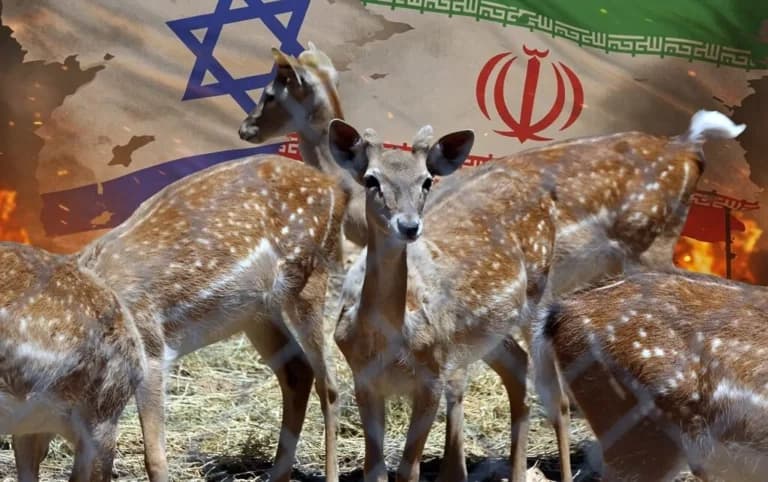
Against the backdrop of unrest in Iran and memories of the pre-1979 era, here is the remarkable story of a dream that became reality: a pair of the rare Persian fallow deer boarded the last flight from Iran to Israel in December 1978. This forgotten chapter of Israeli–Iranian cooperation began in the early years of the Jewish state and continues to this day.
The Endangered Persian Fallow Deer
In 1956, a discovery was made that changed the fate of the Persian fallow deer. A small group of the species was found in southwestern Iran, near the Dez and Karkheh rivers, numbering only about 25 individuals. For decades, scientists and conservationists had been convinced that the species was extinct. The discovery therefore sparked great excitement and restored hope for a creature that had vanished from human view.
The find in Iran further highlighted a forgotten chapter of regional history. In the past, the Persian fallow deer had lived in the Land of Israel, particularly in the dense woodlands of the Galilee. But from the 1920s onward, it had disappeared entirely from the wild. For many years, not a single individual was recorded, even in zoos. A species that had once been part of the local landscape became nothing more than a memory.
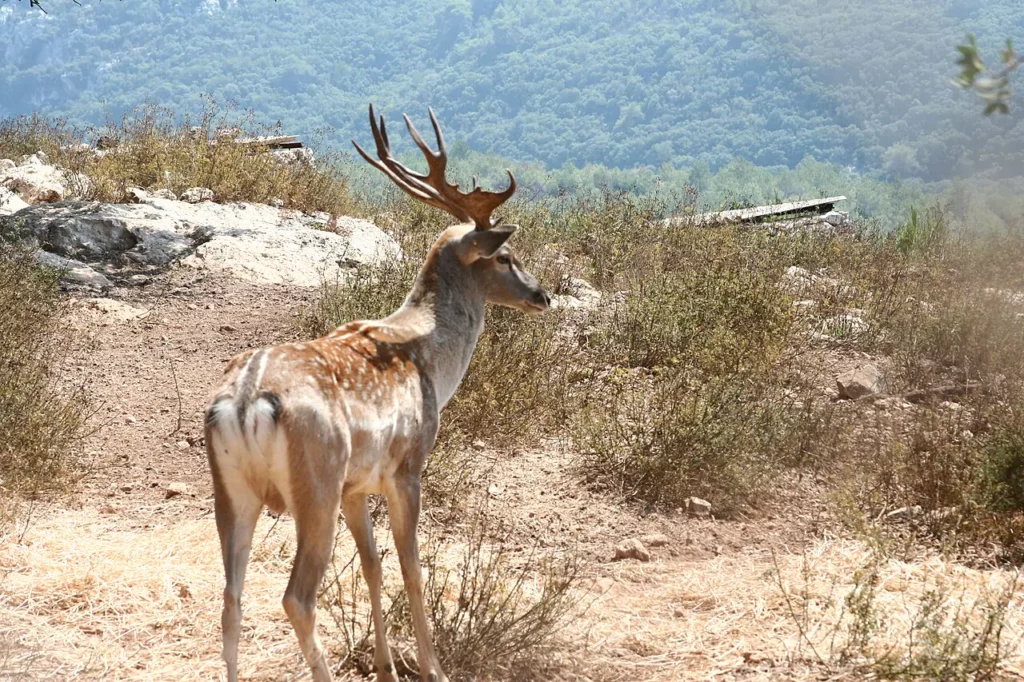
During the 1970s, Israeli conservationists began searching for a practical way to restore the Persian fallow deer. Officials from the Israel Nature and Parks Authority reached an agreement with the the Shah of Iran’s brother to transfer two deer to Israel. Although the general agreement was in place, the transfer was delayed. As time passed, concern grew that the political and logistical window would close before the animals could arrive.
While negotiations with Iran stalled, Israel pursued an alternative route. Two pairs of Persian fallow deer were brought to Israel in 1976 from a zoo in Germany and housed at the Tel Aviv Zoo. This move laid the initial groundwork for conservation and breeding efforts in Israel, even though it did not fulfill the ambition of bringing animals directly from the royal herd in Iran.
The Tehran Revolution and the Last Flight
In December 1978, amid the Iranian Revolution and just before the collapse of the regime, the decisive moment arrived. The Shah’s brother told then head of the Israel Nature and Parks Authority Avraham Yaffe to send a representative immediately to collect the deer. Time was running out, conditions were changing by the hour, and it was clear that the opportunity could disappear within days.
Mike van Grevenbroek, a Dutch employee at Israel’s Hai-Bar Wildlife Reserve, was chosen as Yaffe’s representative. He arrived in Tehran to find a city already abandoned by the Shah’s officials. On the way to the airport, he spotted four females from the Shah’s herd and decided to act quickly to save them. On December 8, the four females boarded the last El Al flight from Tehran to Israel. Upon landing, they joined the two males that had arrived two years earlier.
Return to the Wild in Israel
With the arrival of the Persian deer, Israel launched a structured rescue and restoration program. A breeding core was established at the Hai-Bar Carmel Nature Reserve, designed to grow the population and prepare individuals for gradual reintroduction into the wild. The program relied on long-term monitoring, habitat adaptation, and cooperation among conservation authorities. By 1995, more than 150 Persian fallow deer lived at the site. The Israel Nature and Parks Authority determined that the time had come to return the species to its historic habitats.
Releases into the wild began in 1996 in the Nahal Kziv area of the Upper Galilee. Since then groups of 10 to 15 deer have been released every six months. The animals come from Hai-Bar Carmel and from zoos across the country. Today, more than 100 Persian fallow deer live freely in the wild.
Footage from the release of the fallow deer in the Galilee
The population in northern Israel stabilized and expanded. Persian fallow deer are now found throughout the Western Galilee, Nahal Kziv, and Goren Park. Their range stretches from the community of Avdon in the west to Ma’alot in the east. It is the largest wild herd of Persian fallow deer in the world.
In 2003, a second breeding core was established at The Tisch Family Biblical Zoo in Jerusalem. Two years later, in 2005, deer were released into the Nahal Sorek Nature Reserve in the Judean Hills, using animals from the Jerusalem breeding group.
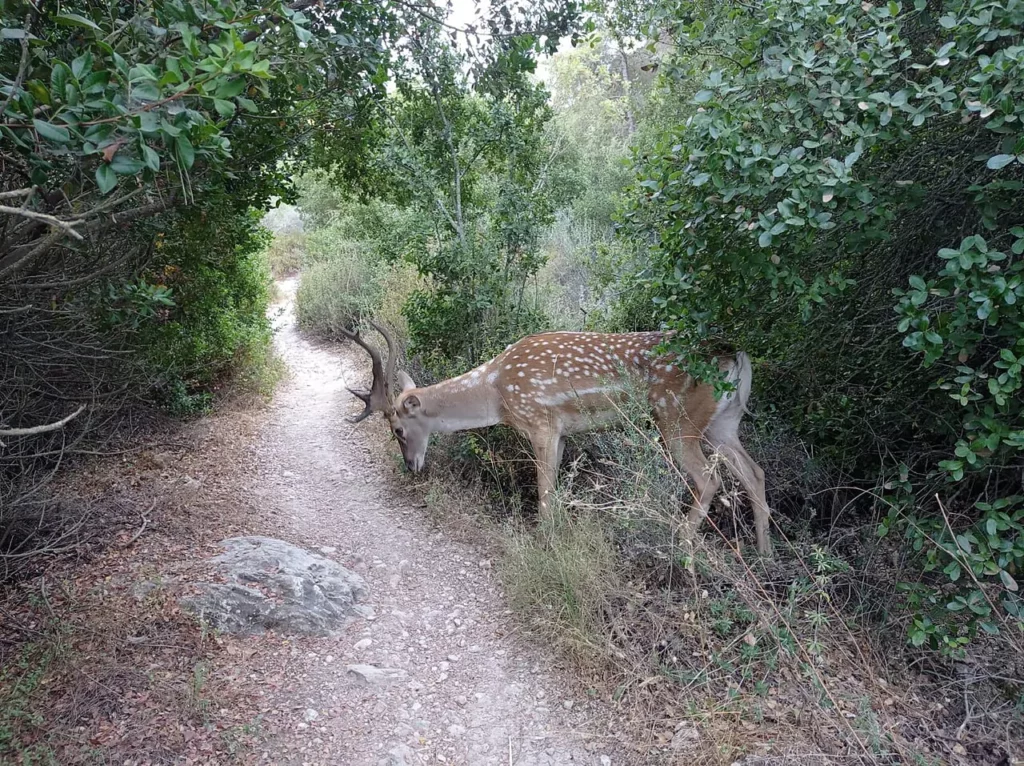
The reintroduction in the Judean Hills encountered difficulties. Some of the deer became accustomed to human presence and to the sound of trains. As a result, several individuals were killed while grazing near railway tracks. Another threat came from packs of feral dogs, which preyed on several deer in the area.
In 2010, the project was frozen. However, three years later, in 2013, efforts were renewed, and six young females were once again released into the Judean Hills. Monitoring conducted in 2017 showed encouraging signs. The population began to stabilize, there were signs of adaptation to life in the wild, and deer born in the wild were observed. At that time, the population in the area was estimated to consist of at least 60 individuals.
The Latest Data
As of 2024, a total of 207 Persian fallow deer have been reintroduced into the wild in Israel. Of these, 156 came from the Biblical Zoo in Jerusalem and 51 from Hai-Bar Carmel. The population includes 107 females and 100 males. According to estimates by the Israel Nature and Parks Authority, approximately 500 Persian fallow deer now live in Israel. Around 300 are found in the north, and around 110 inhabit the Nahal Sorek region of the Judean Hills.
Today, Persian fallow deer can be found in the wild – in Nahal Kziv in the Western Galilee, in the Upper Galilee near Kibbutz Sasa, on Mount Carmel, and in the Nahal Sorek area. The restoration effort is considered one of Israel’s most successful conservation projects.
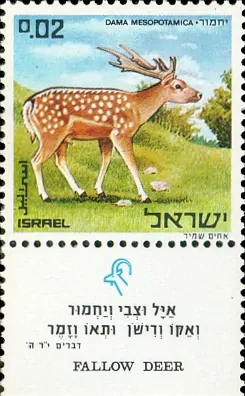
The operation continues successfully to this day, and is recognized as one of Israel’s most notable wildlife reintroduction programs. Israel is now home to the largest wild herd of Persian fallow deer in the world. As with so much in modern day Israel, what once seemed like a distant dream has become living reality, what once seemed dead and gone has been breathed with new life. The prophet Ezekiel foretold long ago:
“The desolate land will be cultivated instead of lying desolate in the sight of all who pass through it. They will say, “This land that was laid waste has become like the garden of Eden”“.
(Ezekiel 36: 34-35 NIV)
Discussion0
No comments yet — be the first to share your thoughts.