Marandi Warns Gulf States After Trump Iran Threat
Mohammad Marandi warned that Gulf states may need to evacuate after Trump threatened Iran with strikes over attacks on ships in Hormuz

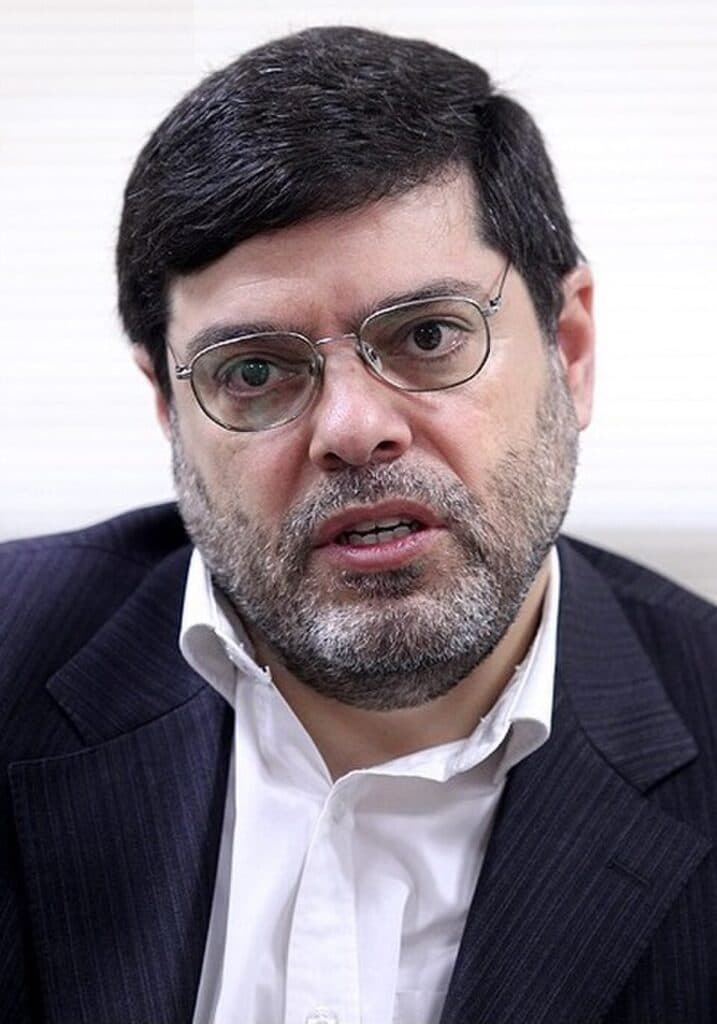
Professor Mohammad Marandi responded to President Donald Trump’s latest Iran threat by warning that several Gulf countries may need to evacuate if Washington follows through on its new deterrence policy.
Marandi, a member of Iran’s negotiation delegation, reacted after Trump said the United States would strike a bridge or power plant if Iran attacks a ship in the Strait of Hormuz.
“If that’s the case, then it’s time to evacuate Kuwait, Qatar, Saudi Arabia, Bahrain, the United Arab Emirates, and apparently also Oman,” Marandi said. The statement pushes the confrontation beyond Iran and the United States. It places America’s Gulf partners at the center of Tehran’s pressure campaign, while also raising immediate concerns for Israel.
The Tanakh says, “The prudent sees danger and takes shelter.” That verse fits this moment because warnings from Iranian officials cannot be treated as empty rhetoric when the region is already facing missiles, drones, naval threats, and attacks on infrastructure.
Marandi Gulf Warning
Marandi’s response appears designed to turn Trump’s warning back against America’s regional partners. Instead of answering only as an Iranian negotiator, he listed Gulf states that host major strategic interests, military facilities, energy infrastructure, and trade routes. The message was clear: if America strikes inside Iran, Tehran may try to raise the cost for countries aligned with Washington.
That threat matters for the United States because Gulf partnerships support American deterrence, regional logistics, air defense, intelligence, and naval operations. If Iran can intimidate those countries into hesitation, it weakens America’s regional posture.
For Israel, the danger is also direct. Iran’s strategy rarely stays inside one arena. Tehran pressures Gulf states, threatens shipping, arms Hezbollah, supports Hamas, backs the Houthis, and uses Iraqi militias to expand the battlefield. Therefore, any Iranian warning aimed at Kuwait, Qatar, Saudi Arabia, Bahrain, the UAE, or Oman also affects Israel’s security map.
Trump’s Equation And Iran’s Answer

Marandi’s warning connects directly to “Trump Iran Threat: One Ship Hit, One Bridge Or Power Plant Hit.” Trump warned Iran that any attack on ships in the Strait of Hormuz would trigger a U.S. strike on a bridge or power plant.
Trump’s message was simple: Iran attacks a ship, and the United States hits strategic infrastructure. Marandi’s response suggested that Iran may answer by threatening the wider Gulf, not only American targets.
If Iran believes it can deter America by threatening Arab partners, then the region becomes more dangerous. However, if the United States backs down after explicit Iranian warnings, Tehran may interpret restraint as weakness. Israel has faced that same dilemma for years on its borders.
Covenant Of Protection Under Pressure
The United States and Israel share a covenantal understanding before God rooted in the protection of life, the defense of freedom, moral courage, and resistance to terror.
That shared covenant appears when America defends open seas and regional allies. It appears when Israel protects its citizens from Iranian-backed terror armies. It also appears when both countries refuse to let hostile regimes turn civilians, ports, energy systems, and border communities into bargaining chips.
America must protect its forces and partners without allowing Iran to dictate the terms of regional security. Israel must read every Iranian threat through the lens of survival, because the same regime threatening Gulf states also seeks to surround the Jewish state with armed proxies.
Marandi’s warning does not prove Iran will act on every threat. However, it reveals Tehran’s logic. Iran wants the Gulf to fear American resolve more than Iranian aggression. For the United States and Israel, that cannot become the regional equation. Deterrence must make clear that attacks on ships, threats against allies, and pressure on civilian infrastructure will not buy Iran immunity.
Ultimately, the exchange shows the stakes of the current confrontation. Trump is trying to impose a cost on Iranian maritime attacks. Iran is trying to widen the cost across the Gulf. Israel is watching because every Iranian threat, whether at sea or on land, belongs to the same war of pressure against America’s allies and the Jewish state.
For more stories on Israel, faith, and the values behind the headlines, follow Sinai on Facebook and Instagram.
Discussion0
No comments yet — be the first to share your thoughts.