Mansour Abbas Refuses To Call For Hamas’s Destruction
Mansour Abbas refused to say Hamas is a terrorist organization that must be destroyed, raising questions about moral clarity in Israeli politics

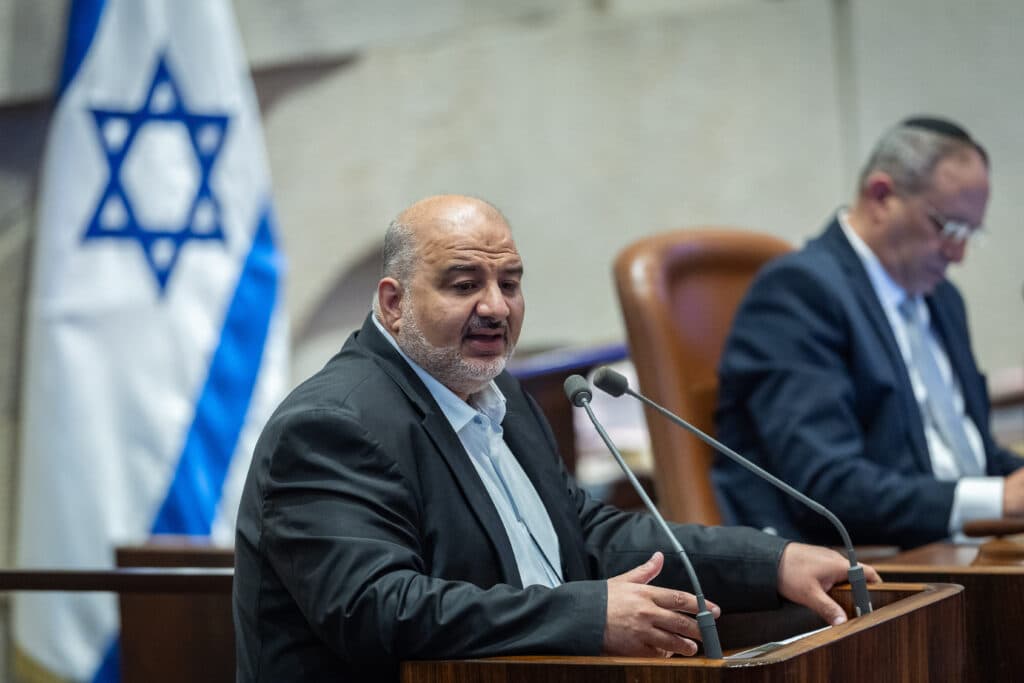
Mansour Abbas refused today to say that Hamas is a terrorist organization that must be destroyed, despite repeated questioning during an interview with Esti Perez on Reshet Bet.
Abbas, a Knesset member from the Ra’am party, is often described as a pragmatic Arab Israeli political figure. However, the interview raised sharp questions about where that pragmatism ends when the subject turns to Hamas.
According to the report, Perez pressed Abbas again and again for more than five minutes. She asked why he would not state clearly that Hamas is a terrorist organization that must be destroyed. Abbas tried to avoid giving the answer directly. After the interviewer pushed him into a corner, Abbas replied: “I have an unequivocal answer, but I refuse to say it.”
The Tanakh says, “Woe to those who call evil good and good evil.” That verse gives this moment its moral frame. A society cannot defeat terror if its leaders cannot name it clearly.
Mansour Abbas Hamas Refusal
For Israel, Abbas’s refusal carries political and security significance.
Hamas did not only attack Israel as a rival political movement. It carried out the October 7 massacre, abducted Israeli civilians, and built its rule around terror, hostage-taking, and the destruction of the Jewish state.
Therefore, the question posed to Abbas was not abstract. It went to the heart of Israel’s current war and the moral clarity required inside Israeli public life.
If a politician considered pragmatic cannot say that Hamas must be destroyed, Israelis will naturally ask what that pragmatism means in practice. They will also ask whether coalition politics, Arab Israeli representation, and democratic inclusion can survive without a clear rejection of terror.
Hamas, Deception, And Public Clarity
This concern also intersects with “Hamas Accused Of Faking Death Reports To Mislead IDF.” Reports claim Hamas may be using false death announcements to mislead Israeli intelligence after targeted strikes in Gaza.
Hamas fights Israel through violence, deception, propaganda, and political ambiguity. On the battlefield, it reportedly tries to mislead Israeli intelligence. In public debate, its supporters and apologists often use evasive language to blur the moral line.
For the United States, this matters because America also faces a political culture where anti-Israel activists often avoid clear answers about Hamas. When public figures refuse to name terror honestly, they make it easier for extremists to hide behind slogans, identity politics, or selective outrage.
For Israel, the stakes are sharper. Israelis live with the consequences when terror receives ambiguity instead of condemnation.
A Covenant Of Moral Clarity
The United States and Israel share a covenantal understanding before God rooted in truth, justice, the defense of life, and the refusal to excuse evil.
America’s covenantal tradition rests on liberty under God and the belief that free societies must defend innocent life. Israel’s covenant is older and unique, rooted in the God of Israel, the Jewish people, Torah, and the return to the land.
America and Israel both understand that language shapes action. A leader who cannot say Hamas must be destroyed leaves space for confusion. That confusion can weaken deterrence, divide allies, and embolden terror movements that survive through fear and manipulation.
Israel’s democracy allows hard debate. It allows Arab parties, opposition voices, criticism of government policy, and disagreement over security strategy. However, democracy also requires a basic moral boundary: terrorism against civilians must receive clear condemnation.
Ultimately, Abbas’s refusal will deepen Israeli concern about Ra’am’s place in national politics. The issue is not whether Arab citizens can participate in Israel’s democracy. They can and should. The issue is whether elected leaders can stand inside that democracy and still refuse to say that Hamas must be destroyed.
For more stories on Israel, faith, and the values behind the headlines, follow Sinai on Facebook and Instagram.
Discussion0
No comments yet — be the first to share your thoughts.