Hamas Accused Of Faking Death Reports To Mislead IDF
Reports claim Hamas may be using false death announcements to mislead Israeli intelligence after targeted strikes in Gaza

Israel HaBahiyr
·17:14
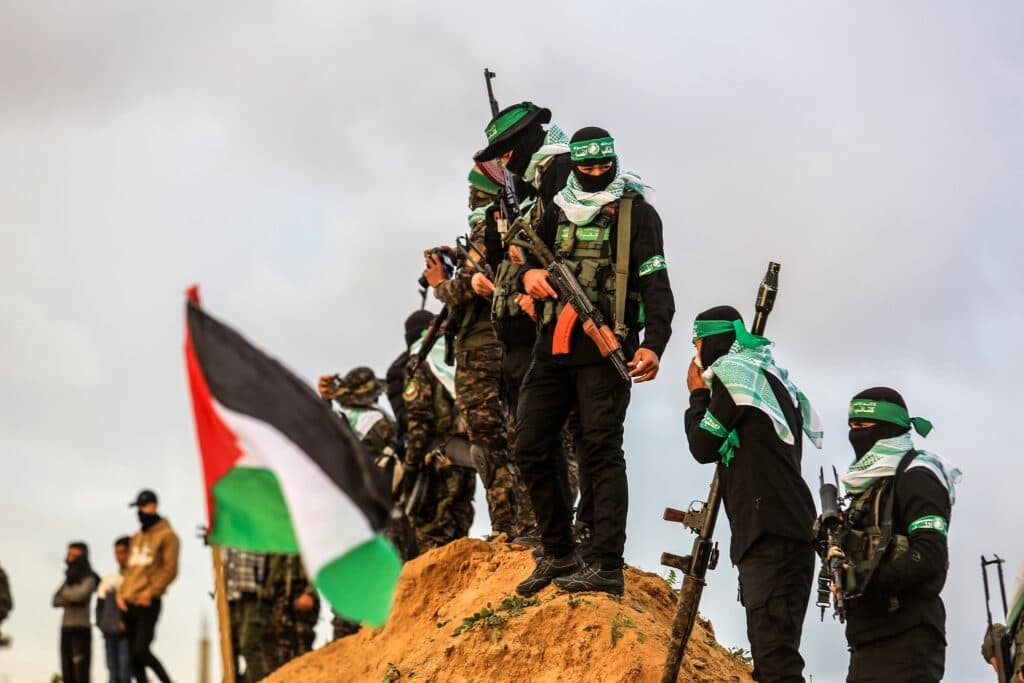
Hamas death reports are coming under new scrutiny after claims that the terror group is trying to mislead the IDF about the outcome of targeted strikes in Gaza.
According to the report, several Hamas operatives who were listed as dead after Israeli strikes were actually still alive, though severely wounded. In some cases, they reportedly died only days later, after social media accounts in Gaza and the IDF Spokesperson had already described them as eliminated.
One example involved police officer Yaman Obeid. The IDF announced his death on the 14th of the month as part of a group of seven or eight Hamas police officers killed in northern Gaza. However, the report said he died of his wounds only this past Saturday, 11 days after the initial announcement.
Another case involved the terrorist Maam Eid. He was attacked on Saturday and declared eliminated on Gaza social networks. The IDF announced his death yesterday, but according to the report, he died of his wounds only this morning.
The Tanakh says, “Keep far from a false matter.” That verse fits this story because Hamas has always treated deception as part of war. Its lies do not only target Israel. They distort the battlefield, endanger civilians, and protect terrorists.
Hamas Death Reports
The reported pattern suggests a broader Hamas intelligence tactic. If Israel believes a wanted operative died in a strike, that person may leave the active target list. In theory, this could reduce intelligence pressure and give the operative a chance to disappear, recover, or return to activity later.
The report said these two cases surfaced clearly on social media, but may point to a wider phenomenon. Hamas appears to understand that the confirmation of deaths has become part of the intelligence battle inside Gaza.
For Israel, the impact is direct. Targeted strikes depend not only on precision before the operation, but also on accurate confirmation afterward. If Hamas can manipulate the outcome narrative, it can protect operatives and complicate Israel’s campaign against the terror infrastructure.
Intelligence, Hospitals, And Deception

The report also said Hamas recently claimed it arrested several Israeli collaborators who had confirmed assassination results for their handlers from inside hospitals.
That detail matters because hospitals have become a central part of the information war in Gaza. Hamas uses civilian spaces, medical networks, social media, and fear to control what the outside world sees.
For the United States, the case carries a wider counterterrorism lesson. America has faced similar problems in wars against terror groups that manipulate casualty claims, hide inside civilian systems, and use information warfare to survive military pressure.
For Israel, the lesson is even more urgent. Hamas does not operate like a normal army. It hides fighters among civilians, uses state-like police structures, and then turns death announcements into another layer of battlefield deception.
This concern also connects to “Khalil al-Hayya Named Hamas Leader.” Khalil al-Hayya’s rise in Hamas leadership raises new concerns that Hamas may seek a Hezbollah-style model in Gaza while preserving its weapons.
A Hezbollah-style model depends on survival, secrecy, political cover, and armed continuity. False death reports would fit that same logic: preserve the organization, protect operatives, and confuse the enemy long enough to rebuild.
Covenant Of Truth In War
The United States and Israel share a covenantal understanding before God rooted in truth, justice, protection of life, and the defense of free nations against terror.
That shared covenant appears when America and Israel reject the lie that terror groups deserve the protections of civilians while using civilians as shields. It appears when both countries insist that intelligence, law, and military force must serve the protection of innocent life.
Israel must verify the results of strikes carefully, not because Hamas deserves trust, but because Hamas specializes in deception. America has an interest in that same discipline because Israeli lessons from Gaza often shape how democratic armies understand urban warfare, terror networks, and hostile propaganda.
Ultimately, the report shows that Hamas is still fighting on several fronts at once: the battlefield, the hospital system, social media, and the intelligence arena.
For Israel, the warning is clear. Every Hamas claim requires caution, every reported death requires careful review, and every deception that saves one terrorist can endanger more Israeli soldiers and civilians later.
For more stories on Israel, faith, and the values behind the headlines, follow Sinai on Facebook and Instagram.
Discussion0
No comments yet — be the first to share your thoughts.