Lebanese Christians: The Overlooked Counterweight to Hezbollah
Lebanese Christians have historically been more open to Israel and less trusting of Hezbollah, while demographic uncertainty and Iran-backed militancy continue shaping Lebanon’s future
Sinai Desk
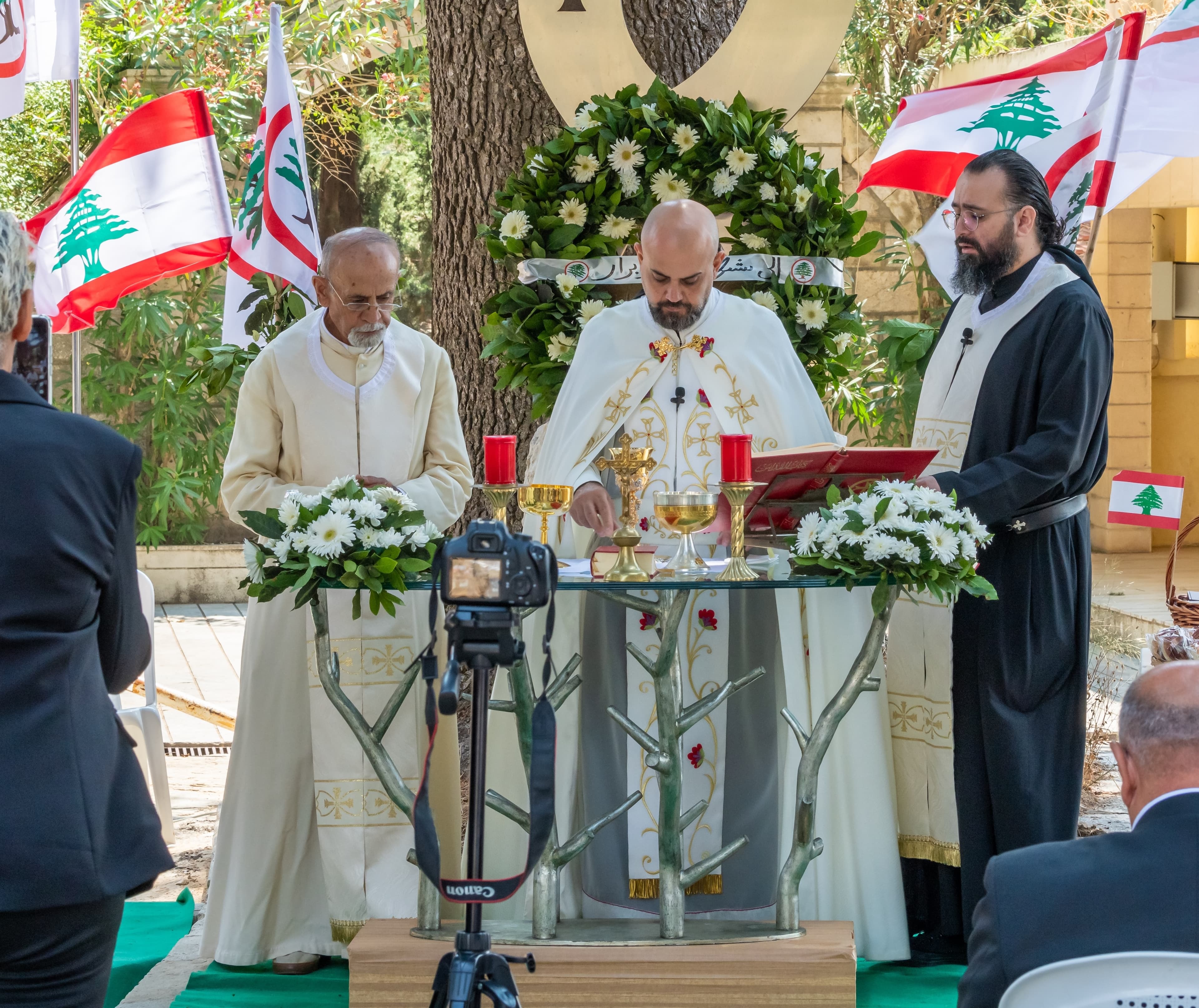
Lebanese Christians are often discussed as though their political decline can be reduced to a simple story of demographics. However, the reality is more complicated. Christians remain central to Lebanon’s identity, yet decades of emigration, civil war, economic collapse and the rise of Iran-backed Hezbollah have weakened a community that recently held a majority in the country.
Lebanese Christians are not uniformly pro-Israel. Still, polling reveals an important difference. Before October 7, Arab Barometer found that 38% of Lebanese Christians supported normalization with Israel, compared with only 5% of Lebanese Muslims. That gap does not make Lebanese Christians an Israeli constituency, but it does show that they have historically been far more open to coexistence with Israel than their Muslim counterparts.
Isaiah 32:17 says, “And the work of righteousness shall be peace; and the effect of righteousness quietness and assurance for ever.” Lebanon’s modern tragedy is that decisions of war and peace have too often escaped the control of the Lebanese state itself.
Lebanese Christians and Lebanon’s Missing Census
Lebanon’s last official census was conducted in 1932. Christians then represented a slight majority, generally estimated at roughly 52% of the population. No national census has been conducted since because Lebanon’s political system distributes power according to religious affiliation, making updated demographic numbers exceptionally sensitive.
That missing census matters. Modern claims that Lebanon is “30% Christian” or “one-third Christian” are estimates, not official counts. Statistics Lebanon currently estimates Christians at about 30.5% of Lebanese citizens, but that figure should not be mistaken for census data.
The Lebanese Christian decline cannot honestly be blamed on Muslim population growth alone. Large-scale Christian emigration has played a major role, alongside differences in birth rates, repeated wars and economic instability. Lebanon’s civil war was also far more complex than a simple Christian-Muslim confrontation, involving Palestinian armed groups, Lebanese factions, Syria, Israel and competing regional interests.
That nuance matters because the problem facing Lebanon today is not Islam itself. It is the ability of an armed ideological movement, backed by Iran, to operate outside normal state authority.
Hezbollah’s Armed Power Changed Lebanon
Hezbollah emerged with extensive Iranian support during the 1980s and retained its weapons after most Lebanese militias disarmed following the civil war. Over time, it built a military force, political organization and financial network capable of challenging decisions made by Lebanon’s own government.
The depth of Lebanon’s sectarian disagreement over Hezbollah is visible in polling. Arab Barometer found significant trust in Hezbollah among only 6% of Christians, compared with 85% of Shia respondents. Sunni and Druze trust was also extremely low, showing that opposition to Hezbollah cannot accurately be described as Christian opposition to Muslims.
That is the distinction the West too often misses. Lebanon’s struggle is not Christianity against Islam. It is a struggle over whether a sovereign state can exist while an Iran-backed armed organization maintains its own weapons and makes strategic decisions that can pull the entire country into war.
Hezbollah demonstrated that power dramatically in 2008, when its fighters seized much of western Beirut after the government moved against its private telecommunications network. More recently, Lebanon has again faced the question of whether Hezbollah or the elected state determines when the country fights Israel.
President Joseph Aoun has taken a markedly different direction. His government has supported restoring state authority over weapons and has pursued direct negotiations with Israel while insisting that Lebanon alone must determine its future.
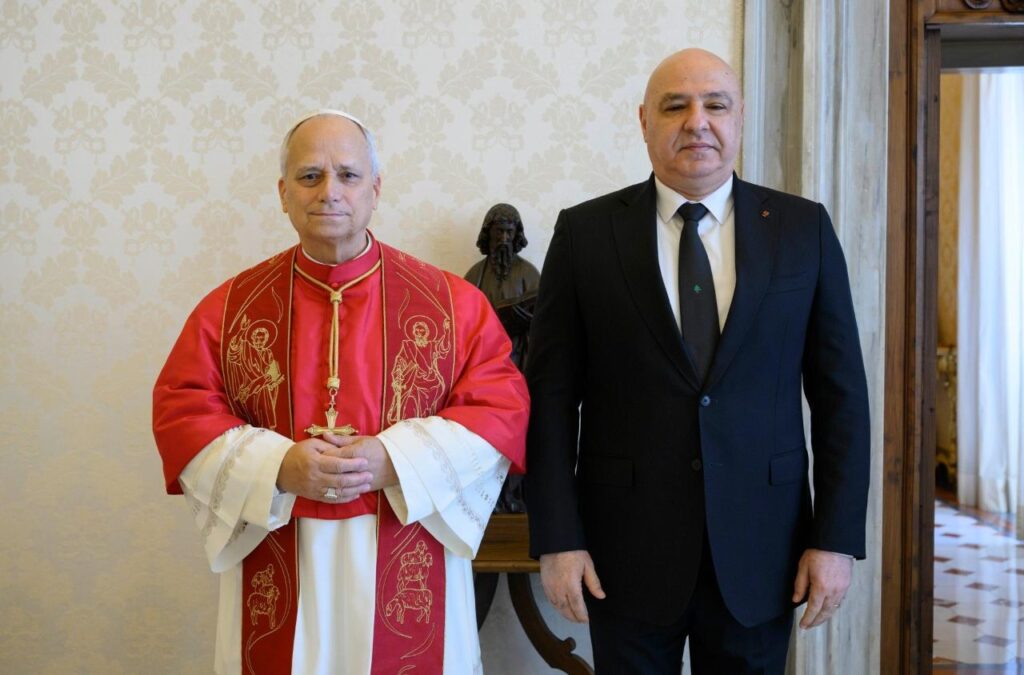
That same sovereignty argument runs through “Lebanese President: No One Negotiates On Lebanon’s Behalf.” Aoun’s message is not submission to Israel. It is that neither Iran, Hezbollah nor any foreign government has the right to decide Lebanon’s national policy.
Two Covenants, One Principle: Sovereignty
A sovereign Lebanon is in Israel’s interest precisely because Israel does not need a Christian Lebanon or an Israeli-aligned Lebanon. It needs a neighbor whose elected government controls its borders, its weapons and its decisions of war and peace.
That goal also serves Washington. The United States has, both historically and recently, invested heavily in Lebanese state institutions and continues pressing for Hezbollah’s disarmament. Recent U.S.-backed proposals have explicitly linked Israeli withdrawal with the restoration of Lebanese government authority in areas dominated by Hezbollah.
Israel’s covenantal mission before God requires the Jewish state to defend Jewish life and sovereignty against forces committed to its destruction. America’s covenantal tradition carries a different obligation: defending ordered liberty, religious freedom and governments capable of exercising legitimate authority over their own territory.
Lebanese Christians deserve particular attention because their survival is tied to whether Lebanon remains genuinely pluralistic. Their future should not depend on permanent conflict with Muslim neighbors, nor on an Iran-backed militia claiming the power to speak for the entire country.
The better future is a Lebanon where Christians remain rooted, Muslims live without militia domination and the state alone decides whether Lebanon goes to war.
That would be good for Lebanon. It would also be good for Israel, the United States and a Middle East that has spent far too long allowing armed ideological movements to hollow out sovereign nations from within.
For more stories on Israel, faith, and the values behind the headlines, follow Sinai on Facebook and Instagram.
Discussion0
No comments yet — be the first to share your thoughts.