“Joseph is Still Alive” : Torah Scroll Dedicated at Joseph’s Tomb in Shechem
Earlier this week, hundreds of worshipers entered Joseph’s Tomb in Shechem (Nablus) under the protection of IDF soldiers, to mark the Hebrew month of Adar with prayer, celebration, and a call for renewed Jewish presence at the site. The central highlight of the gathering was the dedication of a new Torah scroll, written in memory

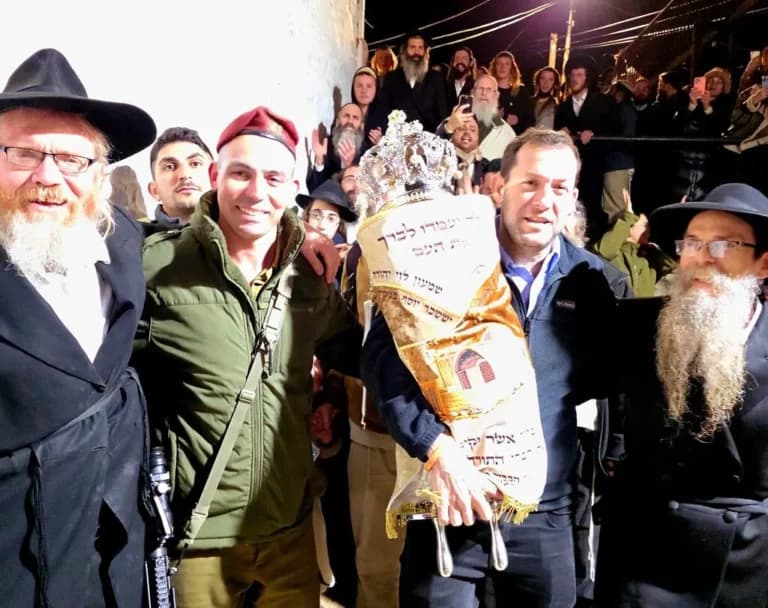
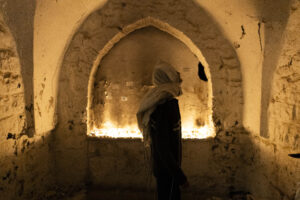
Earlier this week, hundreds of worshipers entered Joseph’s Tomb in Shechem (Nablus) under the protection of IDF soldiers, to mark the Hebrew month of Adar with prayer, celebration, and a call for renewed Jewish presence at the site.
The central highlight of the gathering was the dedication of a new Torah scroll, written in memory of alumni of the Od Yosef Chai Yeshiva who fell in the current war. The event was organized by the Samaria Regional Council and coordinated with Israeli security forces.
The yeshiva named Od Yosef Chai – the words from the verse in Genesis “Joseph is still alive” – was founded in 1982 at Joseph’s Tomb in the holy city of Shechem, where for nearly two decades it served as the only Jewish presence in the city, continuing to operate even during periods of intense unrest. Following the IDF withdrawal in 2000 and official abandonment of the site, the yeshiva relocated to the community of Yitzhar a little to the south of the city, where it has continued to grow and develop.
Led spiritually by Rabbi Yitzchak Ginsburgh, a prominent teacher of Kabbalah and Hasidism, and headed by Rabbis Yosef Elitzur and Yitzchak Shapira, the yeshiva emphasizes deep study of both the revealed and inner dimensions of Torah. Its alumni go on to establish homes in Yitzhar and throughout Israel, engaging in a wide range of professions while maintaining a committed Torah-centered, Hassidic lifestyle, with many serving in educational roles or public missions.
The anonymous donor who funded the Torah scroll requested to remain unnamed. The final letters were completed earlier at the yeshiva’s former study hall, where students learned for nearly two decades before leaving the site in the early 2000s. Bereaved families, rabbis of the yeshiva, and Samaria Regional Council head Yossi Dagan took part in the moving ceremony of completing the final letters.
Footage from the dedication ceremony | Video: Roi Hadi
For now, the Torah scroll will be housed in the yeshiva’s study hall in Yitzhar, until, according to the organizers, conditions will allow the resumption of regular activity at Joseph’s Tomb itself.
The Call for a Permanent Return
During the ceremony, Rabbis and public officials addressed the crowd. Samaria Regional Council head Yossi Dagan described the dedication of the Torah scroll as another step toward restoring a permanent Jewish presence at the Tomb. He called the moment both symbolic and significant, expressing hope that the yeshiva would one day resume full operations at the holy site.
The head of the Od Yosef Chai Yeshiva, Rabbi Yitzchak Shapira, spoke about the deep connection between the biblical figure of Joseph, known as “the Pious” in Jewish lore, and Torah study. He said the dedication of the scroll represented not only a bond to the physical location, but also a yearning to restore the vibrant hall of study that functioned there for many years.
Rabbi Yosef Elitzur added that the Torah scroll was written in memory of yeshiva alumni who are no longer among the living, describing the event as part of a long and ongoing process of return.
Knesset Member Tzvi Sukkot also addressed the gathering, stating: “The Torah scroll dedication symbolizes a renewed connection to Shechem,” and called for concrete steps to reestablish a permanent Jewish presence at the site.
The Ancient Message Renewed
In the time of our forefathers, Jacob was inconsolable over the loss of his beloved son, and his refusal to accept his death was finally met with the stunning words: “Joseph is still alive” (Genesis, 45:26). That declaration did more than restore a father’s spirit, it signaled the reward of faith and the promise of renewed life across exile, distance, and despair. Today, it is Joseph’s sons and daughters who refuse to accept an end of his existence. By remembering, rebuilding, and returning, they testify that the legacy of Joseph lives on, not only in memory, but in Torah, faith, and an unbroken bond to the land of their fathers.
In the very name of the yeshiva, and in the footsteps of those who pray at his burial place, that same message resounds once more: “Joseph is still alive!”
Discussion0
No comments yet — be the first to share your thoughts.