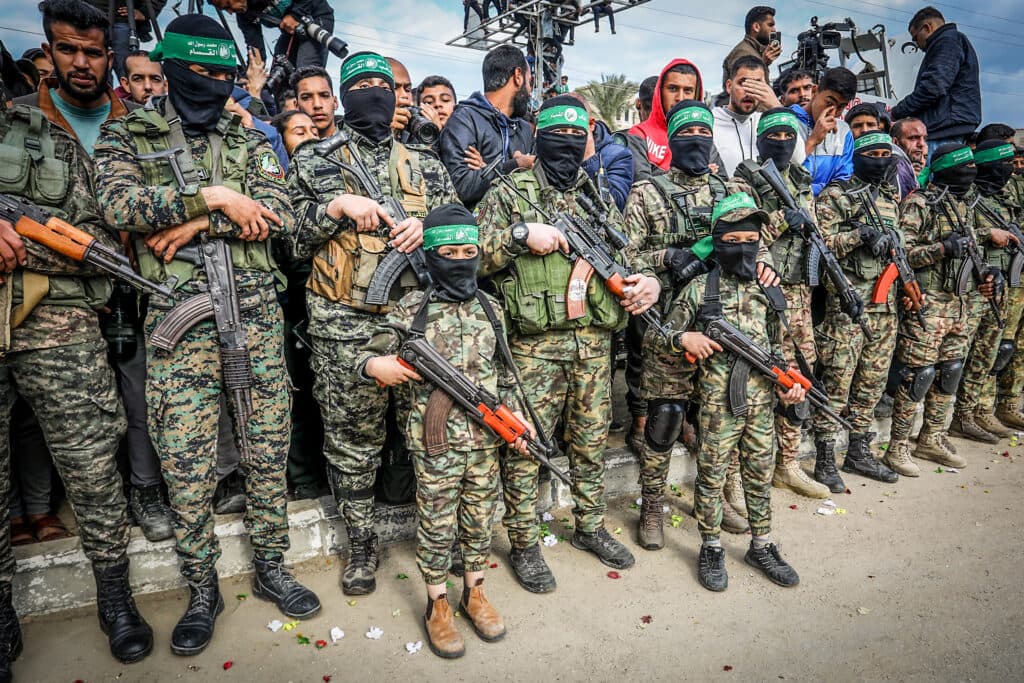

Gazan children dressed in Al-Qassam Brigade uniforms and carrying weapons participate in the handover of Israeli hostages to the Red Cross as part of the ceasefire agreement between Israel and Hamas, in Deir al-Balah on February 8, 2025 | Photo: Abed Rahim Khatib/Flash90
Takeaways
- Hamas didn’t just attack Israel. It rewrote the terror playbook.
- Drones, tunnels, and hostages now work together as one weapon.
- Ideologies that reject Western values now spread faster than agencies can track.
- Border security and fast intelligence save lives, every time.
- Standing with Israel means standing with the frontline of freedom.
A War That Changed the Rules
The October 7 attack didn’t just shock Israel. It exposed how modern terror works now, and how fast it moves. Hamas combined rockets, drones, tunnels, deception, and mass hostage-taking into one coordinated assault.
But the tactics on the battlefield are only half the story. The other half is happening online, where radicalization spreads through private channels and algorithmic feeds faster than any government agency can track it.
For anyone watching from afar, especially those who care about Israel’s survival, both halves matter.
Israel isn’t just defending its own people. It’s revealing what the West will face if it underestimates how fast an ideology can travel now.

Hamas Went Underground, Literally
After heavy battlefield losses, Hamas stopped trying to fight Israel head-on. Fighters shifted to ambushes, sniper fire, roadside bombs, and booby traps, the classic guerrilla playbook groups use once they can’t win in the open.
That shift tells you something important: when terror groups can’t win outright, they hide, they wait, and they try to drag a stronger opponent into years of grinding conflict instead.
Why This Isn’t Just Israel’s Problem
America should be watching closely, and not out of politics. Israel’s daily reality, breached borders, drone incursions, tunnel networks, hostage negotiations, is a preview of threats the West hasn’t fully faced yet.
Israel is basically running a live-fire classroom, and the lessons are free for anyone willing to learn them.
What They’re Recruiting People Into
Understanding the threat means understanding what extreme Islamic groups actually say they want.
ISIS’s founding ideology calls for a global caliphate governed by its own interpretation of Islamic law, and it explicitly rejects secular governance, religious pluralism, and democratic institutions, the very foundations of Western constitutional order.
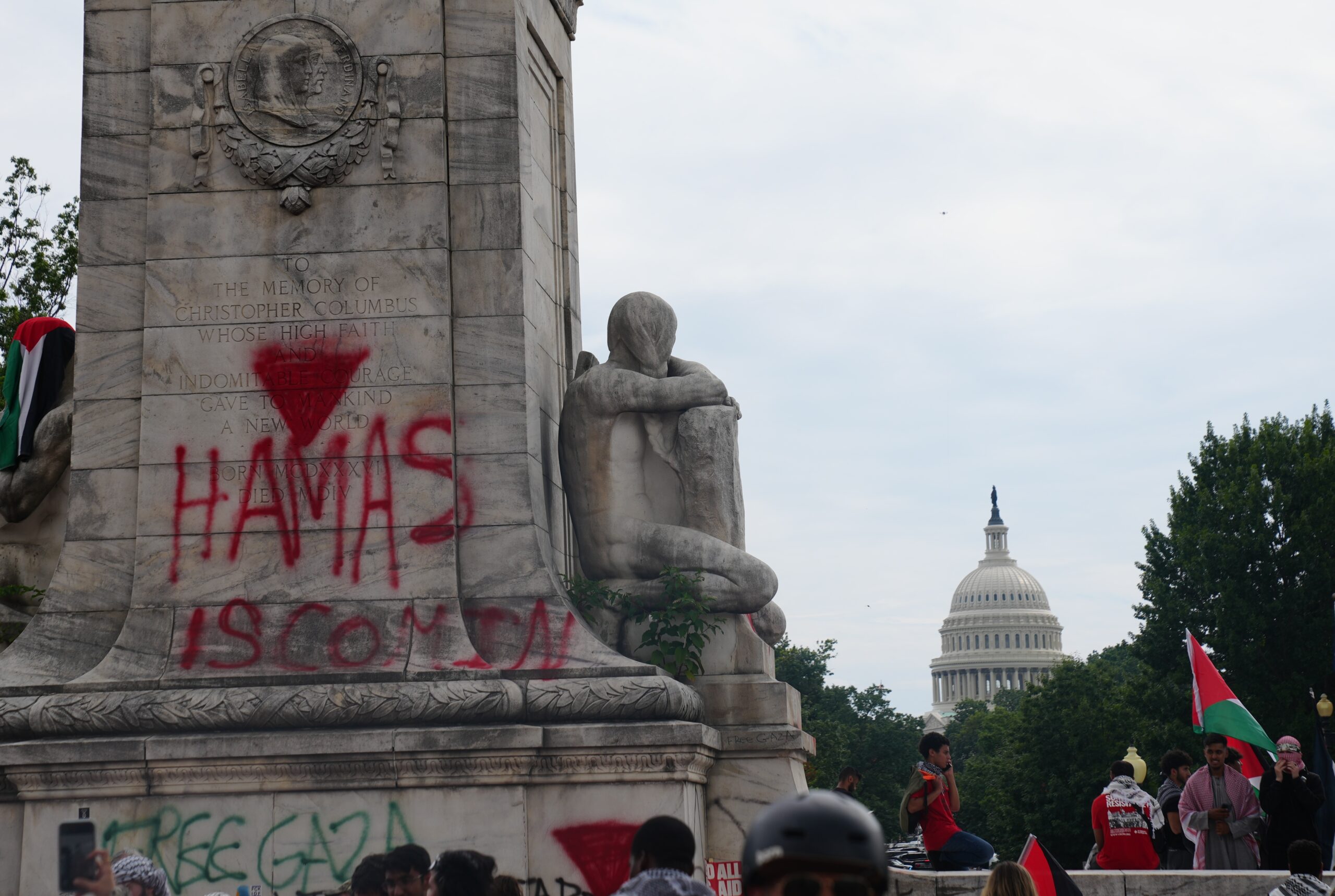
Hamas’s charter calls for the destruction of the State of Israel. Neither group hides these goals; they publish them. What’s changed is how they spread them.
Recruitment used to require in-person networks and years of grooming. Now it happens through algorithm-fed video, encrypted chat groups, and gaming platforms, compressing the path from first exposure to radicalization from months into days.
That’s the real vulnerability: not a hidden army preparing to seize American institutions, but an ideology that rejects the values Americans take for granted, moving faster through open platforms than security agencies can track it.
Three Things Israel Is Teaching the World
- Border defense has to be layered, not just a wall and a hope. Israel stacks physical barriers, sensors, and rapid-response teams together, because a single line of defense always eventually fails.
- Intelligence has to predict, not just record. Spotting patterns before an attack happens matters more than reviewing footage after one. Israel’s intelligence community has spent decades building that muscle.
- Urban and tunnel warfare need real training. Fighting an enemy that hides among civilians and underground demands a completely different skill set than conventional combat, and Israel has been forced to master it out of necessity, not choice.
📖 Read this article about what the U.S. needs to learn from Israel about the threat of a Drone War.
The Deeper Story Behind the Headlines
There’s a reason this conflict feels different from past wars in the region. Hamas isn’t fighting for territory alone. Its stated goal has always centered on Israel’s destruction, and the tactics on display: hiding among civilians, exploiting hostages, weaponizing deception, reflect that goal rather than any normal military strategy.
The land Israel defends carries meaning that stretches back thousands of years.
As the prophet Isaiah wrote, “For Zion’s sake I will not keep silent” (Isaiah 62:1), a reminder that this story has always been bigger than headlines and news cycles.
What Standing With Israel Actually Means
Supporting Israel right now isn’t just a moral stance. It’s recognizing that Israel is absorbing the first blows of a threat that could eventually reach much closer to home.
Every lesson learned on Israeli soil, every tactic exposed, every failure corrected, makes the world a little safer for everyone else too.
The Speed Is the Danger
Hamas tested tactics in Gaza that terror networks elsewhere are already studying. But the fastest-growing threat to the West isn’t a tunnel network or a border breach, it’s an ideology moving through an algorithm faster than anyone can see it coming.
Israel’s layered defenses, sharper intelligence, and battle-tested resolve offer a real blueprint for physical security. Matching that on the digital front, faster moderation, faster intervention, faster intelligence sharing, is the next test.
The West still has time to close that gap. Israel is already showing how.
Want to keep reading? Find out why Hitler’s biography being found in Gaza is so significant. Explore more on faith, values, and the Land of Israel at Sinai Project.
Discussion0
No comments yet — be the first to share your thoughts.