Israel Fuel Prices Hit Record $10.49 a Gallon
Israel’s gasoline price is set to reach NIS 8.25 per liter, about $10.49 a gallon, making a typical American-sized fill-up dramatically more expensive

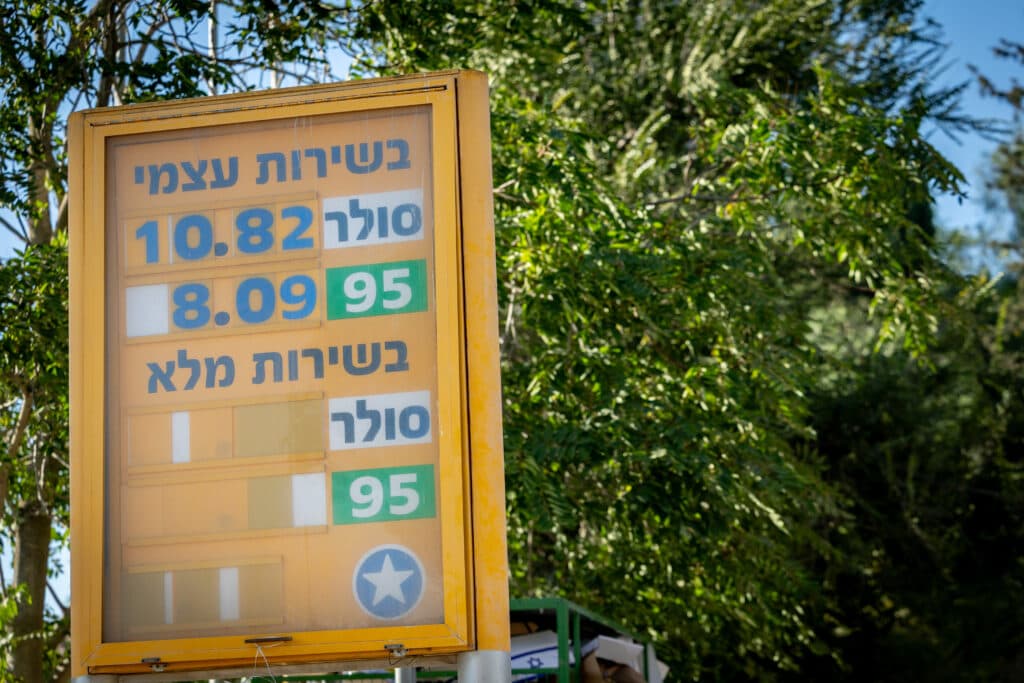
Israel fuel prices are set to hit NIS 8.25 per liter at the start of September, matching the country’s all-time nominal record from 2012. For Americans, the number becomes far more striking when converted into familiar terms. At current exchange rates, Israeli drivers will pay approximately $10.49 for a U.S. gallon of gasoline.
That is more than twice what drivers currently pay in much of the United States. AAA lists regular gasoline at about $4.22 per gallon in Buffalo, New York. The Los Angeles average is much higher, at about $5.74. Even compared with Los Angeles, Israeli gasoline will cost roughly 83% more.
The comparison is not technically grade-for-grade. Israel’s standard 95-octane fuel uses the RON rating system, while American pumps use AKI. Still, these are the standard fuels ordinary drivers encounter in each country, making the prices useful for understanding the household impact.
Proverbs 21:20 says, “Precious treasure and oil are in a wise man’s dwelling.” The ancient verse speaks about stewardship rather than modern petroleum. Yet its principle has unusual relevance when an essential resource begins taking a growing share of the family budget.
Israel Fuel Prices Return to a 14-Year High
The maximum self-service price for 95-octane gasoline will rise by 16 agorot, from NIS 8.09 to NIS 8.25 per liter. That follows a much larger 61-agorot increase last month. In just two months, gasoline has therefore climbed 77 agorot per liter, or nearly $1 per gallon when translated into American terms.
A typical 50-liter fill-up will now cost NIS 412.50 before any full-service charge. That equals roughly 13.2 U.S. gallons and about $139 at current exchange rates.
The Energy Ministry attributed the latest increase largely to a roughly 6% rise in international gasoline prices. An adjustment to Israel’s excise tax added about five agorot per liter, while the updated marketing margin added another agora. A stronger shekel offset part of the international increase.
Finance Minister Bezalel Smotrich moved Sunday to soften the blow. He instructed officials to prepare an excise-tax reduction aimed at offsetting the increase within days. The exact reduction and mechanism had not yet been finalized.
What $10.49 a Gallon Means to an American Driver
Consider a Chevrolet Cruze, a familiar compact American sedan. Chevrolet lists a 13.7-gallon tank for many Cruze configurations. Filling that tank from completely empty at Israel’s new price would cost about $144. In Buffalo, the same 13.7 gallons would cost roughly $58. In Los Angeles, it would cost about $79.

In other words, a Cruze fill-up that Americans might already consider expensive in California approaches $150 in Israel. The numbers become even more dramatic with a Ford F-150, the United States most popular vehicle. Ford offers a 36-gallon tank on numerous F-150 configurations. Filling one from empty at Israeli prices would cost approximately $378. The equivalent fill-up would run about $152 around Buffalo and $207 around Los Angeles.
The U.S. national average stood near $4.08 per gallon on August 30, according to AAA. That makes Israel’s coming price roughly two-and-a-half times the American national average. The contrast is especially notable as Washington pursues greater energy independence. In “Trump Venezuela Oil Deal Secures 65 Billion Barrels,” President Donald Trump announced a sweeping agreement giving the United States majority control over production tied to 65 billion barrels of proven Venezuelan reserves. Trump has presented the deal as a way to expand supply, refill strategic reserves, and reduce American exposure to energy disruptions abroad. Israel’s record-high fuel prices show why that strategy matters: energy security is not only about geopolitics, but also about what ordinary families ultimately pay at the pump.
Energy, Families, and National Resilience
For both America and Israel, energy prices reach far beyond the gas station. They affect the cost of commuting, food distribution, small businesses, military logistics, and almost every product moved by road. When fuel becomes dramatically more expensive, families feel the consequences long before the numbers appear in broader economic statistics.
The covenantal traditions of America and Israel share a belief that prosperity carries responsibilities before God. Both place value on work, stewardship, strong families, national independence, and creating conditions in which ordinary people can build secure lives. Economic strength is therefore not separate from national strength. It helps families endure crises and gives nations greater freedom when hostile powers threaten international trade or energy supplies.
That principle carries particular weight during continuing instability in the Middle East. Israel must preserve the ability to defend itself while keeping everyday life functioning at home. America likewise understands that greater energy resilience can limit the power hostile regimes gain from disruptions abroad.
For Israeli motorists, however, the immediate issue is much simpler. NIS 8.25 per liter can sound abstract to an American reader. $10.49 a gallon does not.
For more stories on Israel, faith, and the values behind the headlines, follow Sinai on Facebook and Instagram.
Discussion0
No comments yet — be the first to share your thoughts.