Iraqi Shiite Militias Threaten To Join Fight Against U.S.
Iraqi Shiite militias threatened to join the fight against the United States if the campaign against Iran expands, raising concerns for America, Israel, and Iraq’s sovereignty

Israel HaBahiyr
·07:56
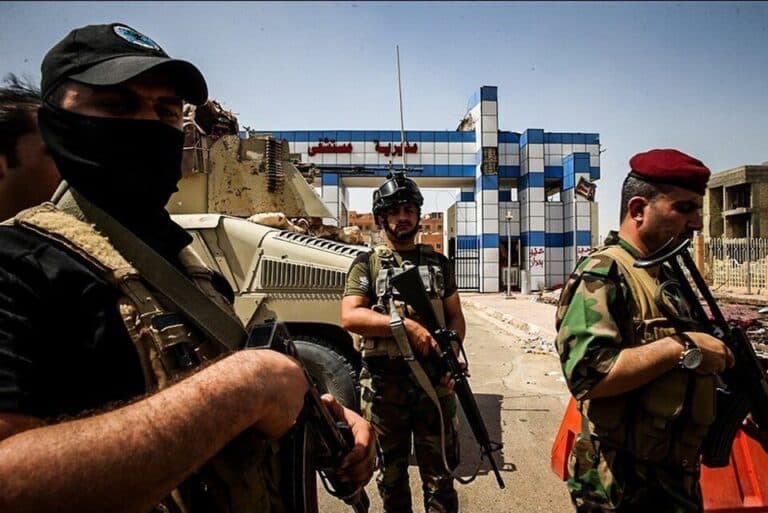
Iraqi Shiite militias threatened to join the fighting against the United States if the military campaign against Iran continues to expand.
In a statement, the Islamic Resistance said it “reiterates and emphasizes that it will directly join the campaign against the American enemy if it continues to expand its aggression against the Islamic Republic.” The group also threatened to act “with strength and determination against all American interests and bases in the country and the region.”
At the same time, the statement denied recent attacks. “In this context, we emphasize that the Islamic Resistance in Iraq has not carried out any military attack against American bases in Iraq or the region in recent days,” it said.
The Tanakh says, “When a man’s ways please the Lord, He makes even his enemies be at peace with him.” That verse speaks to the deeper question here: peace requires more than slogans. It requires enemies of order to lose the power to drag nations into war.
Iraqi Shiite Militias Threat
The warning matters because Iraq remains a key arena in the confrontation between Iran, the United States, and Israel.
The Islamic Resistance in Iraq is an umbrella name used by Iran-backed Shiite factions. The group has claimed past attacks against U.S. targets and Israel, especially after the October 7 massacre and during the wider regional conflict. FDD’s Long War Journal has described the coalition as Iran-backed and linked it to repeated attacks on Israel and U.S. bases in the region.
For the United States, the statement is a direct warning. American bases, personnel, diplomats, contractors, and regional partners could become targets if these militias act on their threat. For Israel, the danger is also clear. Iran uses militias in Iraq, Hezbollah in Lebanon, the Houthis in Yemen, and other proxy forces to pressure Israel from multiple directions.
Iraq’s Direction Under Pressure

This issue connects directly to “Ali al-Zaidi’s Washington Visit Could Test Iraq’s Direction.” Ali al-Zaidi’s expected Washington visit could test Iraq’s direction, as his government seeks closer U.S. ties while facing pressure over armed factions.
If Baghdad wants a stronger relationship with Washington, it must show that armed factions cannot decide Iraq’s foreign policy. A state cannot pursue economic recovery and diplomatic stability while militias threaten American bases on behalf of Tehran. The timing also matters because the United States and Iraq have been discussing the future of the American military presence. AP reported that U.S. and Iraqi officials said the U.S. military would leave Iraq by the end of September, following a long security mission tied to the fight against ISIS.
Therefore, militia escalation could complicate both withdrawal planning and future U.S.-Iraq relations.
Covenant Of Allies Against Terror
The United States and Israel share a covenantal understanding before God rooted in the same moral instincts: protect life, defend freedom, resist tyranny, and stand against terror.
Both nations understand that peace cannot survive when armed movements answer to foreign regimes instead of lawful governments. Both also know that deterrence matters. If terror networks see hesitation, they expand. If they see resolve, they recalculate. That shared covenant is not abstract in Iraq. It appears in the need to protect American forces, defend Israel from Iranian-backed networks, and stop militias from turning sovereign countries into launchpads for Tehran.
For America, the threat from Iraqi Shiite militias is about more than one battlefield. It is about whether U.S. commitments still carry weight across the region. For Israel, it confirms the same strategic reality visible in Lebanon, Yemen, Syria, and Gaza: Iran rarely fights alone. It builds armed networks and then uses them to threaten free nations while avoiding direct responsibility.
Ultimately, the militia statement shows why the U.S.-Israel alliance remains essential. Both countries face the same Iranian system, the same proxy strategy, and the same need for moral clarity backed by force.
For more stories on Israel, faith, and the values behind the headlines, follow Sinai on Facebook and Instagram.
Discussion0
No comments yet — be the first to share your thoughts.