Hope for Rain: How Late-Season Storms Have Reshaped Israeli Winters
Despite current concerns, Israel’s climate history suggests that even the driest winters can end with abundant rainfall.

Despite Israel experiencing its driest season in a century, history shows that even severe droughts can be followed by abundant rainfall. Meteorologists remain optimistic, as February and March have frequently brought late-season storms that have transformed water shortages into seasons of unexpected blessing.
From Drought to Abundance: Biblical and Modern Precedents
The winter of 1991–1992 remains one of Israel’s most extraordinary seasons of rainfall. After three consecutive years of severe drought, water levels in the Sea of Galilee had dropped to dangerously low levels, sparking national concerns over water shortages. Then, when it seemed as though the drought would persist, heavy rainfall arrived unexpectedly late in the season. Northern Israel received over 1,000 mm (39 inches) of rain, and flash floods swept through central and southern regions. Cities such as Tel Aviv and Haifa saw waterlogged streets, and the Dead Sea, which typically suffers from evaporation, rose substantially. Even the Negev Desert was blanketed in snow, significantly replenishing national water reserves.
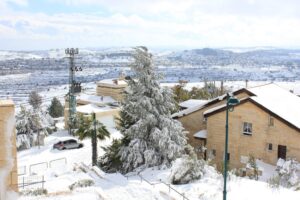
A similar event occurred in 2013, when the winter began with dangerously low rainfall levels. That year, Israel experienced the “Alexa Storm,” an unanticipated and historic weather event that covered Jerusalem and Safed in thick snow and caused extreme flooding across the country. Although the season had started with drought conditions, it ended with an above-average total rainfall, proving that even the driest beginnings can result in bountiful endings.
This recurring cycle of drought followed by restoration echoes the biblical promise found in Leviticus 26:4: “I will send you rain in its season, and the ground will yield its crops and the trees their fruit.” Just as God has provided in the past, Israel continues to trust that relief will come in due time.
Measuring Rainfall, Illustration | Photo: Shutterstock
Looking Ahead: A Season of Hope
As February and March approach, meteorologists predict that Israel could still receive substantial rainfall, bringing a renewed bloom in nature reserves. Past years have shown that even dry winters can be reversed with late-season downpours, dramatically improving national water reserves. Additionally, Israel’s advanced desalination technology, smart irrigation systems, and reservoir management strategies offer greater stability than ever before, ensuring the country can endure fluctuating rainfall conditions.
While the current drought may seem discouraging, faith, and history remind us that rain will come in its season. Just as the prophets foretold restoration after hardship, Israel remains hopeful that this year’s dry beginning will ultimately give way to abundance.
Discussion0
No comments yet — be the first to share your thoughts.