Highway 45 Breaks Ground, Connecting the Tribal Lands of Benjamin to Israel’s Core
In recent months, the Israeli government has taken a series of concrete, highly visible steps to strengthen its hold on Judea and Samaria, the biblical heartland of Israel. From officially recognizing new community settlements to expanding tourism initiatives highlighting the region’s rich biblical heritage, to increasing security coordination and strategic development plans, Jerusalem has signaled

In recent months, the Israeli government has taken a series of concrete, highly visible steps to strengthen its hold on Judea and Samaria, the biblical heartland of Israel. From officially recognizing new community settlements to expanding tourism initiatives highlighting the region’s rich biblical heritage, to increasing security coordination and strategic development plans, Jerusalem has signaled that its vision for the area is not theoretical but practical. Senior officials have framed these moves not merely as policy decisions but as historic measures that deepen Israel’s roots in the land of the Patriarchs and reinforce Jewish sovereignty in the cradle of Scripture.
In the latest iteration of the determination to reassert the Jewish historical heritage in Judea and Samaria, construction has officially begun on Highway 45, a major infrastructure project designed to connect the Binyamin region directly to central Israel and significantly ease traffic congestion around Jerusalem. The initiative is expected to shorten travel time from eastern Binyamin to the country’s center by around 15 minutes.
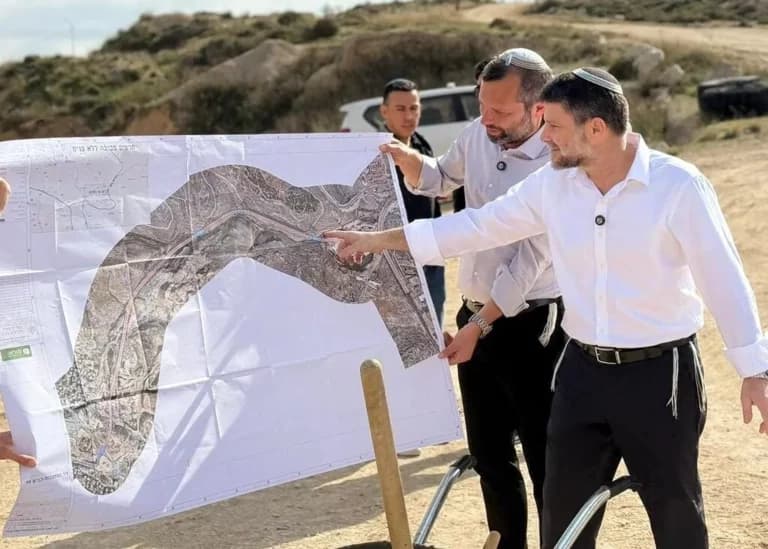
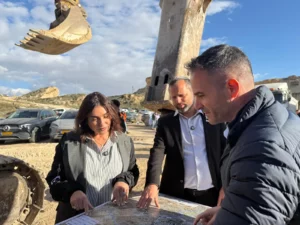
The groundbreaking ceremony was attended this week by Finance Minister Bezalel Smotrich, Transport, National Infrastructure, and Road Safety Minister Miri Regev, and Binyamin Regional Council head Israel Ganz. Regev emphasized that the government is “working energetically to strengthen the communities.”
Highway 45 is considered one of the most significant transportation infrastructure projects in the Jerusalem and Binyamin areas in recent decades. According to current plans, the new road will directly link eastern Binyamin to Highway 443. The route, which begins at Sha’ar Binyamin, will include four bridges and an underground passage in the Qalandiya area.
The engineering project is regarded as a complex and advanced, designed to ensure continuous, safe, and efficient traffic flow. The total investment stands at roughly 400 million shekels, part of broader national transportation infrastructure efforts aimed at strengthening Jewish communities in Judea and Samaria and integrating the region more fully into Israel’s national transportation network.
Once completed, residents of Binyamin will enjoy a fast, direct connection to central Israel without the need to pass through the Hizma checkpoint or the northern Jerusalem neighborhoods. The project is also expected to significantly reduce congestion on Route 437, and traffic flow at northern entry points into Jerusalem is anticipated to improve, benefiting Jerusalem residents as well.
Strategic and Zionist Milestone
“Constructing Highway 45 is not merely an important transportation project,” Smotrich declared. “It is a first-rate settlement, strategic, and Zionist milestone. The direct connection of eastern Binyamin to the center of the country changes the reality on the ground and applies de facto sovereignty. The massive development we are leading here, together with my partner Transport Minister Miri Regev and Binyamin Council head Israel Ganz, deepens our hold on the cradle of our homeland and serves as a practical rebuttal to the idea of a Palestinian state. We will continue to invest, build, and strengthen Jewish communities in Judea and Samaria for the security and future of Israel.”

Ganz added, “We are continuing to make history and care for the residents of Judea and Samaria and the State of Israel as a whole. The launch of Highway 45, another central access road to the capital, is a strategic move that will transform the region and significantly upgrade residents’ quality of life. It is a decisive answer to those who seek to establish a terror state here. We are strengthening security and creating territorial continuity between Binyamin and central Israel. Together, we are making Binyamin and Judea and Samaria an inseparable part of our land.”
Gilad Bar Adon, CEO of Moriah Jerusalem Development Company, noted that after completing the planning stages, the project has now moved into the execution phase. “Highway 45 will fundamentally reshape traffic patterns in the area and create a continuous, efficient, and safe transportation link between Binyamin, Jerusalem, and central Israel. We are proud to lead a complex infrastructure project that brings real relief to residents,” he said.
The Binyamin Region
The region of Binyamin occupies a central place in the Bible. Allotted to the tribe of Benjamin, youngest son of Jacob, this territory lay between Judah and Ephraim and includes some of the most pivotal sites in Israel’s early history. Jericho, where Joshua led the Israelites in their first miraculous conquest in the land, stands at its eastern edge. Gibeah, (modern Tell el-Ful), home to King Saul, Israel’s first monarch, is located in Binyamin, three miles north of Jerusalem, and so is Mizpah, a key gathering place during the era of the Judges and the early monarchy.
Where the prophet Samuel once traversed on foot and mule over dirt roads, the descendants of the men and women he administered to are now paving a modern highway.
Discussion0
No comments yet — be the first to share your thoughts.