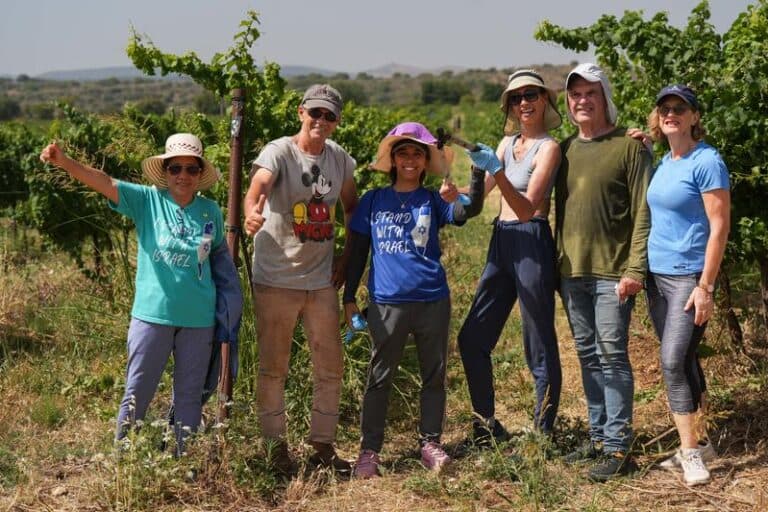

Foreign volunteers from working at a vineyard in Kibuutz Malkia, near the Israeli border with Lebanon, June 15, 2024 | Photo: Ayal Margolin/Flash90
Takeaways
- War damaged or shut down a massive share of Israel’s farms.
- Friends of Israel didn’t just send money, they showed up to work the land.
- One partnership raised $2 million to protect Israel’s food supply.
- Hundreds of thousands of volunteers helped keep harvests moving.
- Supporting Israeli agriculture is a concrete way to bless the land and its people.
War turned Israel’s farms into a frontline nobody saw coming. Workers vanished overnight. Fields near the borders sat unharvested for weeks. Far away, people who love Israel started asking what they could actually do.
Why Israeli Farms Needed Help
Israeli agriculture depends heavily on seasonal and foreign labor, and war disrupted that almost instantly. Reservists left their fields for the front lines. Foreign workers went home. Border communities, many of them farming towns, became closed military zones.
The numbers tell the story. Reports found that 89 percent of Israeli farms suffered negative effects from the war, and 19 percent were forced to stop operating completely. That’s not a side issue. Food security is a national security issue, and Israel felt it directly.
📖Read this article about an exciting initiative to get young Israelis to cultivate farms in the North.
Friends of Israel Who Showed Up
What happened next surprised a lot of people. Supporters didn’t just write checks from home. They got on planes, put on work gloves, and picked fruit alongside Israeli farmers who had no one else left to call.
Volunteer groups organized themselves by the hundreds of thousands. Some came for a single day. Others stayed for weeks, sleeping in dorms near the fields they were harvesting. Prayer gatherings happened in the same communities where the work was being done, often in the same week.
A Model Partnership: IFCJ and HaShomer HaChadash
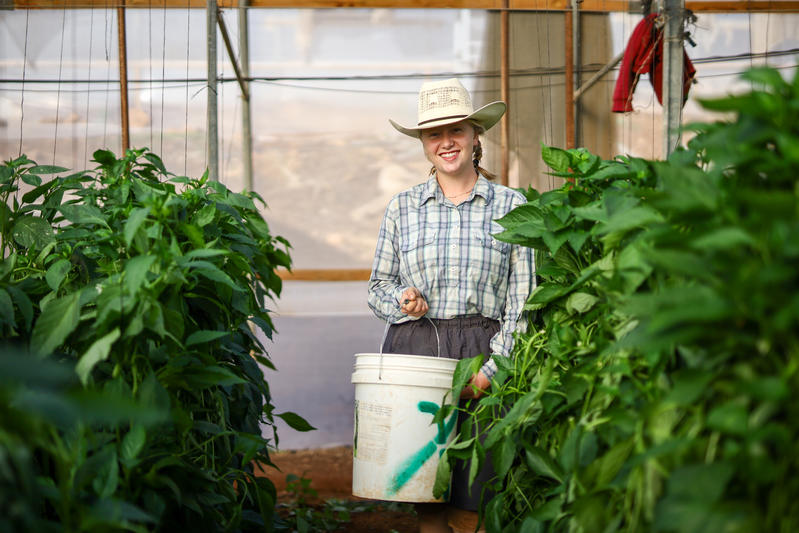
The clearest example of faith turned into action is the partnership between the International Fellowship of Christians and Jews and HaShomer HaChadash. Together they launched a $2 million food security initiative.
The program supported more than 900 farms and helped coordinate hundreds of thousands of volunteers across the country. It wasn’t a vague gesture. It had a number, a goal, and measurable results. That’s what made it work.
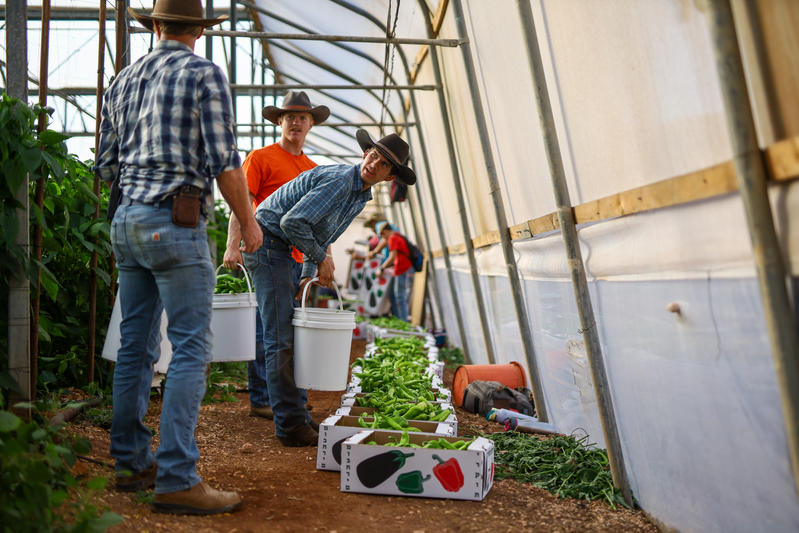
Agriculture as a Matter of Dignity, Not Just Politics
It’s easy to talk about Israel only in political terms. Farming pulls the conversation back to something simpler: land, food, and the people who depend on both.
When friends of Israel chose to help with harvests instead of headlines, they were standing with the land itself.
The Hebrew Bible ties the people of Israel to their soil again and again. Supporting that soil during a crisis is one of the most direct ways to honor that connection.
“Those who sow in tears will reap with songs of joy (Psalm 126:5).”
What This Means for Friends of Israel Today
The war exposed how fragile Israel’s farms can be, and how much faith-driven support can do when it’s organized and specific.
Giving toward food security isn’t abstract charity. It’s funding tractors, seed, and labor for families who refused to abandon their fields.
Standing with Israel doesn’t always require a plane ticket. It can mean funding a known program, sharing what these farmers are facing, or simply learning their names. Every harvest saved is proof that solidarity, when it’s hands-on, still works.
Want to keep reading? Read here about Israeli Farm-tech going global. Explore more on faith, values, and the Land of Israel at Sinai Project.
Discussion0
No comments yet — be the first to share your thoughts.