From the Iraqi Underground to Israel’s Cabinet: The Life and Legacy of Shoshana Arbeli-Almozlino
Yesterday, January 26, marked 100 years since the birth of Shoshana (Rose) Arbeli-Almozlino, a member of the Zionist underground in Iraq who later immigrated to Israel, rose to key positions, and touched countless lives. Her life and legacy can teach us about genuine leadership that blends identity with values, cooperation with courage, and vision with

Yesterday, January 26, marked 100 years since the birth of Shoshana (Rose) Arbeli-Almozlino, a member of the Zionist underground in Iraq who later immigrated to Israel, rose to key positions, and touched countless lives. Her life and legacy can teach us about genuine leadership that blends identity with values, cooperation with courage, and vision with action.
A century since the rose bloomed.
From the Underground in Baghdad to the Tents of Beit Lid
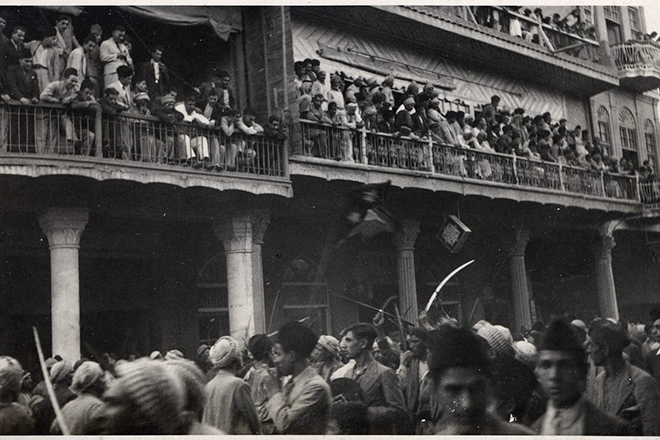
Shoshana Arbeli-Almozlino was born to a traditional family on January 26, 1926, in Mosul, Iraq. She studied in a Muslim classroom and later trained as a teacher in Baghdad, where she experienced hostility and isolation. A turning point came in 1941: the Farhud (Arabic for violent dispossession) pogrom.
In April 1941, Rashid Ali al-Kailani—an anti-British nationalist backed by senior Iraqi officers, Nazi Germany, and the former Mufti of Jerusalem, Hajj Amin al-Husseini—seized power in Baghdad. The brief pro-Axis regime intensified an already toxic atmosphere of antisemitism fueled by Nazi propaganda and German influence in Iraq. When British forces moved to reassert control in early June, many Jews believed the danger had passed and went out to celebrate the Jewish holiday of Shavuot. Instead, violent riots erupted in Baghdad. Over two days, in what became known as the Farhud, mobs murdered more than 150 Jews, wounded hundreds, looted thousands of homes and businesses, and devastated roughly 15 percent of the city’s Jewish community in an event that marked a turning point for Iraqi Jewry and pushed many toward Zionist resistance and eventual flight.
So it was with Shoshana Arbeli-Almozlino. The shattered relations with Muslim neighbors propelled her toward Zionist activity, and in 1946 she joined the Zionist underground as an instructor and coordinator. The underground operated as a clandestine organization within the Jewish community between the years 1941 and 1951, focusing on education, community protection and assisting the immigration to Israel. Iraqi authorities arrested her on suspicion of illegal activity; after her release, she immigrated to Israel clandestinely as part of the 1947 Operation Michaelberg, in which two American pilots illegally flew 50 youths from Iraq to Jewish Palestine in exchange for a hefty fee.
Upon arrival she joined the founding core group of Kibbutz Neve Ur. In 1950 she began working on behalf of the Jewish Agency at the Beit Lid immigrant camp. There, for the first time, she encountered the harsh living conditions of immigrants from Muslim lands—an encounter that shaped her public journey.
“The Outstanding Parliamentarian”
For years Arbeli-Almozlino was politically active, and in 1966 she entered the Knesset and became one of the most industrious legislators in its history, initiating dozens of laws that affected the daily lives of Israelis.
Among the issues she promoted were equal wages for men and women in the same position; enabling pregnant women to miss work for medical exams without loss of pay; granting disability insurance to homemakers; significant reforms to prevent misleading consumer practices and the establishment of a nationwide network of daycare centers to enable mothers to enter the workforce.
The Second Woman at the Cabinet Table
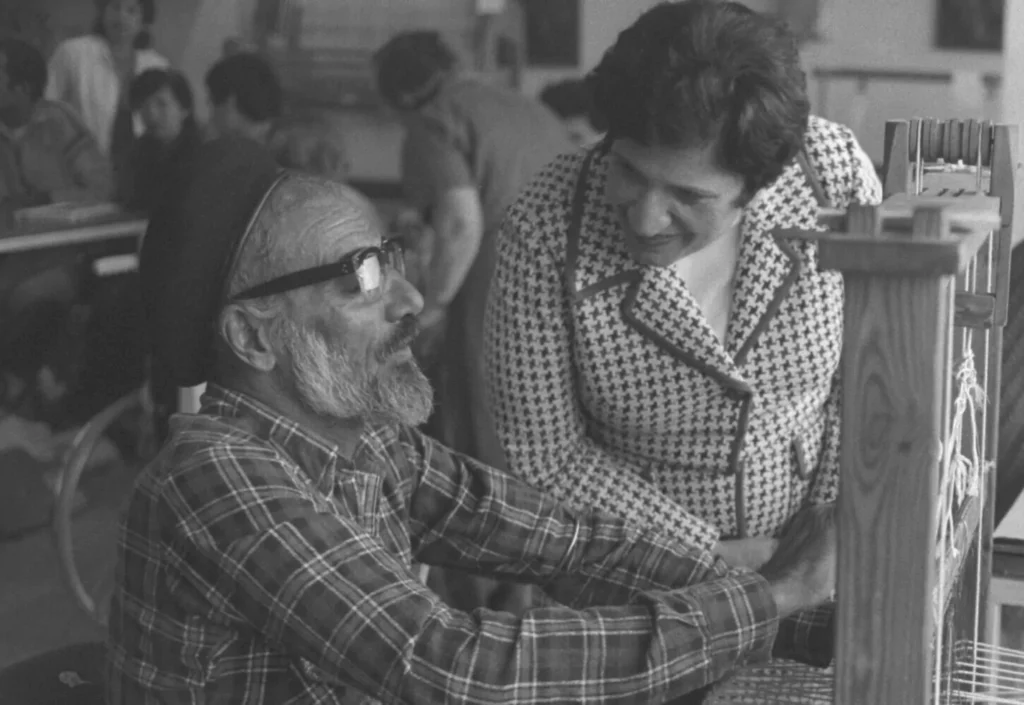
In October 1986 she made history when she was appointed Minister of Health, becoming only the second woman in Israel’s history after Golda Meir to hold a full executive portfolio. Despite her conservative views on abortion, she did not shy away from confronting the religious establishment when she believed in her cause.
As health minister she advanced the approval of Israel’s first liver transplant and promotion of heart transplants, despite some opposition from the Chief Rabbinate; the establishment of a national authority to combat drug and alcohol abuse; and the strengthening of geriatrics, nursing care, and public health.
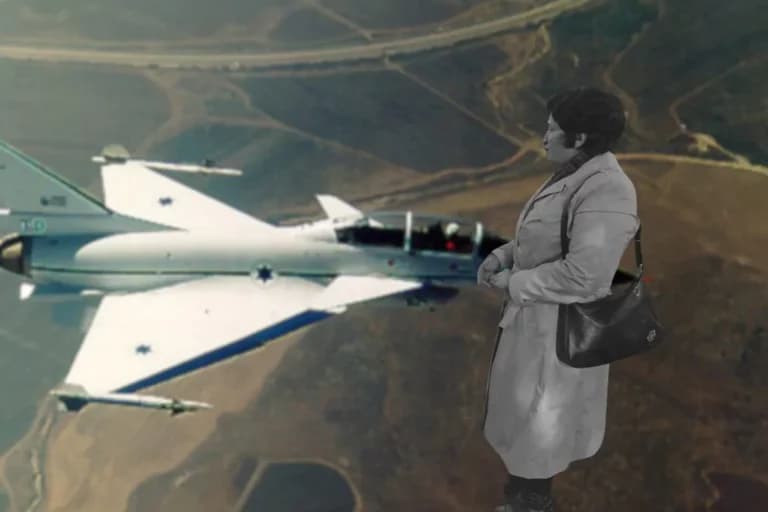
In 1987 she stood at the center of a fateful decision that reshaped Israel’s economy and security: the cancellation of the Lavi fighter jet project, the largest weapons-development effort ever undertaken by the State of Israel. The cabinet was evenly split, and her vote tipped the balance in favor of shutting down the costly program. The decision sparked a storm; Shimon Peres later informed her she would not be included in the next government.
Guided by her conscience, she did not hesitate to act against party lines on foreign and security issues, either. Belonging to the hawkish wing of the Labor Party, she opposed the Camp David Accords and chose to absent herself from the vote on the peace treaty with Egypt. She also worked actively to secure a majority for the Golan Heights Law.
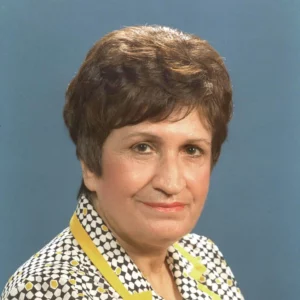
After nearly 27 years in the Knesset and government, Arbeli-Almozlino left parliament in the summer of 1992, but continued dedicating her energy to the public in welfare, health, and immigrant absorption.
Her post-retirement contributions included serving as president of the Mosul Jewish Heritage Association and a board member of the Babylonian Jewry Heritage Center; chairing the “Inbar” association for people with rheumatic diseases; leading the members’ rights committee at Clalit Health Services; and founding and heading an organization to help new immigrants integrate into Israeli society and culture.
What Can We Learn?
Shoshana Arbeli-Almozlino is not easily fit into a right-left wing paradigm. Despite her hawkish views on security, her command of Arabic opened doors and hearts among Arab and Bedouin communities. In 1987 she visited Gaza’s Shifa Hospital to improve medical conditions in the Gaza Strip and delivered a speech in Arabic that drew wide acclaim. Her unique rapport was so strong that MK Abd al-Wahab Darawshe asked Shimon Peres to appoint her as minister, noting that despite political disagreements, her contribution and respectful approach to Arab citizens were beyond dispute.
And alongside her courageous and daring past as an underground operative in a hostile environment, Shoshana Arbeli-Almozlino also collected dolls. Her collection began during a clandestine operation in 1962, when dolls were used to conceal messages smuggled to Jews trapped in the Soviet Union. In 2003 her family donated funds and dolls to the Givatayim Theater, where one hall is named for Shoshana and Natan Almozlino and a selection of her dolls is displayed at the entrance.
Her story reminds us that it is possible to be a complex figure – one who refuses narrow labels. She was a security hawk who connected with Arabs, and a woman who combined gritty underground resistance with the gentleness of dolls.
Too often we allow ourselves to be boxed into narrow camps and let partisanship occlude the larger questions facing our society. Not that we should not relinquish our identity or values – but we should rise above them to find solutions together. In the end, leadership is measured by the ability to integrate and to cooperate – just as did the Rose from Iraq.
Discussion0
No comments yet — be the first to share your thoughts.