From the Ashes of Nir Oz: A Survivor’s Voice of Strength, Love, and Faith
Member of Knesset Hili Tropper published yesterday (Tuesday) a post sharing the story of Dana Siton-Silverman from Kibbutz Nir Oz, who lost her parents Yossi and Margit, her sister Shiri, and her nephews Ariel and Kfir Bibas in the October 7 massacre.

Member of Knesset Hili Tropper published yesterday (Tuesday) a post sharing the story of Dana Siton-Silverman from Kibbutz Nir Oz, who lost her parents Yossi and Margit, her sister Shiri, and her nephews Ariel and Kfir Bibas in the October 7 massacre.
“A Family Measured Not by Blood, But by the Heart”
According to Dana, Nir Oz is not “a source of sorrow or a symbol of tragedy,” but a place that represents strength, resilience, and unconditional love. She described the kibbutz as
“a community of powerful spirit, love that is greater than death, and strength that overcomes anyone who tries to harm it.”
She added that for her, the community is family — and that Nir Oz possesses “a special power, a quiet and deep power” that can be felt among its people. She spoke of the memories that line the kibbutz pathways, the lawns, and the dining hall, and of the closeness created among the “Nir Ozniks.”
According to Dana, the community is a source of healing — a family not measured by blood but by heart, built from small moments of togetherness.
Dana emphasized that the people of the kibbutz grew and were shaped together, and today they stand side by side with a shared commitment not to abandon and not to forget. She concluded by expressing gratitude to the community in which she was raised and for the path through which her parents brought her into it.
Background: Nir Oz and the National Wound of October 7
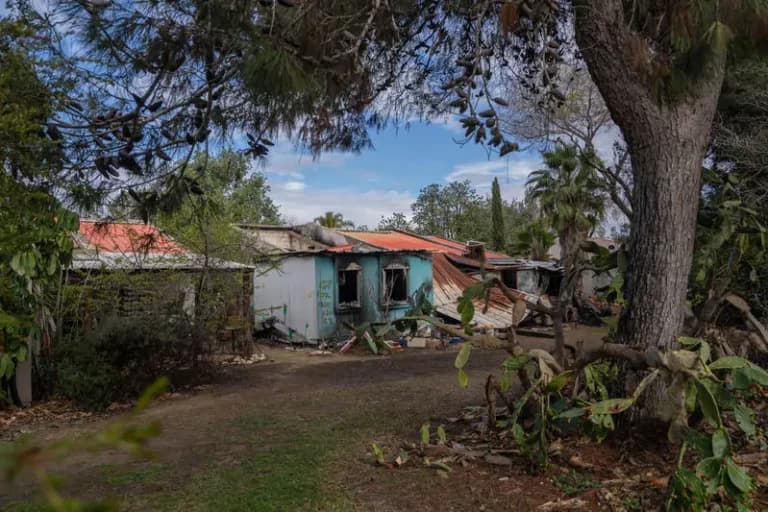
Kibbutz Nir Oz, located near Israel’s southern border with Gaza, became one of the hardest-hit communities in the October 7 Hamas attack. More than a quarter of its residents were either murdered or kidnapped in the coordinated assault that shocked the nation and the world.
Entire families were wiped encouraging to do identity building. Survivors were left without homes, without communities, and in many cases without their loved ones. The devastation of Nir Oz came to symbolize not only the brutality of the massacre, but also the vulnerability of Israel’s southern communities that had lived for years under the threat of terror.
In the weeks following the attack, stories from Nir Oz emerged as some of the most painful and personal accounts of that day — from parents searching for missing children, to children orphaned overnight, to survivors who lived through hours of terror inside sealed safe rooms.
Against this backdrop, Dana Siton-Silverman’s story stands out not only because of the unimaginable loss she endured, but because of what she chose to say afterward: not a cry for revenge, but a declaration of identity. Her words transform Nir Oz from a symbol of destruction into a symbol of communal strength — not just a site of terror, but a testament to the power of shared life, memory, and quiet courage.
Her voice joins a growing chorus of survivors who refuse to be defined solely by what was done to them, and instead insist on being known for the life, love, and spirit that preceded the attack — and will yet outlast it.
The Bible provides inspiration: “The LORD is close to the brokenhearted and saves those who are crushed in spirit.” — Psalm 34:18
Discussion0
No comments yet — be the first to share your thoughts.