Colombia’s New Leader Cancels PA Embassy Plan
Colombia’s president-elect canceled plans for an embassy in the PA territories and announced broader diplomatic closures, signaling a sharp pro-Israel shift

Israel HaBahiyr
·12:14
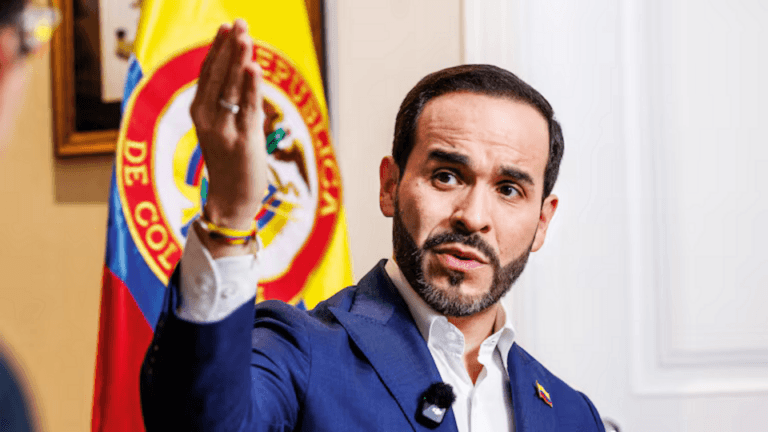
Colombia’s Palestinian Authority embassy plan has been canceled by president-elect Abelardo de la Espriella, marking another major shift in Bogotá’s diplomatic posture toward Israel and the Middle East.
De la Espriella announced that he will cancel plans to open a Colombian embassy in the PA territories. He also said Colombia will close embassies in Algeria, Azerbaijan, Barbados, Cuba, Czechia, Ethiopia, Ghana, Haiti, Hungary, Malaysia, Nicaragua, Romania, Senegal, and South Africa.
At the same time, Colombia will merge its diplomatic missions in France, through UNESCO, and in Italy, through the United Nations Food and Agriculture Organization. Colombia will continue diplomatic relations with all countries except Cuba and Nicaragua, according to the announcement.
A recent EFE report also said de la Espriella plans to close 14 embassies and restore Colombia’s “historic alliance with Israel.” The Times of Israel reported that he suspended the outgoing government’s plan to open an embassy to the Palestinian Authority and confirmed plans for a Colombian embassy in Jerusalem.
The Tanakh says, “Remove not the ancient landmark.” That verse fits this moment because foreign policy should not erase truth, history, or sovereignty for political fashion.
Colombia PA Embassy Plan

Opening an embassy in the PA territories would have sent a diplomatic message against Israel during a period of intense international pressure. Canceling that plan signals a different direction: closer alignment with Israel, skepticism toward anti-Israel diplomatic theater, and a return to a more strategic view of the Jewish state.
For Israel, the move signals a major diplomatic reversal after years of tension under Colombia’s previous leadership.
For the United States, the decision also matters. Colombia has long played an important role in Latin American politics, security cooperation, and regional alignment. A Colombian president who moves closer to Israel also strengthens a broader pro-Western camp in the Americas.
Israel, America, And Diplomatic Authority
This issue connects naturally to “NBA Star Blasts Mamdani Over Netanyahu Arrest Talk.” NBA player Kyle Kuzma criticized Mamdani after his Netanyahu arrest comments, framing the controversy as a question of authority, law, and U.S.-Israel ties.
Both stories point to the same larger question: whether public officials use their authority responsibly.
Mamdani’s comments placed anti-Israel legal theater inside American local politics. De la Espriella’s move does the opposite. He is using national authority to reset foreign policy, protect Colombia’s interests, and move away from symbolic gestures that target Israel.
For Israel, that distinction matters. Words and embassies are not symbolic details. They shape legitimacy, alliances, trade, lawfare, and the diplomatic battlefield around the Jewish state.
Covenant Of Truthful Friendship
The United States and Israel share a covenantal understanding before God rooted in truth, liberty, lawful order, and friendship with nations that defend civilization.
That shared covenant appears when America stands with Israel against efforts to criminalize self-defense. It appears when Israel welcomes leaders who reject the campaign to isolate the Jewish state. It also appears when allies understand that peace must rest on truth, not pressure campaigns.
America benefits when democratic partners in the Western Hemisphere move closer to Israel and resist anti-Western blocs. Israel benefits when Latin American countries reject diplomatic moves that reward rejectionism or delegitimize Jewish sovereignty.
De la Espriella’s decision does not resolve the wider conflict. However, it shows how quickly diplomacy can shift when leaders choose clarity over fashionable hostility.
Ultimately, Colombia’s new direction sends a clear message: relations with Israel are not a liability. They are a strategic, moral, and diplomatic asset for countries that understand the value of truth, sovereignty, and alliance.
For more stories on Israel, faith, and the values behind the headlines, follow Sinai on Facebook and Instagram.
Discussion0
No comments yet — be the first to share your thoughts.