Colombia Turns To U.S. And Israel After Earthquake
Colombia’s government said it would receive rescuers from the United States, Israel, Ecuador, and El Salvador after the deadly earthquake

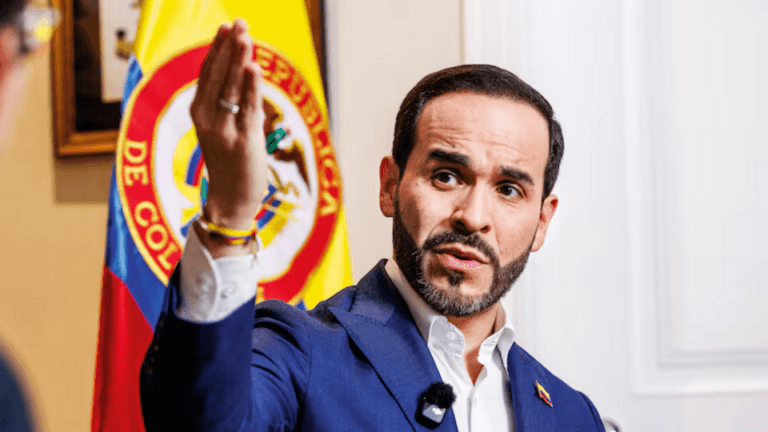
Colombia earthquake aid has become an early test for President Abelardo de la Espriella, whose government is turning first to a small group of allies after the deadly disaster.
According to El País, the Colombian government said it would receive rescuers from four allied countries: the United States, Israel, Ecuador, and El Salvador. Reuters reported that Colombian officials later pushed back against claims that the government had rejected aid entirely, saying Colombia would accept international search-and-rescue teams that meet recognized certification standards.
The Tanakh says, “If thou draw out thy soul to the hungry, and satisfy the afflicted soul, then shall thy light rise in darkness” (Isaiah 58:10). In the aftermath of an earthquake, that principle becomes immediate. Saving lives, sending aid, and standing with the afflicted are not symbolic gestures. They are moral duties.
Colombia Earthquake Aid
The decision matters because it shows where Colombia’s new government is placing trust during a national emergency. Disaster response is practical by nature. Countries need trained teams, supplies, coordination, and reliable partners who can move quickly.
For Israel, the moment carries special significance. Israel has long used its rescue, medical, and humanitarian capabilities to help countries after earthquakes and other disasters. When Colombia includes Israel among the countries it is willing to receive help from, it signals a relationship built on more than statements.
De La Espriella’s Pro-Israel Direction
The emergency response also fits the diplomatic shift described in “Colombia’s New Leader Makes Dramatic Pro-Israel Moves.” That article reported that de la Espriella advanced major pro-Israel steps, including Golan recognition, Jerusalem embassy plans, visa-free travel, and withdrawal from The Hague.
Now, that pro-Israel posture is appearing in a crisis. Colombia is not only speaking warmly about Israel in diplomatic language. It is treating Israel as a trusted partner when lives are at stake.
The inclusion of the United States also matters. Washington remains the leading power in the hemisphere, and Colombia’s turn toward the U.S., Israel, Ecuador, and El Salvador reflects a broader alignment with countries seen as dependable partners in security, diplomacy, and emergency response.
Covenant In A Moment Of Crisis
Colombia’s choice of partners also points to something deeper than logistics. In moments of disaster, nations reveal who they trust, who they call, and who they believe will show up with skill, courage, and moral seriousness.
That is where the bond between the United States and Israel matters. Both nations, at their best, understand national life through covenant with God. Freedom is not only a political right. It carries responsibility: to protect life, aid the suffering, defend human dignity, and stand beside allies in their hour of need.
In Colombia, that shared American-Israeli covenantal instinct becomes practical. The United States brings global reach, regional leadership, and unmatched emergency capacity. Israel brings hard-earned rescue experience, medical innovation, and a national culture shaped by the duty to save life wherever possible.
For Colombia, the earthquake is a tragedy. However, the government’s decision to turn to the United States, Israel, Ecuador, and El Salvador also reveals a clear diplomatic direction. Under de la Espriella, Colombia is moving closer to allies who understand that friendship is proven not only in speeches, but when people are trapped, wounded, and waiting for help.
For more stories on Israel, faith, and the values behind the headlines, follow Sinai on Facebook and Instagram.
Discussion0
No comments yet — be the first to share your thoughts.