
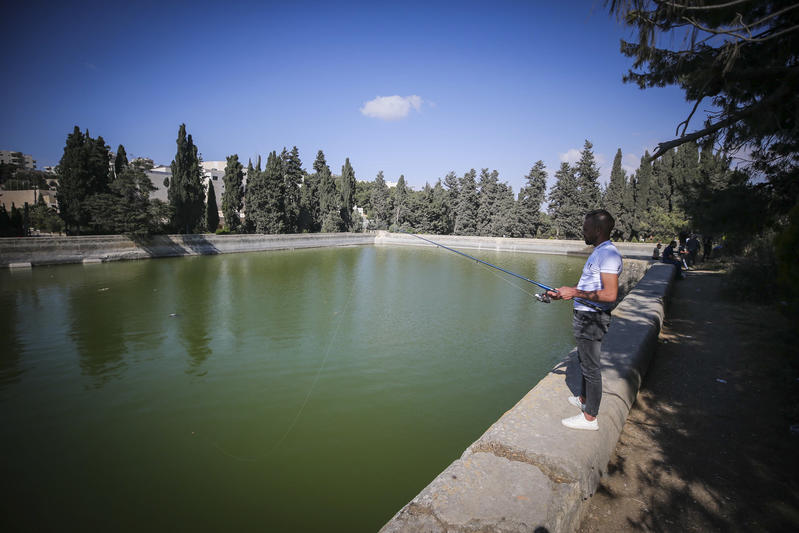
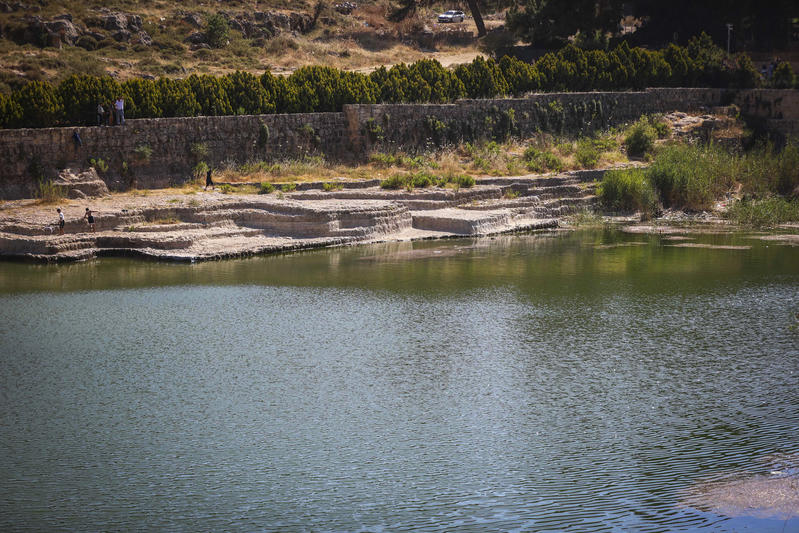
View of the Solomon’s Pools near the west bank city of Bethlehem, 2013, during the Passover vacation. | Photo: Gershon Elinson/Flash90
Takeaways
- Solomon’s Pools are now open to visitors after years of limited access.
- The three reservoirs once held an estimated 288,000 cubic meters of water.
- Construction began during the Hasmonean period and expanded under Herod the Great.
- Carbon-14 testing links parts of the aqueduct to the era of Pontius Pilate.
- The site sits near Bethlehem, close to the Israeli community of Efrat.
Dr. Azriel Yechezkel spent years researching an ancient water system for his doctorate, then finally got to walk a group through it in person. He guided the largest group in a new pilot program that just brought organized tours into Solomon’s Pools for the first time, a mix of students and tourists visiting from the US.
The tour became possible after the Efrat Local Council partnered with the Etzion Regional Brigade, backed by a government allocation of 10 million shekels meant to make the site permanently reachable. Entry currently runs once a week, with travel agents, educational groups, and licensed guides registering in advance. Efrat Council head Dov Shefler said the goal is a site “freely open to visitors every day.”
📖Read here about why Jerusalem’s Temple Mount is still considered the holiest place in the world.
What Are Solomon’s Pools
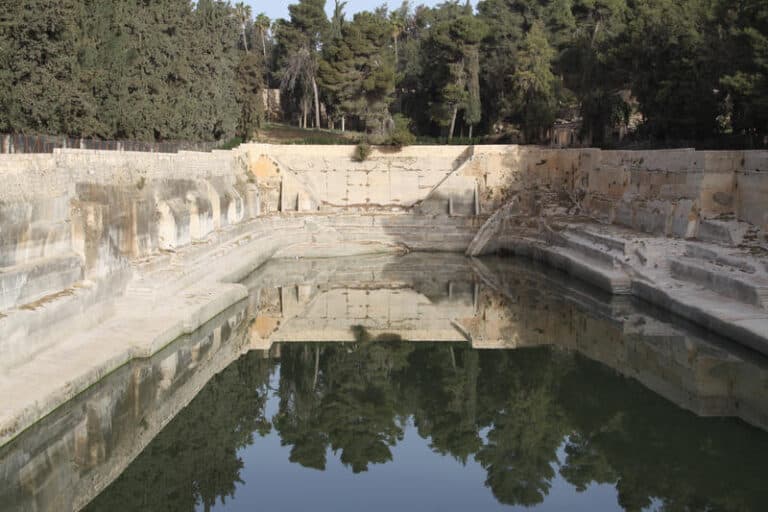
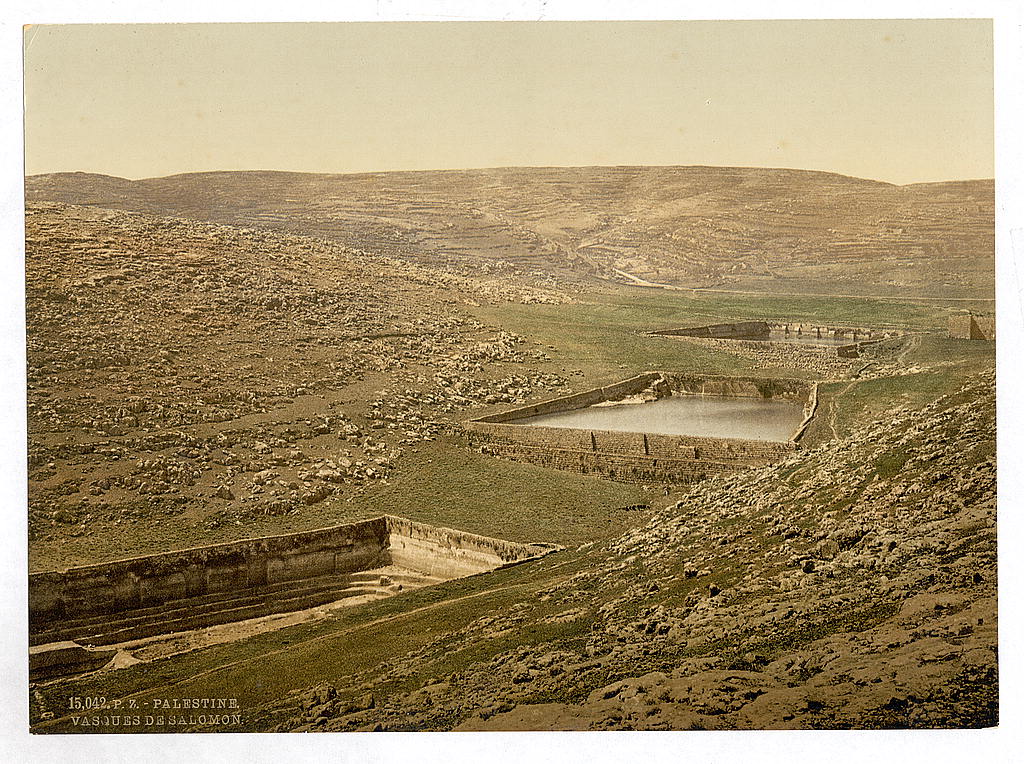
How do you supply a city packed with pilgrims, in the middle of a dry Judean summer, centuries before pipelines or pumps? You build reservoirs the size of small stadiums and let gravity do the rest. The pools sit near Bethlehem, close to Efrat, spaced several dozen meters apart with each one sitting roughly 6 meters lower than the last, so water simply flowed downhill from one basin to the next.
Each pool is rectangular or trapezoidal, cut partly from bedrock and partly built up with stone, stretching between 118 and 179 meters long and reaching 8 to 23 meters deep. Together the three basins held an estimated 288,000 cubic meters of water, something in the range of 75 million gallons.
Built by the Hasmoneans, Expanded by Herod
Who actually built this thing? Most archaeologists trace the earliest construction to the Hasmonean period, starting in the second century B.C., a dynasty descended from the Maccabees whose revolt is remembered every Hanukkah. Herod the Great later expanded the system as part of his broader building program, alongside his renovation of the Second Temple and the construction of Herodium nearby.
The Aqueducts That Fed Jerusalem
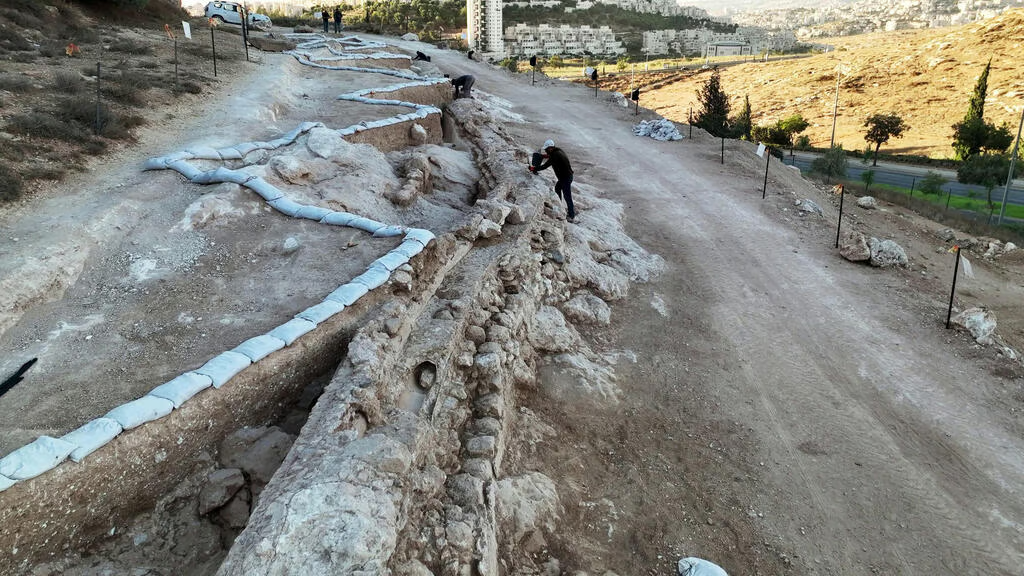
Water reached the pools through the Biyar and Arrub aqueducts, drawing from springs and seasonal rainfall alike. What became known as the Lower Aqueduct crossed the Valley of Hinnom above the Sultan’s Pool, curved along the southern slope of Mount Zion, and entered the city near today’s Jewish Quarter. From there it hugged the eastern hillside, sometimes built on stonework and sometimes carved straight into rock, before turning east past what is now Wilson’s Arch and reaching the Temple Mount courtyard through the Chain Gate.
Carbon-14 testing on parts of the upper aqueduct dated sections to the years of Pontius Pilate, and the historian Josephus described unrest tied to a Roman waterworks project funded from the Temple treasury. The system kept working long after Rome. Beneath the middle pool sit the remains of a British pump station that once piped water into the Old City, and a newer station below the lower pool still supplies Bethlehem today.
Why the Engineering Still Matters
Organizing labor across the Judean hills, cutting channels through rock, and moving water uphill toward a crowded capital took real authority and planning. The pools drew on both springs and rainwater, keeping Jerusalem supplied through the dry summer months when other cisterns ran low, fueling daily life, agriculture, ritual purification, and the work of the Temple itself.
Psalm 42:2 captures the same longing that water represents throughout the Hebrew Bible: “As a deer longs for streams of water, so my soul longs for You, O God.” Standing at the edge of these reservoirs, that image stops being poetry and starts feeling literal.
Visiting Solomon’s Pools Today
Back at the rim of that first basin, Dr. Yechezkel’s group kept looking down into the empty stone, trying to picture it full. Tourism adviser Hezki Betzalel called the pilot only a starting point, with more weekly dates expected as the council works toward daily access.
The pools, for now, remain, patient and enormous, waiting for the next set of visitors willing to make the walk.
Want to keep reading? Jerusalem’s gates and the Psalms share a hidden connection. Click here for the fascinating breakdown and a tour of each gate. Explore more on faith, values, and the Land of Israel at Sinai Project.
Discussion0
No comments yet — be the first to share your thoughts.