Power of the Matriarchs: How the Bible’s Women Still Shape Hebron Today

By Leah Bean Bowman
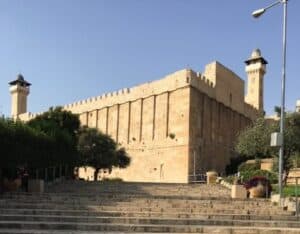
Tomb of the Matriarchs and the Patriarchs in Hebron called Ma’arat HaMachpelah in Hebrew. | Photo: Leah Bean-Bowman
Hebron is a city where the Bible breathes. It is the place of Abraham’s faith, Isaac’s devotion, and Jacob’s promise, but it is also the city of Sarah, Rebecca, and Leah. Hebron reminds us of a truth sometimes overlooked: from the very beginning, the story of Israel was shaped not only by great men, but by extraordinary women whose faith, courage, wisdom, and devotion carried God’s story forward.
A Moments of Providence
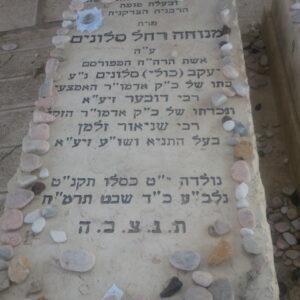
A few years ago, while guiding in Hebron, I took a group there by public transportation. Before my group even arrived, a large American Jewish family approached me as if I were their guide. “Does this bus go to Hebron? Does it go to the grave of Menucha Rachel?” they asked. Their daughter was named after this great woman — and that day was her birthday. They had traveled all the way to Israel just to honor her legacy.
They didn’t know where to go or how to get there. Miraculously, I was able to connect them with a local guide who actually happened to be available. After everything was set, they asked me: “Is it safe?” I smiled and thought — after everything that just aligned so precisely — they were clearly meant to be there.
That moment wasn’t clumsiness in planning. It was love, devotion, and faith guiding a family to honor a woman of spiritual greatness. And it was a reminder: Hebron is still a city where the legacy of women lives.
The Bible’s Bold Statement About Women
There is a striking moment in Genesis when God tells Abraham:
“Whatever Sarah tells you — listen to her voice.”
The Bible could have written many other things. Instead, it affirms something foundational: women’s wisdom and spiritual clarity are essential to the unfolding of God’s plan. The future of the covenant is shaped by Sarah’s insight.
Hebron is the city where this truth lives in stone.
In the Cave of Machpelah rest not only Abraham, Isaac, and Jacob — but Sarah, Rebecca, and Leah. Jewish memory places men and women together as the builders of faith, the carriers of heritage, and the founders of a people.
Hebron’s very name means connection — and women are at the heart of that connection.
Sarah: A Life Fully Lived
The Bible tells us that Sarah lived 127 years, and a Jewish sage explained that the text emphasizes each stage of her life to teach something powerful: Sarah lived every stage with purpose. She was not only old or young or middle-aged; she was meaningful at every moment. Every season mattered. Every chapter was full.
The same portion later tells us:
“And Abraham was old, advanced in days.”
Another Jewish teaching explains this not to mean that he simply lived many days, but that he gathered his days — he filled them with meaning so deeply that they became part of who he was.
Faithful lives are measured not just by years, but by purpose.
Rebecca: Continuing the Chain of Holy Women
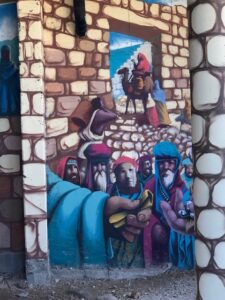
There is another beautiful ancient teaching: in Sarah’s tent there were always three miracles — a candle that remained lit, a divine cloud of presence above, and a blessing in her bread. When she died, those miracles vanished. When Rebecca entered Sarah’s tent, they returned.
Meaning:
Women do not only inherit faith —
they renew it, preserve it, and pass it forward.
Women Who Continued the Story of Hebron
The legacy of biblical women did not end in Scripture. Hebron continued to be shaped by remarkable women across generations. Here are just a few of the great women of Hevron (and neighboring Kiryat Arba) of history and today.
Rebbetzin Menucha Rachel Slonim
As a child in 19th-century Russia, she longed for the Land of Israel so deeply she became ill until promised she would one day reach it. She eventually arrived in Hebron and became its spiritual center — wise, compassionate, and deeply connected to the people. She loved the Land like Rebecca loved Israel — not as an idea, but as destiny.
Sarah Nachshon
In the modern era, when Jewish life in Hebron seemed broken beyond repair, Sarah Nachshon helped bring it back. She restored the ancient Jewish cemetery by heroically burying her baby Avraham who sadly had passed away, refusing to be detered by calls not to re-open the historic cemetery. The renewal of the Jewish cemetery led to the renewal of the Avraham Avinu Synagogue and the renewal of the Jewish community there. She helped reclaim Beit Hadassah. She lived for months underground with dozens of other women and children until Jewish life returned. Leaders compared her to the Daughters of Zelophehad, women in the Bible whose love for the Land reshaped history.
Rena Ariel
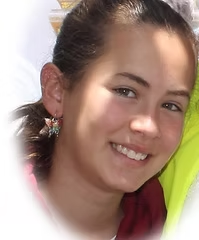
After the tragic murder of her daughter, Hallel Yaffa Ariel, of blessed memory, on June 30, 2016, Rena did not collapse spiritually. She became a pillar of faith and strength. People came hoping to comfort her — and instead left strengthened by her courage, clarity, and unwavering hope. Her voice, like the voices of Sarah, Rebecca, and Leah before her, continues the chain of women who refuse to surrender to darkness.
Together with her husband Amichai, Rena has channeled grief into creation: they have published meaningful books and produce award-winning wine in Hallel’s memory, turning pain into purpose and blessing, and offering a lasting contribution to culture, faith, and the story of Israel.
Hebron: Women and Faith Across Time
Hebron reminds us that women’s spiritual courage is not an ancient memory — it is a living force. Women have guarded this city, nurtured its communities, preserved its faith, and carried its story across generations.
The Bible honors women as leaders, protectors, visionaries, and partners in destiny. History proves that nothing has changed.
Hebron stands as a witness:
Women built the faith of Israel.
Women preserved the heart of Israel.
Women still shape the future of Israel.
From Sarah to Rebecca, from Leah to the women of Hebron in every generation, their faith is not history.
It is heritage, continuity, and living strength.
And the voice God once commanded Abraham to hear
still echoes through the story of Israel today.
Leah Bean-Bowman is a licensed guide in Israel and holds an MA in Religion and Politics in the Middle East from Bar-Ilan University. Leah can be reached at https://www.tourguideleah.com
Discussion0
No comments yet — be the first to share your thoughts.