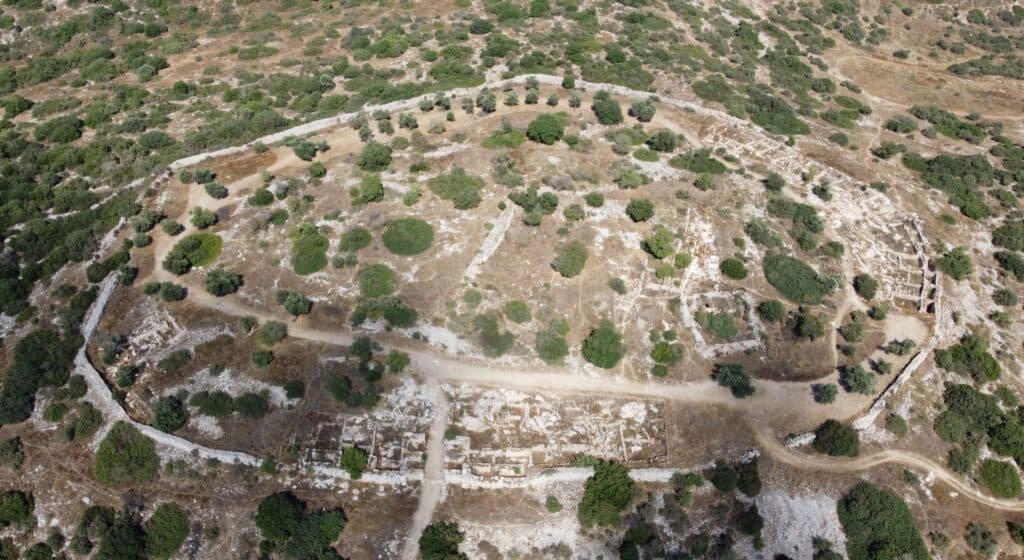

Aerial view of Khirbet Qeiyafa archaeological site, near Beit Shemesh | Photo: Wikimedia
Takeaways
- A fortress overlooking the Elah Valley dates to David’s own era
- Its two gates match a place-name from the Bible itself
- Carbon dating on 28 olive pits anchors the timeline
- The Philistines had real coastal cities, not just a role in a story
- You can stand in this valley and read 1 Samuel 17 on the spot
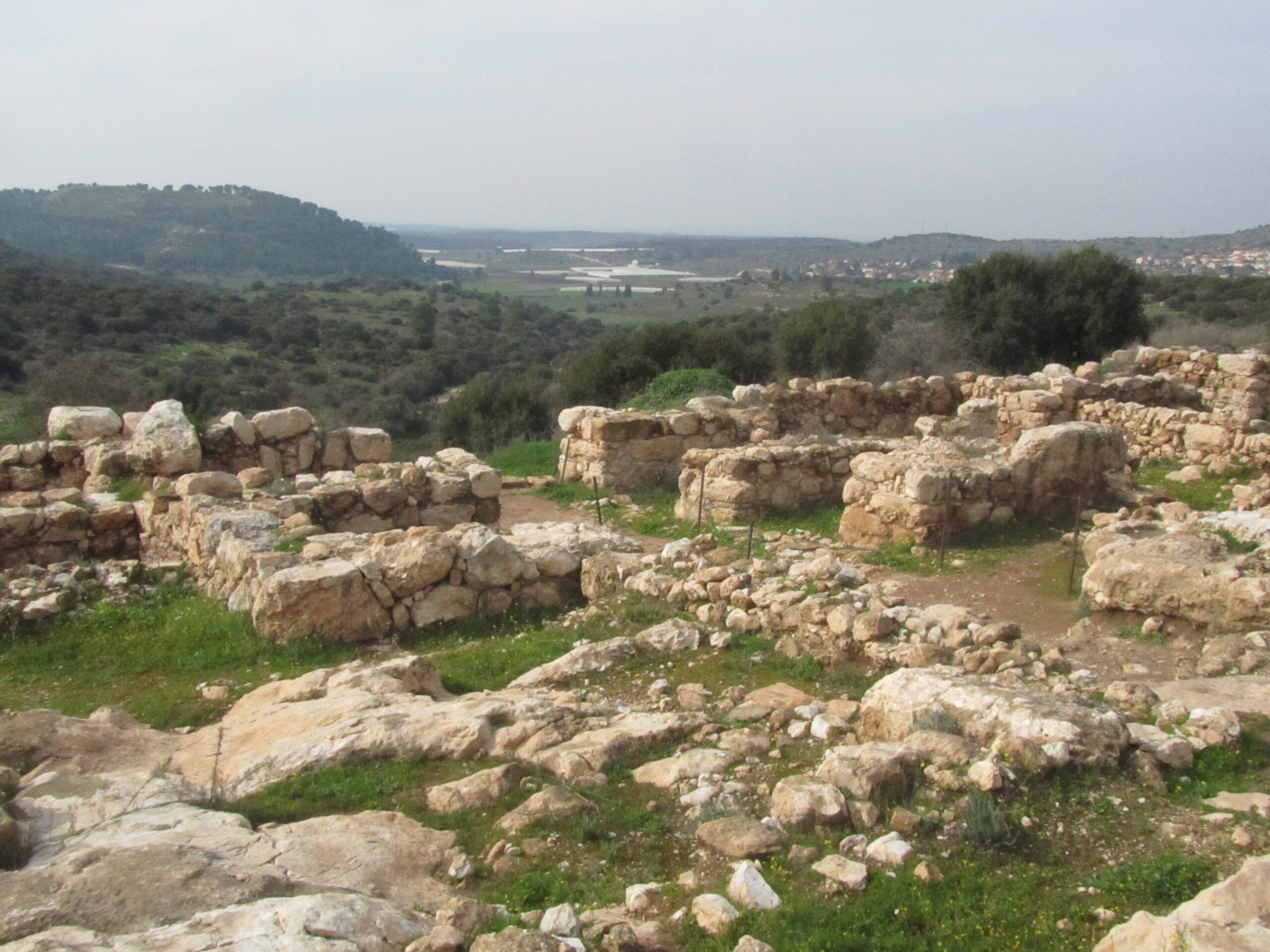
I stood on that ridge above the Elah Valley last spring, and for a second I forgot I was looking at dirt and stone instead of a page from Scripture. The wind moves through that valley the same way it must have moved through it three thousand years ago, and something about that stillness gets under your skin. I ran my hand along the edge of the Western gate, the one that once faced Gath, and thought about how many feet had crossed that threshold before mine. This was the actual ground where a shepherd boy refused to back down from a giant, worn smooth by three thousand years of wind and feet, and I was standing on it.
A Fortress Above the Valley
Southwest of Jerusalem, near Beit Shemesh, a hilltop ruin called Khirbet Qeiyafa looks down over the Elah Valley. This is the valley where 1 Samuel 17 places the standoff between David and Goliath. Archaeologists dated the site to the early 10th century BCE, the period tradition assigns to King David’s rise, using carbon dating on 28 charred olive pits pulled from the excavation.
The ridge sits on a natural corridor running from the Philistine coastal plain up into Judah’s highlands, toward Hebron and Jerusalem. Armies moving between those two worlds would have funneled through exactly this terrain. Walking it today, the narrow approach and clear sightlines make the biblical setting feel less like literature and more like geography.
The City of Two Gates
One detail sets this site apart: it has two monumental gates, one facing west toward Philistine Gath, one facing south toward Judah. Most fortified cities from this period had a single gate. Researchers connected this feature to a biblical place-name, Sha’arayim, which means “two gates” and appears in the David and Goliath account itself.
That connection is an archaeological reading, not a courtroom verdict on every verse. What it does establish is a fortified Judahite city sitting precisely where the biblical text puts the conflict, on the frontier between Israel and the Philistines.
A Kingdom With Real Infrastructure
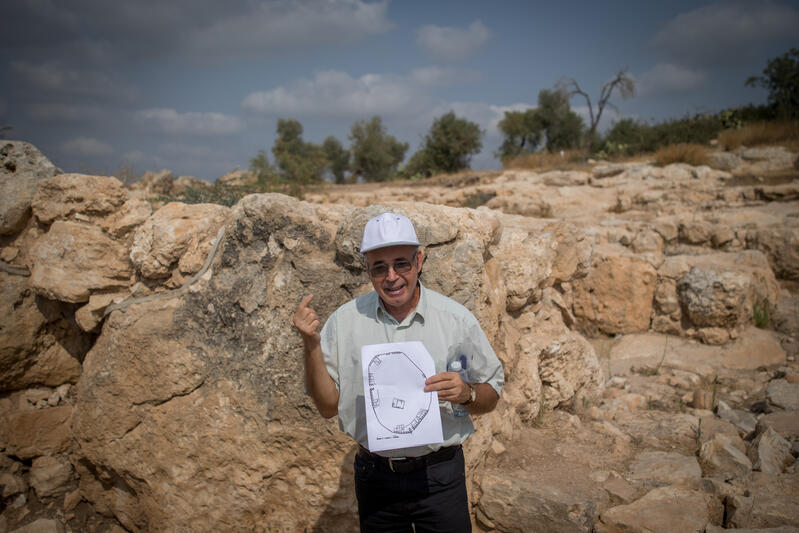
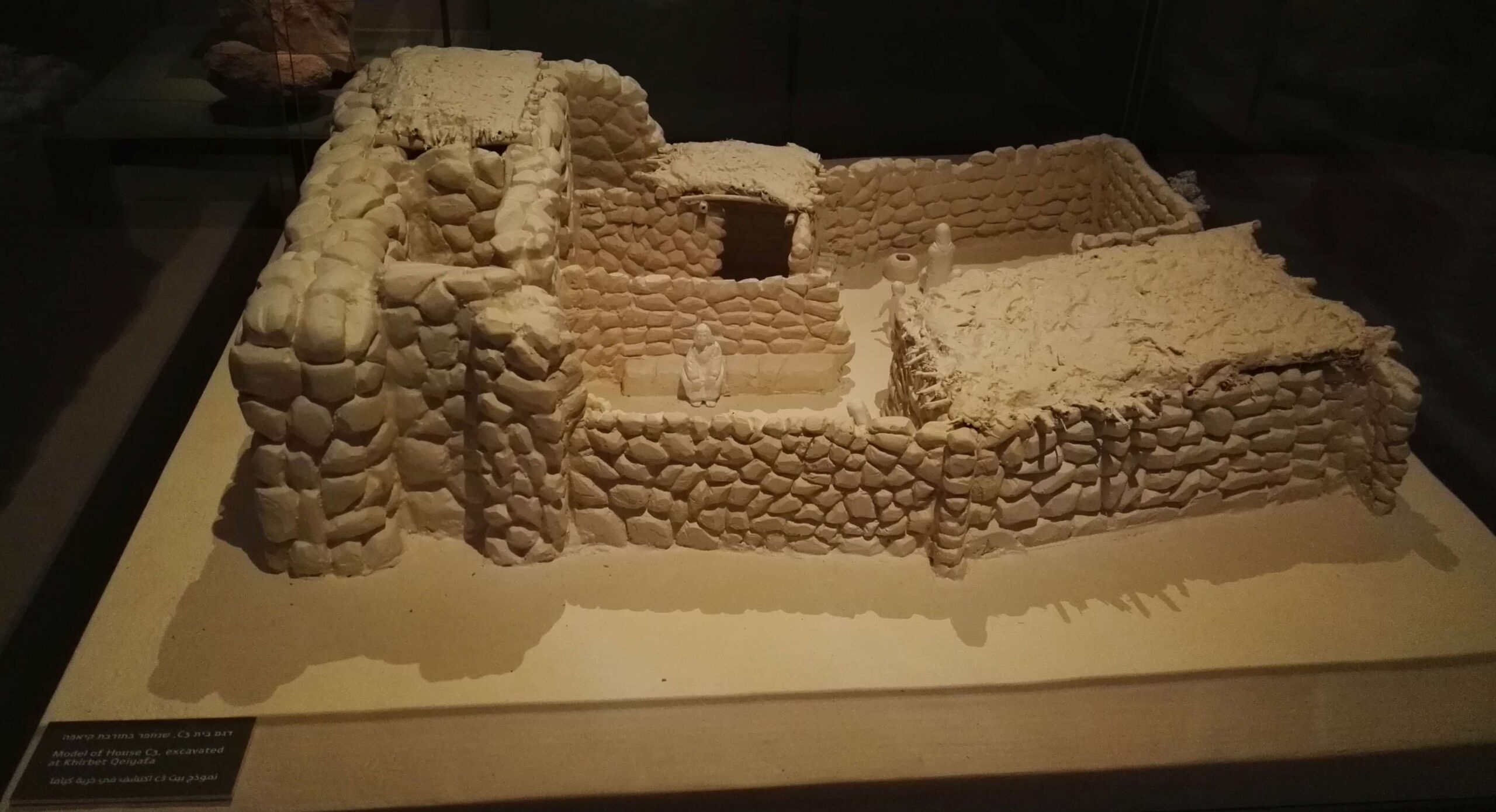
Excavators found casemate walls, planned streets, imported pottery, animal bones, and public buildings at the site, along with a limestone building model reflecting architectural ideas tied to royal and sacred construction. Skeptics have long argued that David’s Judah was too small and rural to match the biblical picture of an organized kingdom. Khirbet Qeiyafa pushes back on that claim with a fortified urban center, complete with trade connections and centralized planning, active in David’s generation.
Neighbors Who Were Genuinely Dangerous
The Philistines ruled five major cities along the coast: Gath, Gaza, Ashkelon, Ashdod, and Ekron. From strongholds like Gath, they pressed into the hill country where early Israelite communities were forming. The western gate at Khirbet Qeiyafa faces Gath directly, a reminder that this was a contested border, not a peaceful backdrop.
Scripture frames the young shepherd’s stand there in exactly those terms: “The Lord will deliver me from the hand of this Philistine” (1 Samuel 17:37).
Quick Q&A
Q: Does this prove Goliath existed? A: No. Archaeology confirms the setting, the fortifications, and the timeline. It can’t excavate a single individual’s biography.
Q: Why do the two gates matter so much to researchers? A: A double-gated city in this exact location, matching a place-name from the biblical text, is rare enough to be significant on its own.
Fun fact: The olive pits used for dating were found burned in a destruction layer, likely from a hostile attack on the city itself.
Come Walk the Valley
There is nothing quite like standing where David once stood, feeling the same wind, seeing the same ridgeline he saw before he ran toward Goliath instead of away from him. A trip through the Elah Valley turns a familiar Bible chapter into a place you can touch, and that changes something in you. The Israel Museum and Bible Lands Museum in Jerusalem hold artifacts from this exact period, close enough to reach out and nearly touch the world David lived in. Walking the gates, the ridge, and the open field where the Philistine camp once stood, you stop reading the story and start living inside it. Few experiences will move you the way this valley does, watching a Bible story rise up out of the ground and become real beneath your own feet.
Discussion0
No comments yet — be the first to share your thoughts.