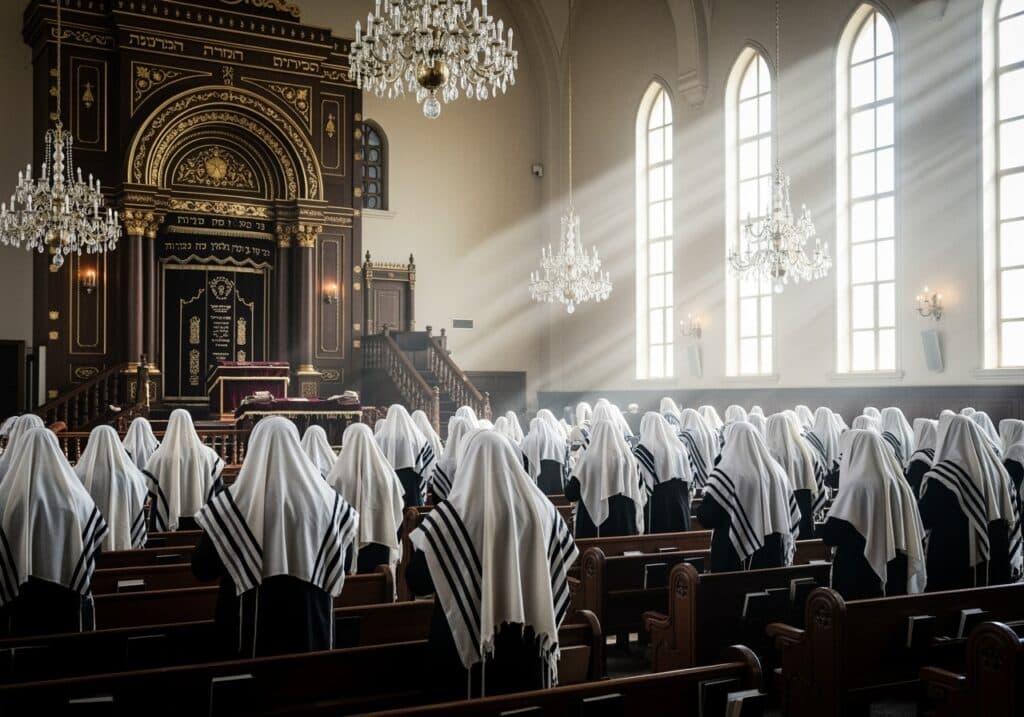

Wherever you find a synagogue in the world, you can bet it’s facing Jerusalem | Photo: Shutterstock
Takeaways
- Jews across the globe turn their bodies toward Jerusalem three times a day.
- The practice traces back to a covenant God made with Abraham in Genesis.
- The Talmud calls the Temple Mount the gate through which prayer rises to heaven.
- Nearly a third of the Torah’s commandments can only be fully kept in the Land of Israel.
- Visitors describe feeling a presence at the Western Wall that stays with them for years.
An elderly man in a small village in Yemen used to get up right before sunrise every single day and pray facing the same wall in his own home. On it he’d painted one word in fading blue paint: Mizrach, meaning “East.” Jerusalem was a place he knew only through stories his grandparents told him, a spot his family had faced in prayer for generations without ever going back. Every morning, though, he stood at that wall and prayed like the Temple was standing right there in front of him.
1. A Promise That Started It All
That habit, repeated by millions of people across hundreds of years, goes back to a promise in Genesis 12:1, when God tells Abraham, “Go from your land, from your birthplace, from your father’s house, to the land that I will show you.” Jewish tradition reads that opening phrase, Lech Lecha, as something closer to “go toward yourself.” In other words, this land was central to who this people were going to become. That’s the reason the direction of prayer was never optional. It’s the reason a promise made to one man in Genesis still shows up in how millions of people orient their bodies every single day.
2. A Covenant Written Into the Ground
The promise to Abraham came with two parts that Jewish thought treats as a package deal: a people and a place. That gets written into actual law at Sinai, where about two hundred of the Torah’s 613 commandments only work if you’re standing in the Land of Israel. Think agricultural tithes, the sabbatical year, the whole system of Temple service. According to Jewish tradition, these commandments hit their full expression only inside the Land’s borders (Nachmanides). Everywhere else, Jewish tradition holds, Jews are basically practicing for the real thing.
3. The Gate Heaven Left Open
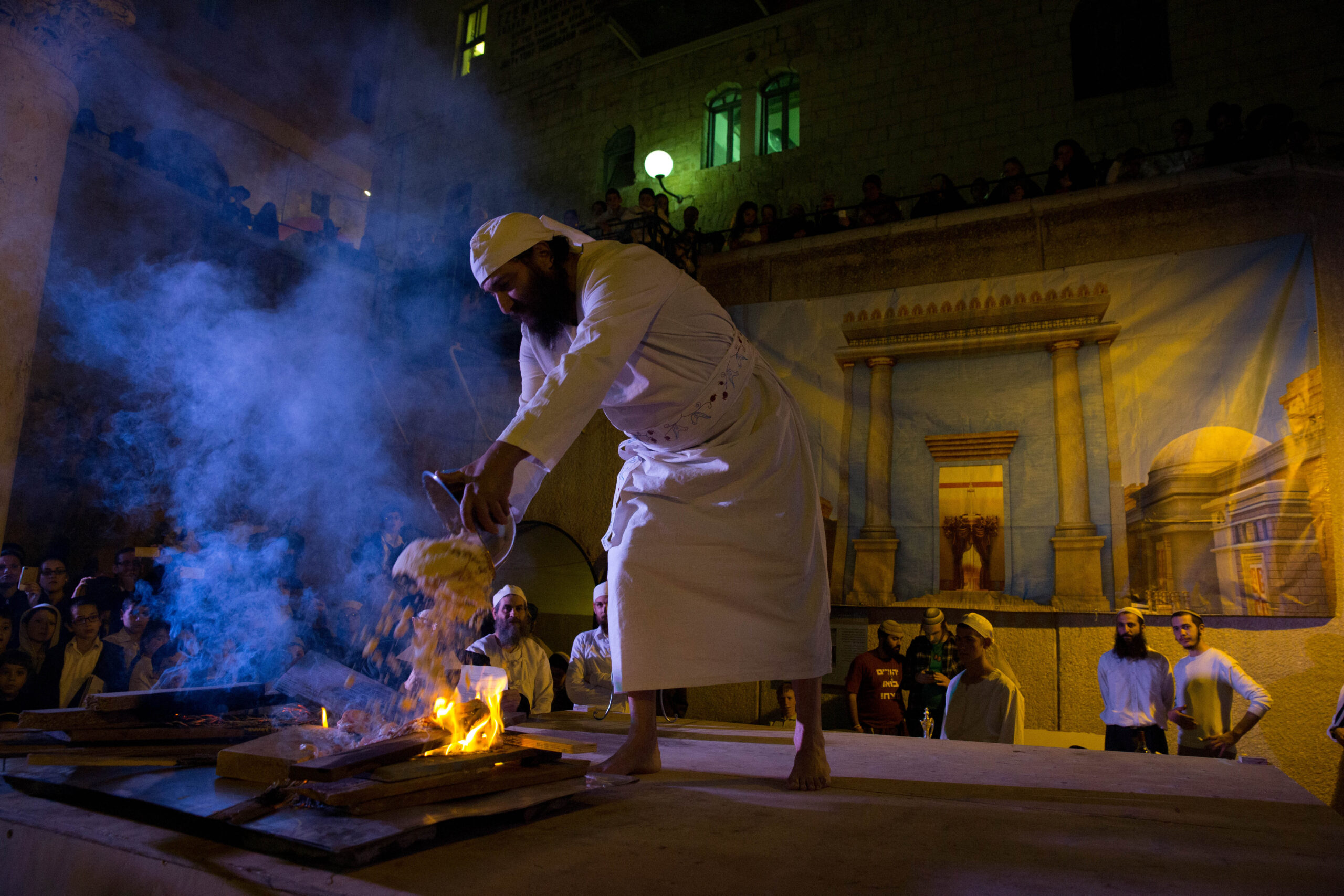
According to Jewish tradition, the Temple Mount carries a specific title, the Gate of Heaven, meaning the spot where prayer goes up most directly. That’s the actual reason synagogues around the world are built facing Jerusalem, and why people praying in Warsaw or Baghdad or anywhere else have aimed their prayers at that same patch of ground. This is treated as real spiritual geography.
Deuteronomy adds a detail worth sitting with. It calls Israel a land “the Lord your God scrutinizes constantly, from the beginning of the year until the end” (11:12). And history has basically lined up with that verse. Travelers described the land as pretty barren during the centuries Jews were exiled from it, and then within a generation of Jews coming back, the same ground was growing citrus groves, forests, whole cities.
4. A Vineyard Needs Its Own Soil
Also according to Jewish tradition (Rabbi Yehuda Halevi, in his book the Kuzari), the Jewish people are like a vine that only produces its real flavor in one particular soil. Take that same vine and plant it somewhere else, and the grapes come out different, even though the vine hasn’t changed at all. The point ties to the nation’s job description, to be “a kingdom of priests and a holy nation,” designed for one specific setting, not anywhere in general. That job was assigned at Sinai, but it only gets carried out inside the Land of Israel itself.
That’s a big part of why the direction people pray in matters so much here. Jews scattered across the globe, all aiming their prayers at one hillside, are basically keeping a national assignment on the books even while they’re stuck somewhere else. You can think of it like this: the centuries in exile just left that assignment sitting unfinished for a really long time.
5. Longing for Zion Is Like Being Born There
Jewish tradition (Talmud) states that, of Zion it will be said, “this one and that one were born in her,” meaning both people actually born there and people who spent their whole lives wanting to see it. Rabbi Chaim Sonnenfeld once ruled that a Jew could call himself “from Israel” based purely on that longing, treating the desire to return as its own kind of citizenship. Joseph, dying in Egypt, called himself a man “from the land of the Hebrews,” and his remains got carried through the desert for decades until they finally made it there.
Standing Where the Words Still Live
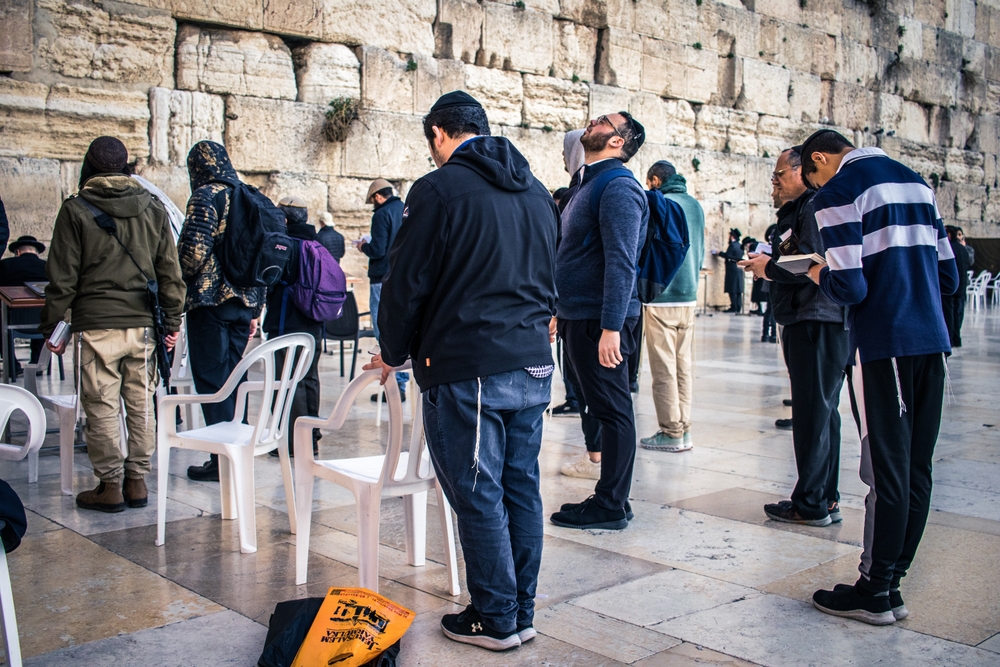
These days, you can walk into the Old City, put your hand on the Western Wall, and feel something that sticks with you well after you’ve gone home. It’s just stone, worn smooth by centuries of people leaning against it, and it’s held a nonstop stream of prayer since the first Jews prayed there.
Back in that Yemenite village, the blue paint on the wall eventually wore off to the point you couldn’t read it anymore. That never really mattered. The paint was just a marker, a way to remember which direction to face. What stuck around was the habit itself, going back three thousand years, and it’s still alive today in every Jew who turns east to pray and in every visitor who finally stands at that same wall in person. That’s the whole story of this small strip of land in one image: people who never stopped facing it, waiting for the day they’d finally arrive.
Discussion0
No comments yet — be the first to share your thoughts.