U.S. Returns MQ-4C Triton To Region Amid Iran Escalation
The U.S. military reportedly returned the MQ-4C Triton intelligence drone to the region, suggesting a renewed need for surveillance amid Iran-linked escalation

Israel HaBahiyr
·08:40
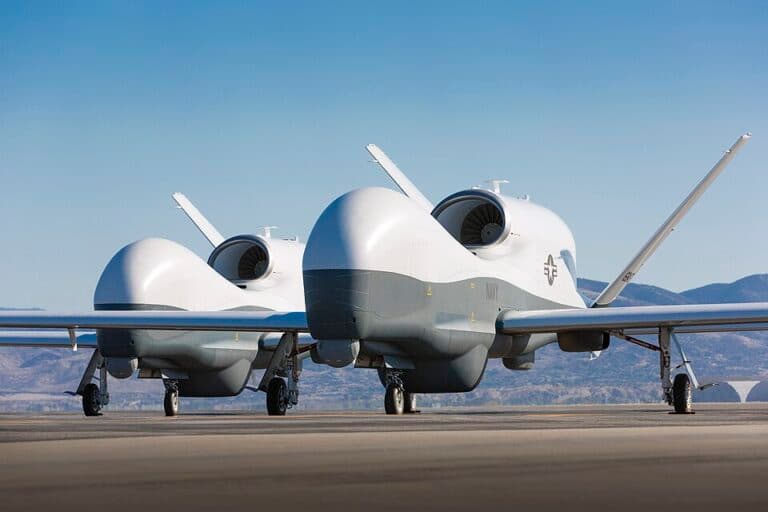
The U.S. military has reportedly returned the MQ-4C Triton to the region after a week of absence, raising new questions about American intelligence needs during the confrontation with Iran.
The Triton is one of the U.S. Navy’s most expensive intelligence-gathering platforms, with an estimated cost of about $200 million per unit. It is an unmanned aerial vehicle that operates at high altitude and is designed for intelligence collection over seas and oceans.
According to the report, the aircraft had been absent from the area due to concern that it could be shot down. However, its return now suggests that Washington sees a more urgent need for intelligence collection.
The Tanakh says, “A prudent man sees danger and hides himself.” That verse fits the military logic behind surveillance. Before a nation moves, it must see clearly. Before it strikes, it must understand the battlefield.
MQ-4C Triton Return
The reported return of the MQ-4C Triton does not confirm that a wider American campaign is imminent.
However, it may point to increased preparation. High-altitude intelligence platforms help track movement across maritime routes, military zones, and strategic corridors. In a region shaped by Iran, Iraq, the Gulf, the Red Sea, and the eastern Mediterranean, that kind of surveillance can become essential before major decisions.
For the United States, the return of such a valuable platform signals seriousness. Washington does not risk expensive intelligence assets unless the information they gather matters. For Israel, the development is also relevant. Iran’s regional activity affects Israel through Hezbollah, Iraqi militias, the Houthis, Hamas, and direct military threats. Better American intelligence can strengthen the wider picture that Israel needs in order to prepare, deter, and respond.
Iraq, Iran, And The Wider Threat

This issue connects directly to “Iraqi Shiite Militias Threaten To Join Fight Against U.S.” Iraqi Shiite militias threatened to join the fight against the United States if the campaign against Iran expands, raising concerns for America, Israel, and Iraq’s sovereignty.
If Iran-backed militias are threatening American interests and bases, the United States needs stronger visibility across the region. It must know where threats are forming, how forces are moving, and whether escalation is spreading beyond Iran itself.
For Israel, this matters because Iran’s proxy system rarely moves in isolation. A threat from Iraq can affect Syria, Lebanon, Jordan, the Gulf, and eventually Israel’s borders. Therefore, intelligence collection is not only a technical matter. It is part of deterrence.
Covenant Of Vigilance And Defense
The United States and Israel share a covenantal understanding before God rooted in protection, freedom, and the defense of life.
Both nations believe that evil must be identified before it is allowed to advance. Both understand that security requires watchfulness. Both also know that free nations cannot wait passively while hostile regimes and terror networks prepare the next attack.
America’s intelligence platforms help protect U.S. forces, allies, shipping routes, and regional stability. Israel’s intelligence and defense posture help expose threats from Iran’s network before they reach Israeli civilians. Together, the two countries face the same strategic challenge: Iran does not rely only on one battlefield. It uses drones, missiles, militias, maritime pressure, and propaganda to stretch the region.
The Triton’s reported return shows that Washington may be preparing for a wider and more complex picture. For Israel, that picture is already familiar. Ultimately, the aircraft’s return signals that intelligence has become urgent again. In a region where one miscalculation can ignite multiple fronts, seeing first can mean surviving first.
For more stories on Israel, faith, and the values behind the headlines, follow Sinai on Facebook and Instagram.
Discussion0
No comments yet — be the first to share your thoughts.