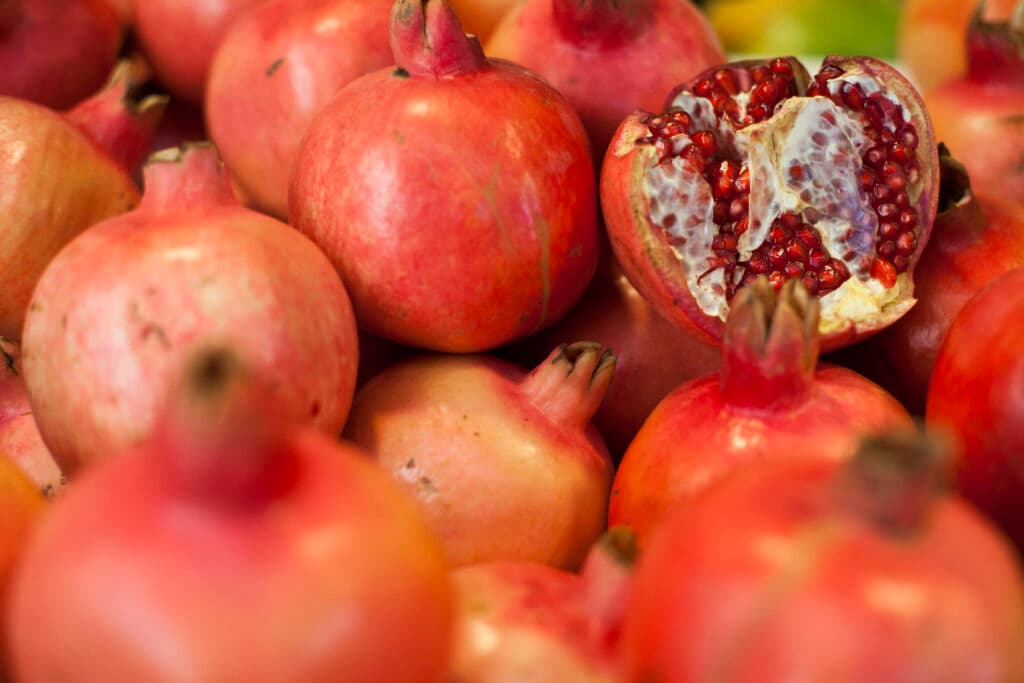

Pomegranates sold for the Jewish New Year, Rosh Hashana, at the Mahane Yehuda market in Jerusalem. Pomegranates are used in the Jewish ritual of the new year because they supposedly contain 613 seeds, and by eating the pomegranate Jews display their desire to fulfill the 613 commandments written in the Torah | Photo: Noam Revkin Fenton/Flash90
Takeaways
- Jewish families open the New Year with a table full of hidden meaning, not just a meal.
- These symbolic foods, called simanim, turn a dinner into a spoken prayer.
- Each food is chosen because its Hebrew name sounds like a blessing.
- A pomegranate can represent hundreds of good deeds in a single fruit.
Picture a dinner table where every single item, down to the shape of the bread, carries its own quiet meaning. That’s the Jewish New Year ‘Rosh Hashanah’ table. Jewish families have been sitting down to it for centuries, and it’s built around a custom that’s honestly one of the most beautiful things in Jewish tradition: simanim, the Hebrew word for “signs.”
Most people outside the tradition know the apple and honey part. Fewer people know there’s an entire structured, ancient ritual built around specific foods, each one carrying its own wish for the year ahead. It’s called a seder, the same word used for the Passover meal, and it turns the festive Rosh Hashanah dinner into something closer to a spoken map of hope.
(image)

Why Food Becomes a Kind of Prayer
Here’s the idea at the center of it all. In Jewish tradition, food isn’t just something you eat. It can become language.
The simanim were chosen because their Hebrew or Aramaic names sound like words tied to blessing, protection, or growth. You hold the food, say a short line that starts with “Yehi ratzon,” meaning “may it be Your will,” and then you eat it.
The wish turns into something concrete, something you can taste (as opposed to something abstract).
The Full Order of Blessings
The custom follows a set sequence, the same one many traditional households still use today. Here’s the order, along with what each food represents:
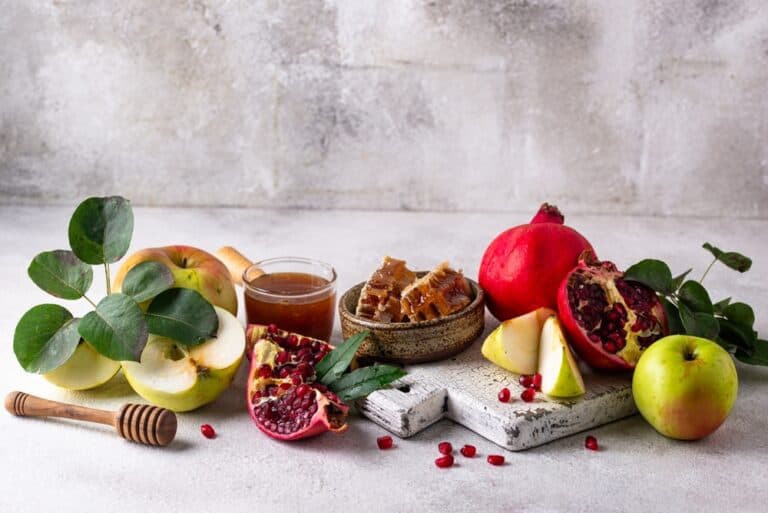
- Apple dipped in honey – a wish for a year filled with sweetness
- Dates – a wish to overcome the struggles that hold a person back from within
- Pomegranate – a wish for a year overflowing with good deeds
- Squash or gourd – a wish to be shielded from hardship
- Leeks – a wish to grow into a better way of living
- Beets – a wish for a joyful year ahead
- Black-eyed peas – a wish for real spiritual growth
- Carrots – a wish for abundance, both physical and spiritual
- The head of a fish or ram – a wish to lead rather than follow
The Wordplay Behind the Wishes
This is where it gets genuinely clever. The custom relies on a kind of sacred pun, where the sound of a food’s name lines up with the sound of a spiritual request.
Leeks, called karti in Hebrew, sound like the word for “to cut off.” So the prayer asks that anything harmful be cut away from a person’s life.
Beets, or selek, echo the word for “to depart,” and the request is that hardship would leave.
A gourd, kara, carries a double meaning: it can sound like “to tear” a harsh decree, or “to announce” someone’s good deeds.
None of this is superstition. It’s a disciplined way of focusing the mind, tying together what you taste, what you say, and what you actually want for the year sitting in front of you.
Apple and Honey Isn’t Just for Kids
The apple dipped in honey gets treated like the “beginner” part of the custom, but there’s real depth underneath it. The basic request is a sweet and good year.
Jewish sources add another layer. The apple has been linked to a longing for closeness with God, an image pulled straight from the Song of Songs. And honey isn’t just sweet, it’s sweet that lasts. Fruit syrups spoil fast, but bee honey holds. The wish tucked inside that dip isn’t for a moment of sweetness. It’s for joy that doesn’t fade.
A Fruit Packed With Meaning
Few foods on the table carry as much symbolism as the pomegranate. Its hundreds of tiny seeds become a picture of hundreds of good deeds, and the accompanying line asks that the coming year be just as full.
Leadership, Not Just Luck
One of the more striking simanim involves the head of a fish, paired with the line, “may we be the head and not the tail.” It’s a request for the ability to lead rather than simply follow whatever happens.
When a ram’s head is used instead, it carries an added layer, calling to mind the binding of Isaac and the ram that appeared in his place. That single detail links the New Year table back to one of the oldest stories of trust and divine provision in the entire Hebrew Bible.
A Circle on the Table
Even the bread gets in on it. Rather than the braided loaf used the rest of the year, Rosh Hashanah challah is baked round.
A circle has no beginning and no end. It quietly echoes the same idea running through every siman on the table: endings can lead to beginnings, and a new season can carry real renewal with it.

What This Custom Reveals
Step back, and the whole practice starts to look like something remarkable. A tradition took abstract hopes, things like protection, growth, and lasting sweetness, and found a way to make them physical.
You can hold them. You can say them out loud. You can taste them.
For anyone curious about how faith, language, and daily life can weave together this tightly, the Rosh Hashanah table offers a small but vivid window into the depth of wisdom running through Jewish tradition.
Discussion0
No comments yet — be the first to share your thoughts.