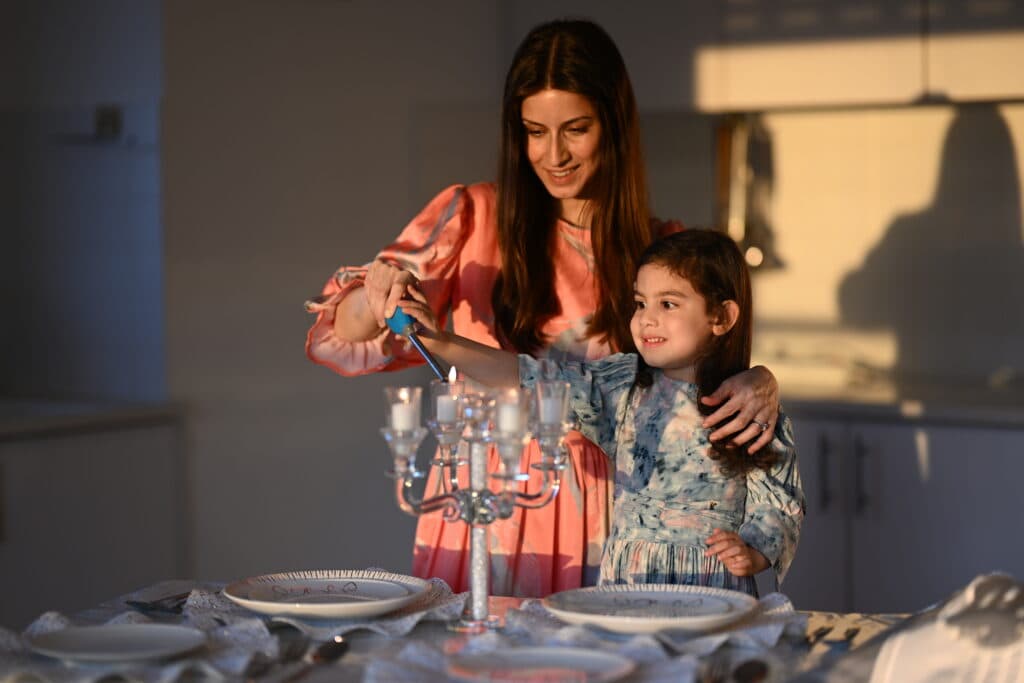

Lighting of the shabbat candles. | Photo: Mendy Hechtman FLASH90
In the 19th century, a Ukrainian Zionist named Asher Ginzburg, who went by the pen name Ahad Haam (meaning “one of the nation”), made a profound observation: “More than the Jews have observed and protected Shabbat, Shabbat has protected the Jews!” His insight highlighted the Bible’s extraordinary gift – the sanctification of a day that transcends mere rest.
What makes the Jewish Sabbath so unique and universally compelling? How have biblical and rabbinic laws, developed over thousands of years, transformed Shabbat into a spiritual lifeline for the Jewish people and potentially for humanity?
“And God Blessed the Seventh Day and Declared it Holy”
We begin at the very beginning – creation itself: “On the seventh day God finished the work that had been undertaken: [God] ceased on the seventh day from doing any of the work.
And God blessed the seventh day and declared it holy—having ceased on it from all the work of creation that God had done.” (Genesis 2:2,3)
During the first six days, God created through word, bringing a world into existence. On the seventh day, God ceased creative activity, marking the work as ‘complete’ and ‘good’. The Hebrew verb SHBT (ceasing) is more than passive inaction – it’s a transformative spiritual state.The Torah reveals a profound three-fold process:
- Ceasing (negative action)
- Blessing (positive spiritual elevation)
- Sanctification (positive spiritual transformation)
This nuanced approach suggests Shabbat is not merely about stopping work, but about elevating consciousness and creating sacred space.
This weekly series will explore the radiance of Shabbat in the following areas:
- Liturgical traditions
- Preparation customs
- Special prayers
- Meal-related rituals
- Negative commandments preserving the day’s sanctity
Some laws trace back thousands of years, while others are recent interpretations – all contributing to this beautiful, powerful tradition.
Significance of Shabbat to Humanity
While Shabbat is a central pillar of Jewish observance, its universal appeal extends beyond the Jewish community. The concept of a weekly day of rest resonates with people from various backgrounds, offering a model for balanced living and spiritual renewal.
The idea of Shabbat as a universal principle is rooted in the creation story itself. According to Genesis, the Sabbath was established at the very beginning of time, suggesting its relevance to all of humanity. This universal aspect is further emphasized in Isaiah’s prophecy, which envisions a future where people from all nations will observe the Sabbath and find joy in God’s house of prayer.
However, it’s important to note that while the principle of rest and renewal is universal, the specific religious observance of Shabbat is unique to Judaism. Non-Jews are not obligated to keep Shabbat in the same manner as Jews, and in fact, rabbinic tradition suggests they should not fully observe it as Jews do. Nevertheless, the core values of Shabbat – rest, reflection, and connection – can be appreciated and adapted by anyone seeking to create sacred time in their lives.

Rabbi Avi Baumol grew up in New York and has a B.A. in Economics and an M.A. in Medieval Jewish History from Yeshiva University. He has been an educator, author, tour guide and lecturer for over three decades and currently lives in Judea with his wife and children.
Discussion0
No comments yet — be the first to share your thoughts.