Israel’s Foreign Minister Makes First Historic Visit to Somaliland Following Recognition
The Hebrew prophets envisioned a future in which the nations of the world would be drawn to Jerusalem – not by force, but by shared purpose, spiritual clarity, and the pursuit of peace. “Many peoples will come and say, “Come, let us go up to the mountain of the Lord, to the temple of the God of Jacob” the prophet Isaiah foretold,

Hadas Amram
Opinion contributor··4 min read
The Hebrew prophets envisioned a future in which the nations of the world would be drawn to Jerusalem – not by force, but by shared purpose, spiritual clarity, and the pursuit of peace. “Many peoples will come and say, “Come, let us go up to the mountain of the Lord, to the temple of the God of Jacob” the prophet Isaiah foretold, describing a time when cooperation among nations under God would replace isolation and hostility. In that spirit, Israel’s new diplomatic ties with a nation from a hostile region seems a harbinger of this vision’s fulfillment.
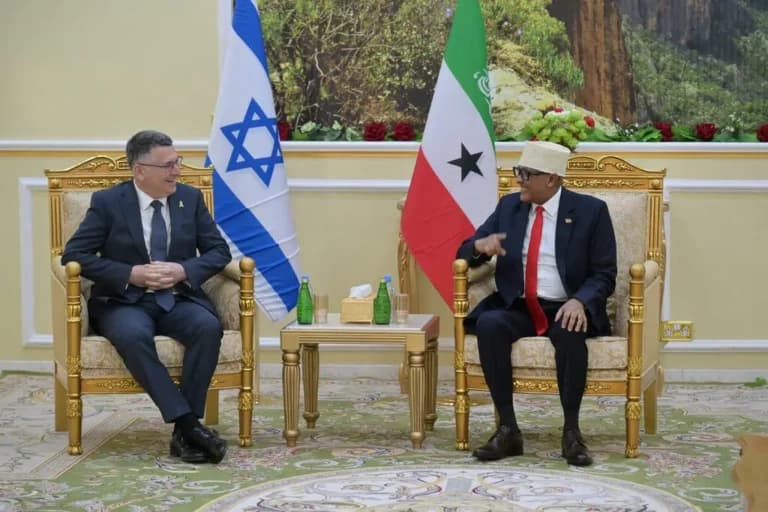
Today (Tuesday), Israel’s Foreign Minister Gideon Sa’ar paid a discreet but historic official visit to Hargeisa, the capital of Somaliland, marking the first such diplomatic visit following Israel’s recent recognition of the African territory as a sovereign state.
The visit, conducted at the invitation of Somaliland President Abdirahman Mohamed Abdullahi, was carried out quietly at the request of security officials and cleared for publication only afterward. During the visit, Sa’ar met with President Abdullahi and senior members of the Somaliland government, including Foreign Minister Abdirahman Dahir Adam, Minister of the Presidency Khadir Hussein Abdi, and Chief of Staff Nimcaan Yusuf Osman. The meetings were held at the official presidential palace in Hargeisa.
Somalia reacted sharply to the visit, with Somalia’s Foreign Ministry issuing what it called a “strong condemnation” of what it described as the “unauthorized entry” of Israel’s foreign minister into Hargeisa, claiming the city as part of Somalia’s sovereign territory.
Despite the criticism, Sa’ar emphasized the significance of the developing relationship. “Israel and Somaliland signed a historic agreement on mutual recognition and the establishment of full diplomatic relations,” he said. “We agreed to work together to promote relations between our countries for the sake of mutual prosperity”. Sa’ar added that Israel’s Foreign Ministry is already working to build ties across a wide range of fields, including the economy and agriculture, as well as water, medicine, and defense.
President Abdullahi for his part, said the visit “reflects not only political recognition but also a shared commitment to transform that recognition into a substantive forward-looking and strategic partnership.” He went on to declare his acceptance of Prime Minister Benjamin Netanyahu’s invitation to visit Israel and announced his intention to open a Somaliland embassy in Jerusalem.
See the full statement by the President of Somaliland :
Strategic and Regional Implications
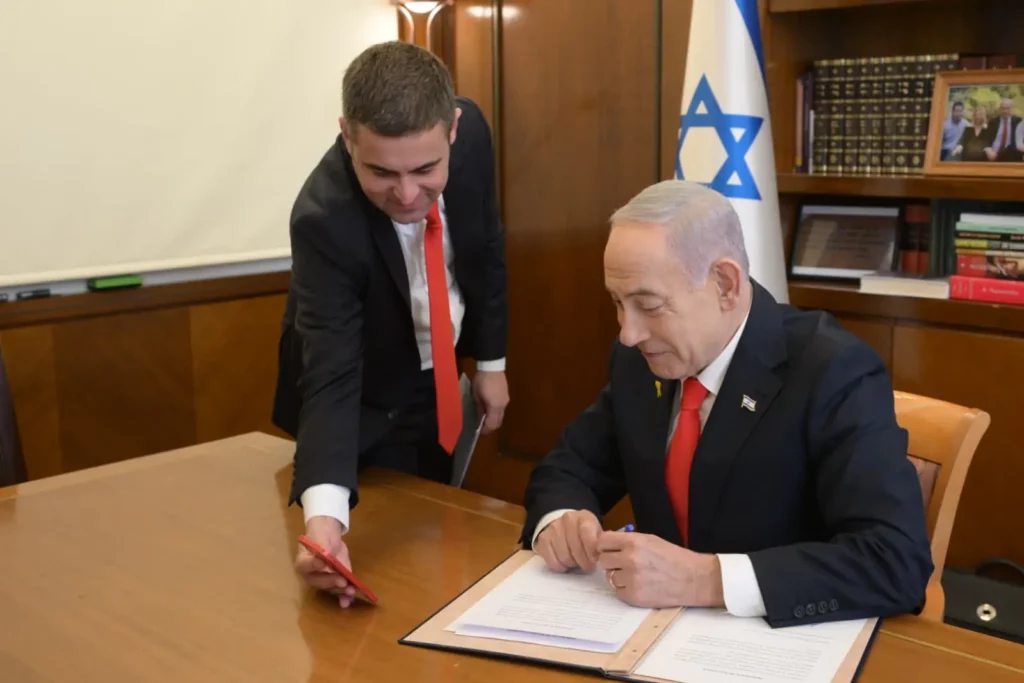
The visit follows Israel’s formal recognition of Somaliland as a sovereign state on December 26, 2026, making Israel the first United Nations member country to do so. The recognition was signed by Prime Minister Benjamin Netanyahu, Foreign Minister Sa’ar, and President Abdullahi. A senior Somaliland official said that Israel’s decision “changed the rules of the game in Africa.”.
In an interview on the Jerusalem Center for Security and Foreign Affairs’ “East to West” podcast, Mustafa Hassan, former head of Somaliland’s intelligence services, said that Israel’s recognition carries far-reaching regional and international implications.
“This is not a matter of opinion—it is a matter of law and history,” Hassan said, noting that Somaliland was recognized as an independent state as early as 1960, including by Israel. “The union with Somalia was never legally finalized.”
Hassan also pointed to potential future security cooperation with Israel. “We will protect Western interests, and especially Israel’s interests,” he said, highlighting Somaliland’s strategic position along critical maritime routes. “Iran is arming the Houthis, and we must share intelligence to stop this.”
Against the backdrop of threats from the al-Qaeda–affiliated terror group al-Shabab and criticism from parts of the Arab and African world, Hassan concluded: “We are a stable, democratic state with strong security institutions. Israel’s recognition breaks the isolation—and others will follow.”
“An Enduring and Warm Friendship”
In his statement, Foreign Minister Sa’ar affirmed: “We want to build an enduring and warm friendship not only between governments but also between the people of Somaliand and the people of Israel”.
He made the case for Somaliland’s bid for recognition, pointing to its history of independence and its record as a functioning democracy. “We are truly moved to play a part in Somaliland’s bold journey from independence to recognition,” he said.
Sa’ar concluded his remarks with a blessing: “In the words of Somaliland’s national anthem, may your nation live in eternal peace. May these historic days and moments be the beginning of a close friendship between our nations for many years to come. God bless Somaliland. God bless Israel”.
Discussion0
No comments yet — be the first to share your thoughts.