Israel to Release Five Lebanese Detainees
Israel is expected to release five Lebanese detainees in coordination with the U.S. as Jerusalem and Beirut continue negotiations over security and missing persons

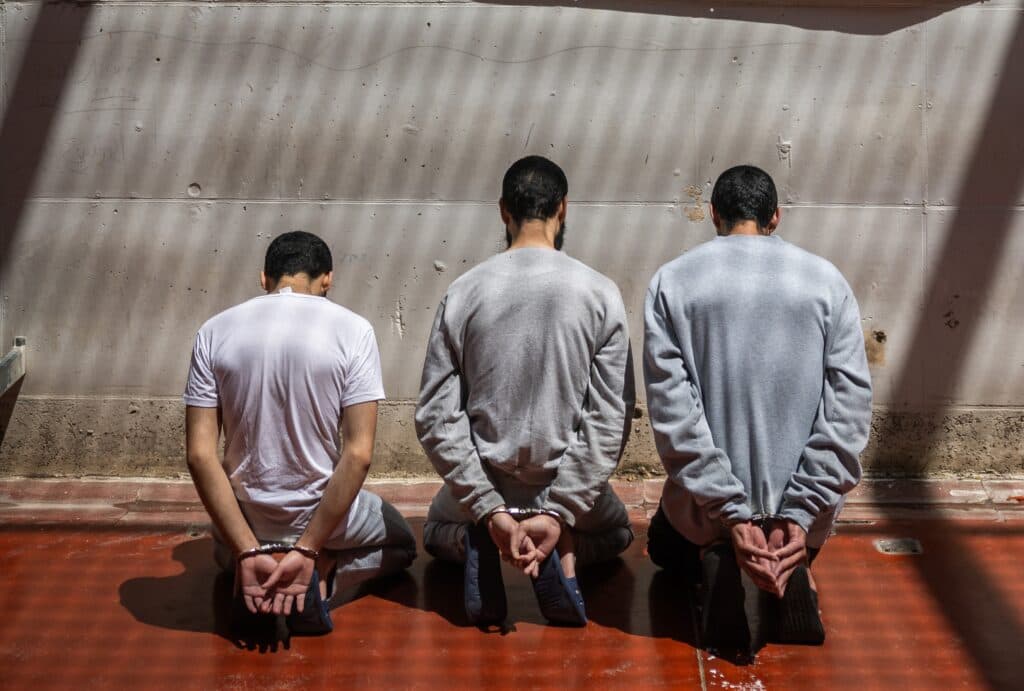
Israel is expected to release five Lebanese detainees on Thursday as U.S.-mediated negotiations between Jerusalem and Beirut continue, according to Israel’s Channel 12. The reported move would address one of the central humanitarian issues in talks that increasingly extend beyond immediate battlefield questions toward the future relationship between the two neighboring states.
The Jerusalem Post separately cited an Israeli source saying four or five detainees arrested in recent months would be released as a “gesture to the Lebanese government.” The move is being coordinated with Washington as the United States attempts to keep negotiations moving despite continued tensions over Hezbollah and southern Lebanon.
Zechariah 8:19 calls on Israel to “love truth and peace.” In this case, pursuing peace does not require abandoning security concerns. It means testing whether practical agreements, handled with clarity and reciprocity, can gradually replace a border defined for decades by Hezbollah’s weapons and repeated war.
Israel to Release Lebanese Detainees Through U.S.-Backed Talks
Detainees and missing persons have become a significant part of the negotiations. During the latest completed round in Rome, Israeli and Lebanese delegations exchanged preliminary lists concerning people held or missing on both sides. Lebanese negotiators pressed for an initial release of civilian detainees, while the legal track examined the issue under international law.
The talks have taken place under direct American sponsorship. The State Department said the Rome process is intended to advance lasting security, eliminate threats against Israel, and restore Lebanese government authority in southern Lebanon. Discussions have also covered border arrangements, military verification, ceasefire implementation, and areas where the Lebanese Armed Forces could assume greater responsibility.
That broader framework is what gives the detainee release importance beyond the individuals involved. A limited humanitarian measure cannot by itself resolve Israel’s security concerns. However, successful implementation can demonstrate whether Beirut is capable of negotiating directly, fulfilling commitments, and gradually replacing Hezbollah’s independent military authority with legitimate state institutions.
Reports later Thursday indicated that at least one Lebanese detainee had already been transferred back to Lebanon with assistance from the International Committee of the Red Cross. The reported wider release remained part of the evolving negotiations.
Beirut Faces the Larger Hezbollah Question
The diplomatic movement comes while Lebanon continues debating a much larger issue: whether its government can exercise genuine sovereignty over decisions of war and peace.
That debate was also at the center of “Nadim Gemayel: Lebanon Needs Ties With Israel.” Gemayel argued that Lebanon should strengthen relations with countries throughout the international community, including Israel, while confronting the question of Hezbollah’s future and Lebanon’s independence from Iranian influence.

The detainee talks offer a practical example of what that alternative could look like. Israel and Lebanon do not need to agree on every political question before officials can address missing persons, border arrangements, security mechanisms, and humanitarian concerns. Direct negotiation itself gives Beirut an avenue that does not run through Tehran or Hezbollah.
Yet the security obstacle remains substantial. Hezbollah has continued resisting efforts to disarm and has rejected elements of the developing Israel-Lebanon framework. The Iran-backed organization retains military positions and weapons in areas that Israel considers a continuing threat to northern communities.
For Israel, releasing detainees therefore represents a calculated diplomatic gesture, not an abandonment of deterrence. Jerusalem can participate in negotiations while maintaining that lasting calm requires Hezbollah to lose the ability to independently threaten Israeli civilians.
Washington has a major interest in making that distinction work. If American mediation can help move Lebanon toward stronger state authority while preserving Israel’s security requirements, the result would weaken one of Iran’s most important regional instruments without requiring every dispute to be settled through another war.
Sovereignty Built Through Responsibility
The American and Israeli traditions share a belief that national freedom carries responsibility before God. Both place value on lawful government, protection of human life, negotiated peace where possible, and strength when hostile forces refuse peaceful coexistence.
Those principles have particular relevance in Lebanon. A sovereign government must be able to negotiate for its citizens, control its borders, and decide national policy without an armed organization maintaining a separate foreign-backed military structure.
Israel’s interest is not a permanently weak Lebanon. A stable Lebanese state capable of enforcing its own sovereignty could become a more predictable neighbor than territory dominated by Hezbollah. The United States has similarly spent years supporting Lebanese state institutions while seeking to reduce Tehran’s ability to dictate events through armed proxies.
The release of five detainees is a small step compared with the unresolved questions surrounding Hezbollah, the border, and regional security. Yet diplomacy often advances through tangible measures before larger political breakthroughs become possible.
If the current process succeeds, its significance will extend beyond a prisoner file. It could show that Jerusalem and Beirut can resolve disputes through direct negotiation, backed by an American ally committed both to Lebanese sovereignty and Israel’s right to security.
For a region accustomed to Hezbollah declaring that only armed “resistance” can shape Lebanon’s future, even that limited shift would be meaningful.
For more stories on Israel, faith, and the values behind the headlines, follow Sinai on Facebook and Instagram.
Discussion0
No comments yet — be the first to share your thoughts.