Iranian Leadership Body Says U.S. President Cannot Be Trusted
Iran’s Assembly of Experts presidency said the U.S. president’s signature cannot be trusted, framing the confrontation with America as fundamental and decisive

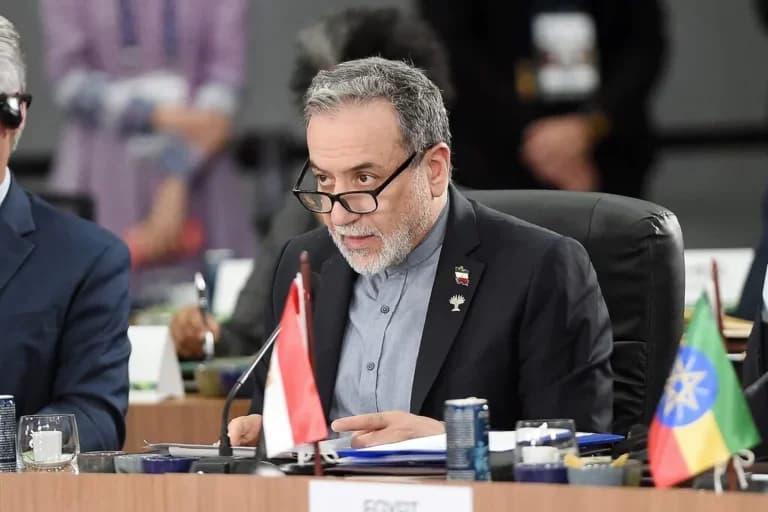
Iran’s Assembly of Experts presidency issued a sharp statement against the United States, saying repeated violations of a memorandum of understanding prove that the signature of the U.S. president “cannot be trusted.”
The statement argued that hope for understandings or an agreement with what it called the “arrogant regime” would produce no result. It also claimed that Iran’s people and armed forces remain ready to sacrifice their lives for the defense of honor, pride, and security.
The statement framed the confrontation between the Islamic Revolution and the so-called “front of arrogance” as fundamental. It also described the current war as “decisive,” warning that any attempt to underestimate the situation at this sensitive stage could cause historic damage.
The Tanakh says, “Trust in princes, nor in the son of man, in whom there is no salvation.” That verse gives this moment a serious frame. Agreements matter, but nations cannot build security on signatures alone when hostile regimes openly reject trust, compromise, and restraint.
Iran Assembly Of Experts Warning
The Assembly of Experts holds major ideological weight inside Iran’s system because it is tied to the leadership structure of the Islamic Republic. Therefore, this statement should not be read as routine political language. It reflects the worldview of Iran’s clerical establishment at a moment of heightened confrontation with the United States.
For Washington, the message creates a direct diplomatic problem. Iran is not only criticizing one agreement or one administration. It is saying the signature of the American president itself cannot be trusted. That kind of language narrows the space for negotiation. It also pushes the conflict toward deterrence, military readiness, and pressure rather than compromise.
For Israel, the statement confirms a long-standing concern. Tehran often uses negotiations to buy time, manage pressure, and preserve strategic projects while its leaders continue framing America and Israel as enemies in a historic struggle.
Impact For America And Israel
The United States faces a regime that publicly presents the conflict as ideological and decisive.
That matters because American policy cannot depend only on finding a diplomatic formula. Washington must also ask whether Tehran’s leadership actually wants a stable agreement, or whether it sees conflict with America as part of its revolutionary identity.
For Israel, the danger is even more direct. Iran’s hostility toward the United States usually comes together with threats against the Jewish state, support for terror proxies, and efforts to pressure Israel through Gaza, Lebanon, Iraq, Yemen, Syria, and the Gulf.
The Assembly of Experts statement also strengthens Israel’s argument that any agreement with Iran must include enforcement, verification, and consequences. A paper understanding means little if Iran’s senior leadership declares that trust itself is impossible.
Covenant Of Vigilance Against Deception
The United States and Israel share a covenantal understanding before God rooted in truth, liberty, justice, and the defense of life against tyranny.
America’s covenantal tradition emphasizes freedom under God, lawful strength, and the duty to defend a constitutional nation against enemies who seek its humiliation. Israel’s covenant is ancient and unique, rooted in the God of Israel, Torah, Jewish peoplehood, and the return to the land.
America cannot ignore a regime that says its president’s signature has no value and frames the conflict as a decisive struggle. Israel cannot ignore a regime that uses the same ideological hostility to support terror networks surrounding the Jewish state.
The issue is not whether diplomacy should ever happen. The issue is whether diplomacy can work without strength behind it. Ultimately, Iran’s statement sends a clear message. Tehran’s leadership is preparing its people for confrontation, not reconciliation. For the United States and Israel, that means any path forward must rest on clarity, deterrence, and the refusal to mistake rhetoric for moderation.
For more stories on Israel, faith, and the values behind the headlines, follow Sinai on Facebook and Instagram.
Discussion0
No comments yet — be the first to share your thoughts.