Iran Claims Strikes On U.S. Gulf Targets
Iran claimed UAV attacks on American targets in Qatar, Bahrain, and Kuwait after U.S. strikes, raising new concerns for U.S. deterrence and Israel’s security

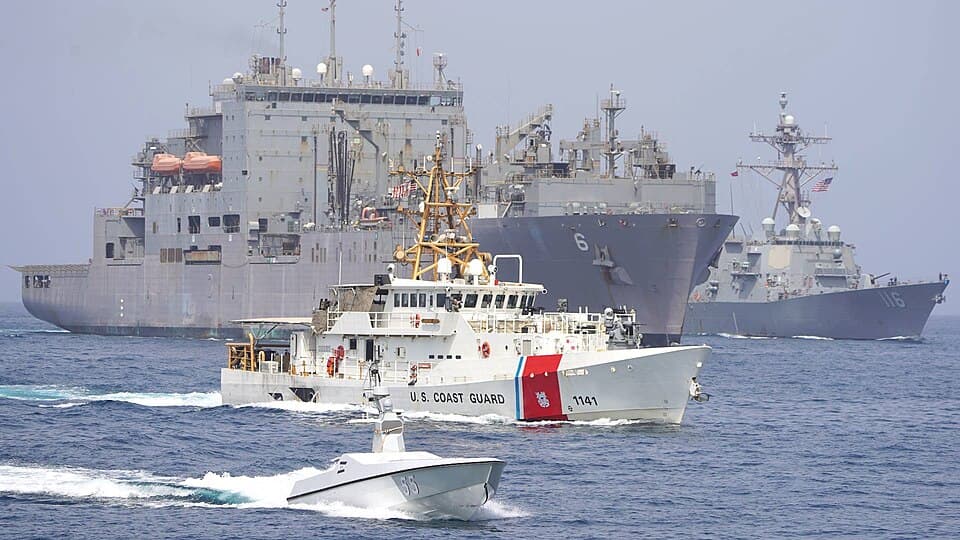
U.S. Gulf targets came under attack, according to an Iranian military announcement issued after last night’s American strike on Iran.
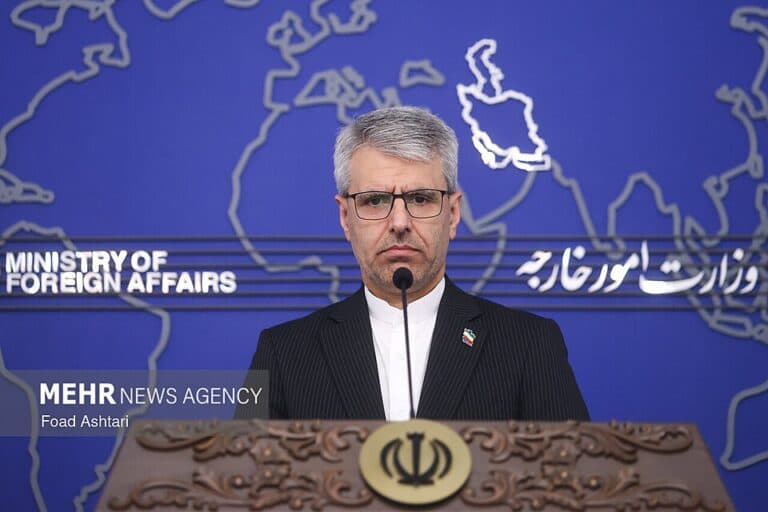
The Iranian army said it attacked American targets in Qatar, Bahrain, and Kuwait in response to the U.S. operation.
According to the announcement, Iran used a large number of UAVs earlier this morning.
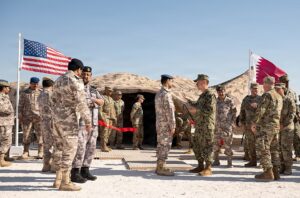
Iran said the drones targeted Patriot systems in Kuwait, satellite reception facilities and early warning sites in Qatar, and American military fuel depots in Bahrain.
The Tanakh says, “The horse is prepared for the day of battle, but victory belongs to the Lord.” That verse speaks to preparation, deterrence, and humility before God in moments of war.
Iran Targets U.S. Gulf Sites
Iran’s claimed retaliation shows how quickly the conflict can spread beyond Iranian territory.
The targets Iran named are not random.
Patriot systems protect American forces and Gulf partners from missiles and drones. Early warning sites help detect incoming threats. Fuel depots support military movement, aircraft, logistics, and regional readiness.
Therefore, Iran’s message was clear.
Tehran wants to pressure the American military network across the Gulf. It also wants Gulf states to feel the cost of hosting U.S. forces.
For Washington, this tests American deterrence.
If Iran can strike near U.S. assets in Kuwait, Qatar, and Bahrain without paying a serious price, it may invite more attacks. It could also shake confidence among American partners.
Impact For America And Israel
The attacks also matter for Israel.
Iran uses the same regional strategy against both America and Israel. It targets ships, bases, borders, and supply routes to stretch its enemies across several fronts.
That issue also stands behind “U.S. Hits Strategic Iran Railway Bridge.” Iranian media reported a U.S. strike hit a strategic railway bridge near Ak-Qala, targeting a corridor tied to Iran, Russia, China, and post-Hormuz trade pressure.
Now Iran appears to be answering in the Gulf.
For the United States, the immediate challenge is force protection. American troops, bases, air defense systems, and logistics hubs all need stronger protection.
For Israel, the broader issue is Iran’s escalation pattern.
Tehran threatens Israel through Hezbollah, Hamas, Islamic Jihad, the Houthis, and militias in Syria and Iraq. At the same time, it threatens American interests through Gulf attacks, maritime pressure, and strikes on regional infrastructure.
That means Israel and America face the same engine of instability.
A Shared Moral Calling
The United States and Israel both rely on strength, readiness, and moral clarity.
They also share a covenantal understanding before God.
America’s covenantal tradition rests on liberty under God, ordered justice, and moral responsibility. Israel’s covenant is older and unique. It rests on God’s promise, Jewish peoplehood, Torah, and the return to the land of Israel.
Those covenants are not identical. However, they meet in a shared calling: defend life, resist tyranny, and protect free nations from violent regimes.
In this story, that shared calling means refusing to let Iran turn the Gulf into a battlefield at will.
For America, that means defending its forces and allies. For Israel, it means recognizing that every blow to Iranian aggression helps weaken the system threatening the Jewish state.
Iran’s claim of attacks in Qatar, Bahrain, and Kuwait marks another dangerous step. It shows that Tehran wants to widen the confrontation and test whether American resolve will hold.
For more stories on Israel, faith, and the values behind the headlines, follow Sinai on Facebook and Instagram.
Discussion0
No comments yet — be the first to share your thoughts.