Hungary Moves To Remove President Tamás Sulyok
Hungary’s parliament approved a constitutional amendment to remove President Tamás Sulyok, raising questions for Europe, America, and Israel

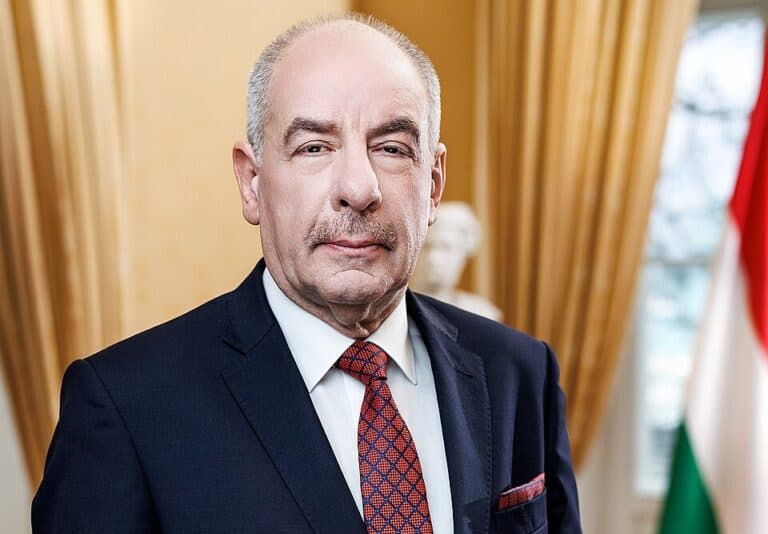
Hungary constitutional amendment efforts moved forward after Prime Minister Péter Magyar kept a major campaign promise and advanced legislation to remove President Tamás Sulyok.
Hungary’s parliament approved the 17th amendment to the Fundamental Law, under which Sulyok is removed from office.
The legislation passed by a special two-thirds majority in the National Assembly, thanks to the majority held by Magyar’s ruling Tisza party.
The Tanakh says, “Justice, justice shall you pursue.” That command speaks not only to courts, but also to national leadership, public trust, and the moral responsibility of government.
Hungary Constitutional Amendment
Magyar’s government presented the move as part of a wider effort to reshape Hungary after the Orbán era.
Sulyok, who became president under the former political order, had faced pressure to resign. Instead, Magyar’s government moved through parliament.
The presidency in Hungary carries limited day-to-day power. However, the office still matters because it represents state continuity, constitutional legitimacy, and national authority.
Therefore, the removal of a sitting president marks a major political moment.
Supporters see the amendment as a step toward democratic repair and institutional change.
Critics, however, may argue that using a supermajority to remove a president can deepen political division. That concern matters because constitutional power must serve the people, not only the ruling majority.
Why It Matters For America And Israel
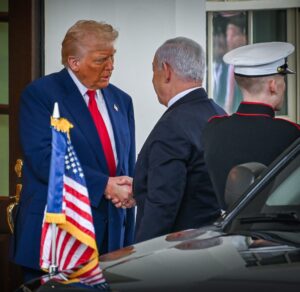
For the United States, Hungary’s direction matters because Hungary sits inside NATO and the European Union.
Washington needs stable allies in Central Europe, especially as Russia, China, and Iran seek influence across the continent.
A Hungary that strengthens rule of law, transparency, and Western alignment could support American interests. However, political instability in Budapest could complicate NATO unity and European decision-making.
For Israel, the impact is more specific.
Hungary has been one of Israel’s most important diplomatic partners inside Europe. Under Viktor Orbán, Budapest often pushed back against hostile European pressure on Israel.
A new political order in Hungary may therefore affect how Budapest votes on Israel-related issues inside the EU.
That does not mean Hungary must weaken its relationship with Israel. Instead, it creates a test for Magyar’s government.
A truly democratic Hungary should oppose antisemitism, reject anti-Israel double standards, and recognize Israel as a legitimate democratic ally facing terror and regional threats.
A Shared Moral Calling
For America and Israel, Hungary’s political transition carries a broader lesson.
Democracy is not only about elections. It also requires lawful institutions, restraint, accountability, and moral clarity.
The United States and Israel also share a covenantal understanding before God.
America’s covenantal tradition rests on liberty under God, ordered justice, and moral responsibility. Israel’s covenant is older and unique. It rests on God’s promise, Jewish peoplehood, Torah, and the return to the land of Israel.
Those covenants are not identical. However, they meet in a shared calling: defend ordered liberty, protect national sovereignty, and resist political systems that serve power over truth.
In this story, that shared calling means watching Hungary’s transition with both hope and caution.
For America, it means supporting stable democratic allies inside NATO and Europe. For Israel, it means encouraging Hungary to remain a serious partner against antisemitism, terror, and anti-Israel hostility.
Magyar’s government has now used its parliamentary mandate to remove Sulyok. The next question is whether Hungary’s new leadership can turn that power into deeper trust, stronger institutions, and a foreign policy that keeps faith with the West and with Israel.
For more stories on Israel, faith, and the values behind the headlines, follow Sinai on Facebook and Instagram.
Discussion0
No comments yet — be the first to share your thoughts.