Houthis Say Saudi Strike Declared War On Yemen
The Houthis accused Saudi Arabia of declaring war after a strike in Sanaa, warning of escalation tied to the United States, Israel, and Red Sea security

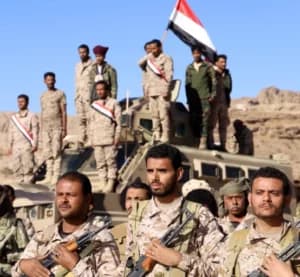
The Houthi Saudi strike confrontation escalated after the Houthi Foreign Ministry accused Riyadh of declaring war following a renewed strike in Sanaa.
According to the Houthi statement, the Saudi strike targeted Sanaa airport and violated Yemeni airspace.
“The Saudi regime has declared war, and must bear full responsibility for this,” the Houthi Foreign Ministry said.
In addition, the statement claimed the strike reflected “a Saudi insistence, encouraged by the American-Zionist alliance, to continue the siege on Yemen.”
The Tanakh warns, “Woe to those who call evil good and good evil.” That warning fits the Houthis’ language. They present themselves as defenders of Yemen while serving Iran’s regional war machine.
Houthi Saudi Strike Escalation

The Houthi response turns a strike in Sanaa into a wider regional confrontation.
By blaming the “American-Zionist alliance,” the Houthis placed the United States and Israel at the center of their narrative.
That language matters because the Houthis repeatedly frame their attacks as resistance. However, their actions threaten shipping, energy routes, Gulf states, Israel, and American interests.
For Saudi Arabia, the latest statement raises the risk of renewed direct confrontation with the Houthis.
Meanwhile, for the United States, the issue connects directly to Red Sea security, Gulf deterrence, and Iran’s wider proxy network.
For Israel, the Houthis are not a distant problem. They have launched missiles and drones toward Israel, threatened Israeli-linked shipping, and tied their operations to the war against the Jewish state.
Red Sea Security And Israel
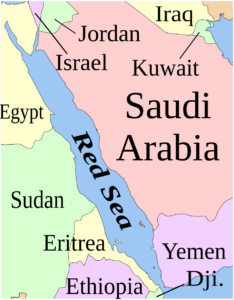
The latest threat also gives new context to “Houthi Leader Threatens Israeli Presence In Somaliland.” Abdul-Malik al-Houthi threatened attacks against any Israeli presence in Somaliland, amid reports of Israel-Somaliland security cooperation near Red Sea trade routes.
The Houthi statement follows the same pattern.
Rather than limiting their threats to Yemen, the Houthis target any regional cooperation that could strengthen Israeli security near Red Sea trade routes.
That matters because the Red Sea is a strategic corridor for Israel’s economy and global commerce.
It also matters for America. The United States has a direct interest in keeping maritime routes open, protecting allies, and preventing Iran-backed forces from controlling chokepoints.
Therefore, renewed Saudi-Houthi escalation could affect much more than Yemen.
It could pressure Gulf security, Red Sea shipping, U.S. force posture, and Israeli trade routes.
A Shared Moral Calling
The United States and Israel both face the same strategic reality.
Iran-backed forces use geography, missiles, drones, and propaganda to threaten free movement and regional order.
At the same time, the United States and Israel share a covenantal understanding before God.
America’s covenantal tradition rests on liberty under God, ordered justice, and moral responsibility. Israel’s covenant is older and unique. It rests on God’s promise, Jewish peoplehood, Torah, and the return to the land of Israel.
Those covenants are not identical. However, they meet in a shared calling: defend life, resist terror, and protect nations from those who use violence to dominate others.
In this story, that shared calling means seeing the Houthi threat clearly.
For America, it means standing with regional partners against Iranian proxy pressure. For Israel, it means treating the Houthi front as part of the same war system that includes Iran, Hezbollah, Hamas, and attacks on shipping.
Ultimately, the Houthi response to the Sanaa strike shows how quickly Yemen can become a wider regional flashpoint. It also shows why American and Israeli interests remain linked wherever Iran’s proxies threaten the free world.
For more stories on Israel, faith, and the values behind the headlines, follow Sinai on Facebook and Instagram.
Discussion0
No comments yet — be the first to share your thoughts.