Hezbollah’s Arsenal: Uncovering the True Sources of Its Firepower
For years, Iran has been widely recognized as the primary supplier of Hezbollah’s arsenal, but recently the IDF discovered that 60-70% of the weaponry in southern Lebanon was from Russia.

- by Yoav Bowman
Unmasking Hezbollah’s Weapons Pipeline
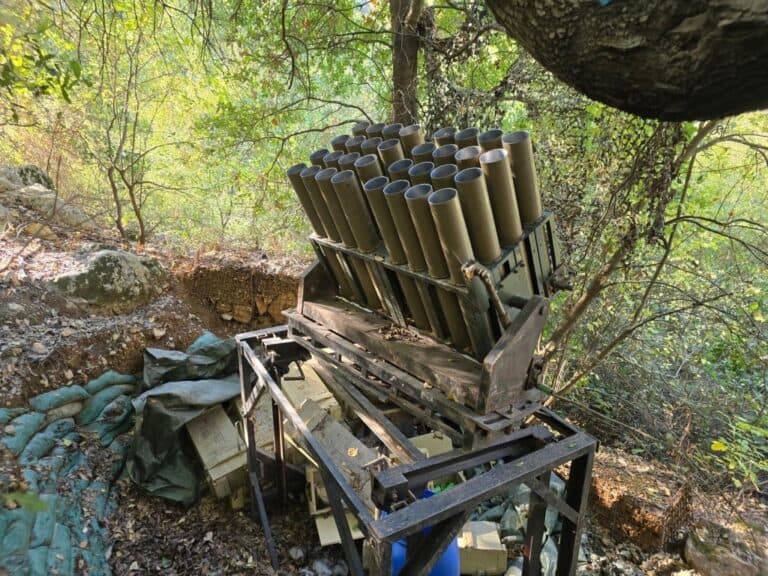
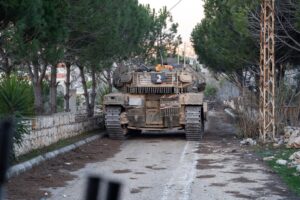
In a military operation spanning September and October, tens of thousands of Hezbollah weapons were seized by the IDF in southern Lebanon. A detailed study by the Meir Amit Intelligence and Terrorism Information Center, published today, highlights surprising revelations about the origins of these arms. While Iran remains a key supplier, much of Hezbollah’s firepower is traced to Russian-made weapons, smuggled through Syria.
Gradual Escalation: Hezbollah’s Tactics
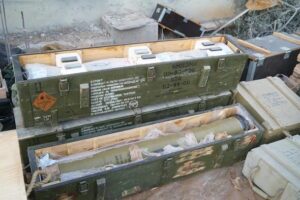
During the year-long conflict that began on October 8, 2023, Hezbollah utilized an array of advanced weaponry, including rockets, ballistic missiles, recoilless rifles, mortars, drones, and anti-tank systems. The group’s arsenal included weapons smuggled from Russia and Iran, along with locally produced arms. Russia’s role was particularly significant, with sophisticated anti-tank missiles and other advanced systems originating from Syrian military stockpiles and Russian forces stationed in Syria.
During the recent conflict, Hezbollah adopted a strategy of gradual escalation, deploying increasingly advanced and precise weaponry. This strategy was often in response to what the group labelled as “disproportionate” Israeli strikes and was further fuelled by flare-ups in the Gaza Strip or the targeted assassinations of senior Hezbollah commanders. The organization’s attempt to intensify the conflict reflected its effort to challenge Israel militarily and symbolically.
Despite these efforts, the IDF delivered a decisive and overwhelming response. By the end of the conflict, Israel’s military operations had inflicted severe damage on Hezbollah’s infrastructure and eliminated much of its leadership, including the group’s Secretary-General, Hassan Nasrallah. This marked a significant blow to Hezbollah’s command structure and operational capabilities.
Hezbollah’s “Toughest Campaign” Against Israel
In its propaganda distributed via Telegram, Hezbollah detailed its military actions during what it referred to as its “toughest campaign” against Israel, spanning from September 17, 2024, to the ceasefire on November 27, 2024. According to the organization, it carried out 1,666 attacks during this period, averaging 23 daily.
– 1,285 rocket and missile launches
– 93 artillery shellings
– 166 drone strikes
– 34 surface-to-air missile launches
– 86 guided missile strikes
– 16 sniper and machine gun attacks
– 11 direct weapon assaults
IDF’s Response and Weapons Seizures
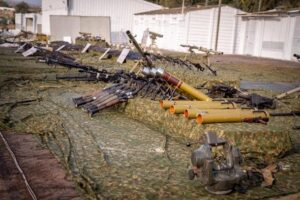
In response, the IDF mounted a decisive and overwhelming counteroffensive, destroying Hezbollah’s infrastructure. During ground operations in southern Lebanon, the IDF confiscated over 85,000 weapons, including:
– 6,840 RPG launchers, anti-tank missiles, and missile launchers
– 2,250 shells and rockets
– 2,700 light weapons
– 60 anti-aircraft missiles
Russia’s Role: A Disturbing Revelation
The discovery of Russian-made weapons in Hezbollah’s possession has profound implications. Advanced anti-tank missiles, manufactured as recently as 2020, were traced back to Russian and Syrian military sources. This revelation highlights the international complexity of Hezbollah’s supply chain and raises critical questions about Russia’s involvement and the complicity of Syrian forces.
The Meir Amit Intelligence and Terrorism Information Center warns:
“Despite the extensive damage caused by the IDF to Hezbollah’s arsenal during this conflict, it can be assumed that the organization still retains capabilities and knowledge that allow it to pose a threat unless it is completely disarmed throughout Lebanon.”
A Biblical Perspective on Israel’s Victory
The IDF’s victory against Hezbollah is a testament to Israel’s resilience and determination to defend its people and land. Yet the global nature of the threat underscores the need for continued vigilance and prayer. As supporters of Israel, we are reminded of God’s promises to protect His people:
“The Lord your God is He who goes with you, to fight for you against your enemies, to give you victory.” – Deuteronomy 20:4
Let us pray for Israel’s continued strength, and the disarming of those who seek its destruction. As the Bible clearly states, the enemies of Israel will ultimately fail in their efforts to harm God’s chosen people. Together, we stand with Israel in faith, action, and prayer for lasting peace and security in the region.
Discussion0
No comments yet — be the first to share your thoughts.