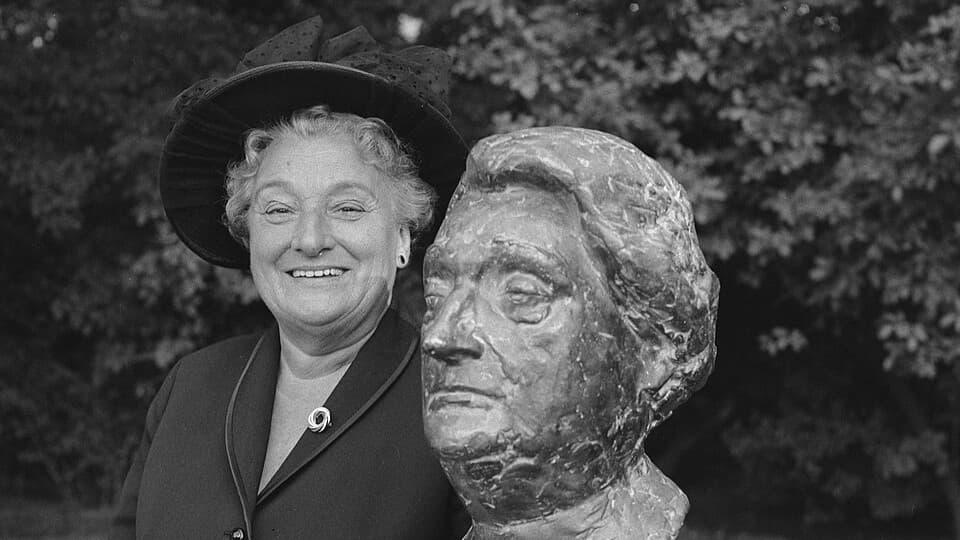
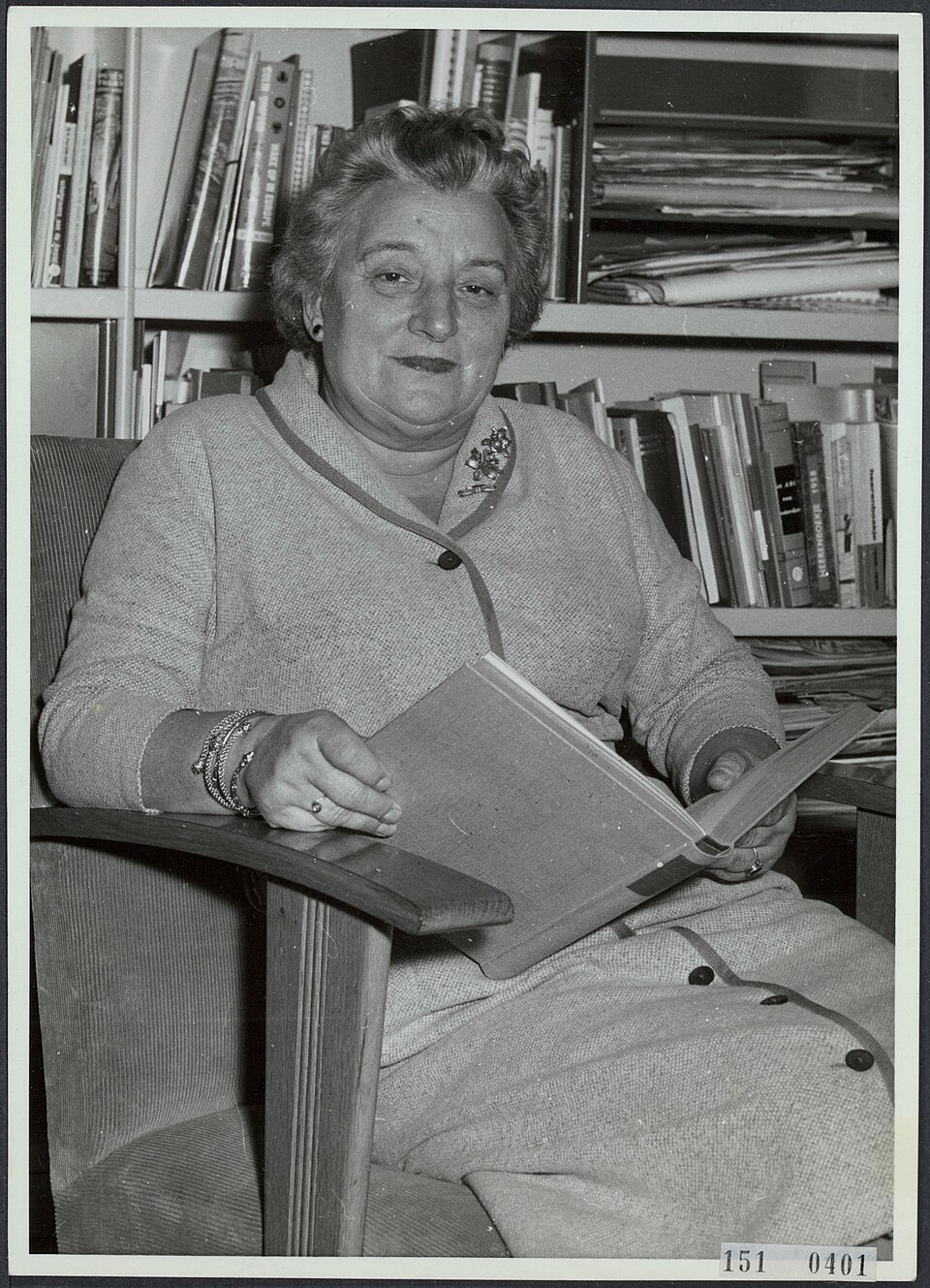
Geertruida Wijsmuller standing with a newly unveiled bust of herself in Oosterpark, Amsterdam, 1965 | Photo: Wikipedia
Takeaways:
The Kindertransport rescued about 10,000 Jewish children.
Geertruida helped organize Kindertransport.
Eichmann gave her five days to save 600.
She risked her life crossing borders for children.
Schindler has a film. She deserves her own.
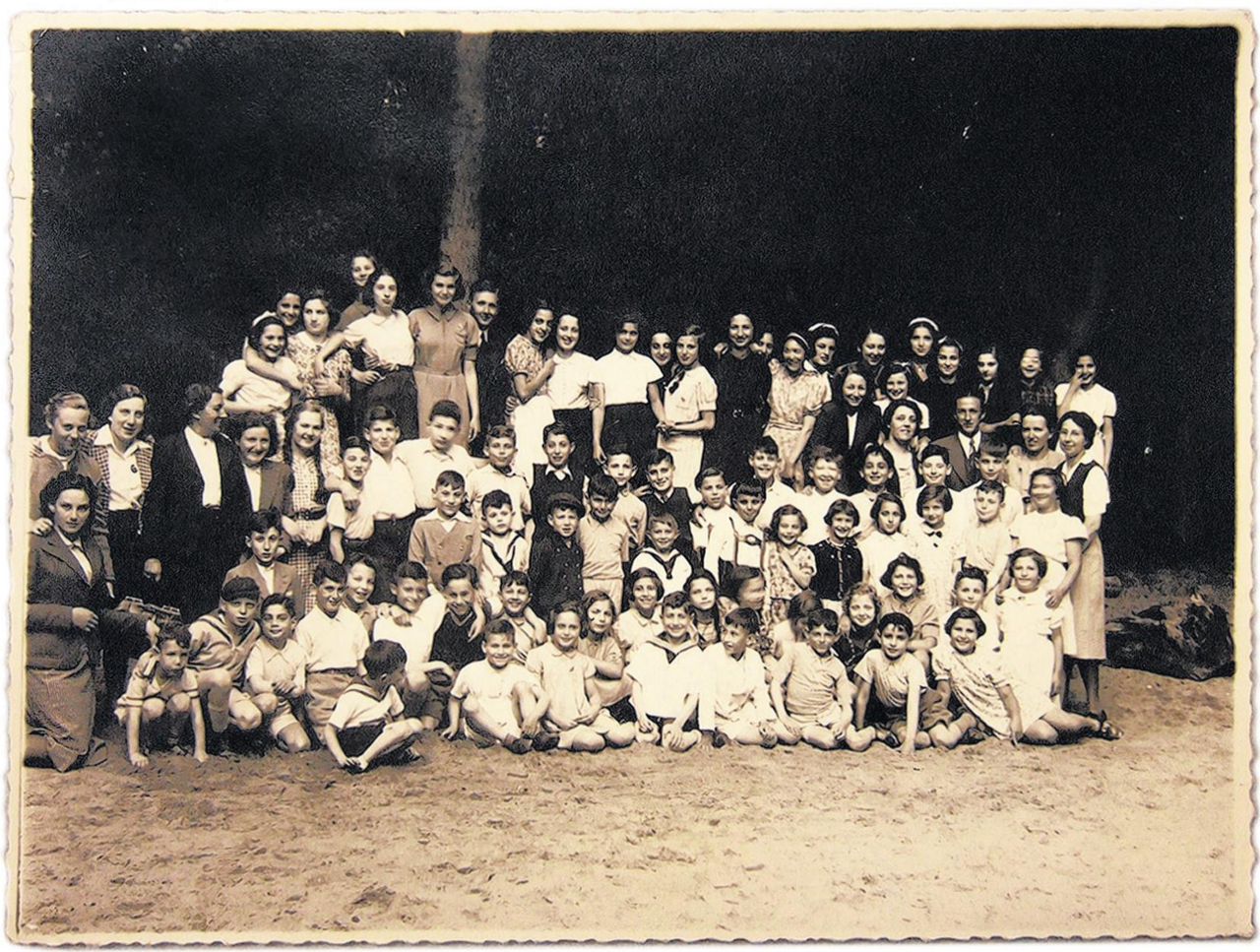
Beginning in late 1938, about 10,000 Jewish children left Nazi-controlled Europe without their parents, bound for safety in Britain. That rescue is called the Kindertransport, German for "children's transport." Geertruida Wijsmuller-Meijer risked her own life to help organize it, and she never had children of her own.
A Childless Woman and Thousands of Children
Born in Alkmaar in 1896, Geertruida studied at the School of Commerce and took a job at a bank, where she met her husband, J. F. Wijsmuller. Then came the news that she would never have children. She had grown up in a Dutch Protestant home, where faith came with a firm moral code: when you see someone suffering, you act. With no children of her own to raise, she poured that conviction into the most vulnerable, and it carried her into social work, where she joined the Association for Women's Interests and Equal Citizenship.
There she befriended Mies Boissevain-van Lennep, a Dutch resistance fighter. Together they began arranging children's transports for the Committee for Special Jewish Interests.
What Was the Kindertransport?
After Kristallnacht in November 1938, when Nazi mobs burned synagogues and smashed Jewish shops, Britain agreed to admit Jewish children traveling alone, provided each had a sponsor and a financial guarantee. Parents chose to send their children away so they could live. Many never saw them again.
Geertruida did not found the Kindertransport effort, but the fairest description calls her one of its most important organizers, working alongside Jewish relief groups, British volunteers, and Quaker workers.
Facing Eichmann
Adolf Eichmann ran the Nazi office in Vienna that controlled Jewish emigration, so no child left Austria without his approval. Geertruida walked into his office knowing the danger, because he held the only key.
Why would he agree? In 1938, Nazi policy still aimed at pushing Jews out of the Reich, so children leaving for Britain cost him nothing. Saying yes also let him look kind, a cheap gesture of generosity from a regime that was persecuting Jewish families. He saw a chance to set a trap.
Adolf Eichmann gave her five days to save 600 Jewish children, expecting her to fail. She succeeded, and she went on to help bring about 10,000 to safety. The train left Vienna on December 10, 1938. Facing the evil man who would eventually help organize the deportation and deaths of millions, she put her own safety on the line for hundreds of children.
Bribes, Charm, and Border Crossings
From late 1938 until May 1940, she bribed railroad men, charmed Nazi officers, and kept routes open through the Netherlands to Britain, risking arrest and her own life with every crossing. Jewish communities, parents, and relief organizations shared that work, and an honest telling gives them their credit.
Working in Paris when Germany invaded the Netherlands, she raced straight back toward the danger in Amsterdam. On May 14, 1940, just before the Dutch surrender, she put 74 orphanage children aboard the SS Bodegraven at IJmuiden. She then smuggled children to Spain and Vichy France, fed refugee camps, and kept going even after a brief Gestapo arrest and interrogation.
Why Schindler Has a Film and She Doesn't
Schindler's fame came from Thomas Keneally's 1982 novel and Steven Spielberg's 1993 film, which won seven Academy Awards. He is credited with saving about 1,100 to 1,200 people, and his story offered one list and one dramatic change of heart.
Her rescue work reached far more people than his, yet it was scattered across many transports, countries, and organizations, which makes it hard to shape into one tidy drama. Her story is less cinematic, made of train schedules, border crossings, and patient negotiation.
Let's Make Her a Household Name
Yad Vashem recognized her heroism by naming her Righteous Among the Nations on October 18, 1966. She died in 1978, and fame never followed.
Discussion0
No comments yet — be the first to share your thoughts.