For the First Time in 25 Years, Daylight Public Prayer at Joseph’s Tomb
For the first time in twenty five years, a morning prayer (Shacharit) was held at Joseph’s Tomb in Shechem (Nablus). This sparked a wave of controversy throughout Arab media and social networks today, to which the Israeli response was not long in coming. Background: Joseph’s Tomb in Shechem According to the Bible, Joseph’s remains were

By Menachem Marton
Opinion contributor··5 min read
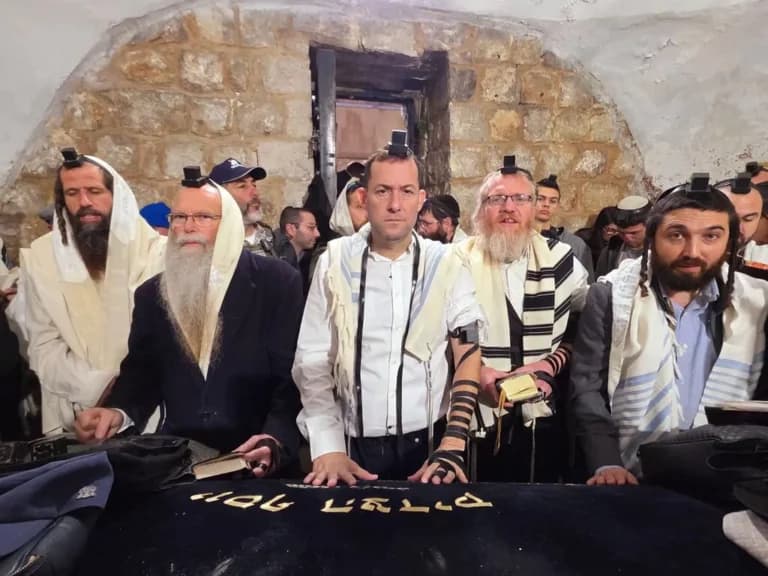
For the first time in twenty five years, a morning prayer (Shacharit) was held at Joseph’s Tomb in Shechem (Nablus). This sparked a wave of controversy throughout Arab media and social networks today, to which the Israeli response was not long in coming.
Background: Joseph’s Tomb in Shechem
According to the Bible, Joseph’s remains were buried in the city of Shechem, fulfilling the request Joseph made before the Exodus. The Book of Joshua records: “The bones of Joseph, which the children of Israel brought up from Egypt, were buried at Shechem, in the parcel of land which Jacob had bought” (Joshua 24:32).
That parcel of land is first mentioned in Genesis, where Jacob purchased land in Shechem and built an altar, invoking the name of God: “He encamped before the city… and set up an altar there, and called it El-Elohe-Israel” (Genesis 33:18–20). Joseph’s Tomb is located at the eastern edge of ancient Shechem, consistent with these biblical descriptions.
Archaeological and geographical evidence reinforces the antiquity of this tradition. The tomb lies east of Tell Balata, the site of biblical Shechem, rather than within later Roman-Byzantine Nablus (Neapolis). Scholars note that had the tradition emerged later, it would likely have placed the tomb within the city itself rather than at this older, peripheral location. The area’s topography—flat and low-lying—also differs from the elevated hilltop shrines typical of later Muslim folk sites.
The site’s existence long predates the Islamic era. Joseph’s Tomb appears on the 6th-century Madaba Mosaic Map, created during the reign of Byzantine Emperor Justinian (527–565 AD). Around the same time, the Christian pilgrim and archdeacon Theodosius wrote: “Close to Jacob’s Well are the remains of Joseph the Holy.” This continuous documentation led Israeli archaeologist Dr. Zvi Ilan to describe Joseph’s Tomb as “one of the tombs whose location is known with the utmost degree of certainty, based on continuous documentation since biblical times.”
Throughout history, the site has been a focal point of religious tension. In the early Byzantine period, Samaritans and Christians clashed violently over control of the tomb. In the modern era, following Israel’s capture of Judea and Samaria in 1967, Jewish prayer at the site gradually resumed, while Muslim worship there ceased.
Under the Oslo Accords, Joseph’s Tomb was placed under the authority of the Palestinian National Authority, though it remained guarded by Israeli forces. Despite security arrangements, the site became a flashpoint. In September 2000, at the outset of the Second Intifada, Palestinian rioters attacked, burned, and destroyed the tomb shortly after Israeli forces withdrew. Earlier violence had already erupted at the site in 1996.
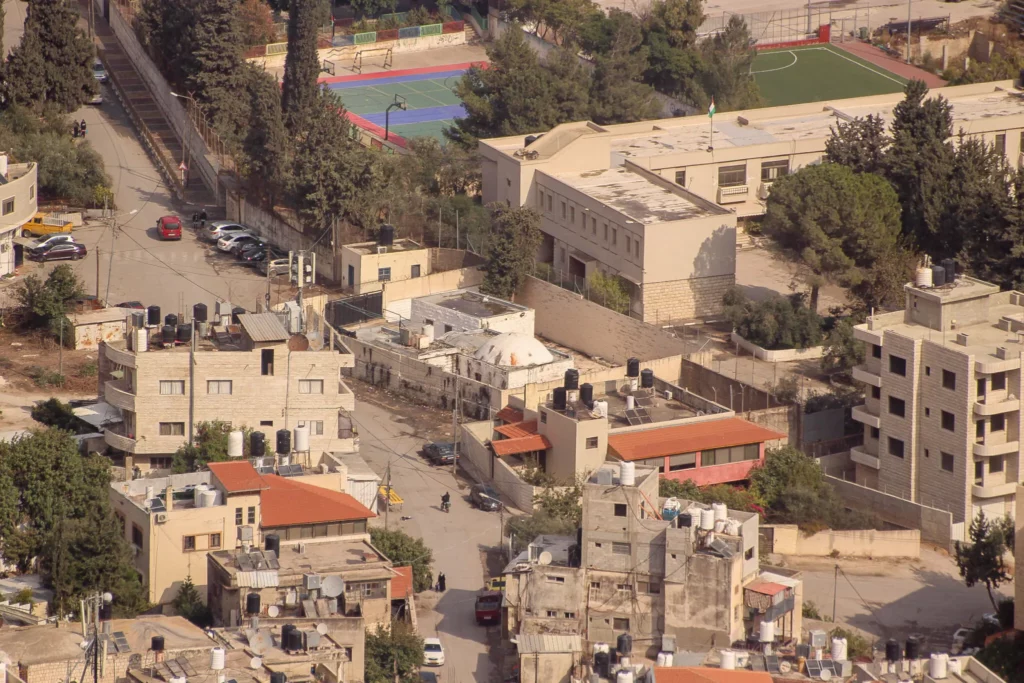
Following Israel’s reentry into Nablus during Operation Defensive Shield in 2002, Jewish worshippers began returning intermittently, usually during coordinated nighttime visits under IDF protection. Between 2009 and 2010, the tomb was restored and rebuilt, including the addition of a new dome.
Nevertheless, violence continued. In 2011, an Israeli worshipper, Ben-Yosef Livnat, was killed by Palestinian Authority police while praying at the site. The tomb was again vandalized by Palestinian rioters in 2015 and 2022.
Today, Joseph’s Tomb remains one of the most historically documented and politically sensitive biblical sites in the Land of Israel, standing at the intersection of ancient covenant, archaeology, and modern conflict.
Renewed Prayer Service
This morning’s prayer service, attended by hundreds of worshippers, was led by Samaria Regional Council head Yossi Dagan and Knesset Member Zvi Sukkot, and was conducted with the approval of Defense Minister Israel Katz, following a decision to expand the hours of Jewish access to the site.
According to officials, the move came after extensive preparation and close coordination with Israel’s security establishment. Senior IDF officers accompanied the entry, including the commander of the Judea and Samaria Division and the commander of the Samaria Brigade, along with additional security forces who secured the area throughout the visit.
Earlier the same night, an additional organized nighttime visit took place as part of the monthly pilgrimages led by the Samaria Regional Council together with volunteers from the Minhelet Kever Yosef Joseph’s Tomb organization.
Arab Outrage and Jewish Response
The Qatari-based Al Jazeera network reacted sharply, describing the event as a “raid with clear political significance.” Correspondent Laith Ja‘ar claimed the IDF had secured the site in order to allow what he termed “Jewish religious prayers,” emphasizing that this marked a dramatic departure from the long-standing practice of nighttime-only visits.
Al Jazeera further suggested that the presence of elected officials and regional leaders during daylight hours reflects a broader strategic shift. The network asserted that the event was not isolated, but part of a wider trend involving increased IDF activity and expanded Israeli operational freedom throughout Judea and Samaria.

Israeli leaders swiftly responded to the criticism.
“The years of flight and retreat are over,” said Yossi Dagan. “We are proud to return to Joseph’s Tomb in broad daylight. The criticism will only strengthen us as we continue the struggle—until full return to Joseph’s Tomb and the restoration of the Od Yosef Chai yeshiva to its rightful place. On October 7 we abandoned this place; now comes the correction.”
Knesset Member Zvi Sukkot added:
“The panicked reactions from Al Jazeera and Palestinian networks demonstrate that they understand something some of us have forgotten: sovereignty begins at our holiest sites. The reality in which Jews must sneak in like thieves at night to Joseph’s Tomb ended today. We prayed Shacharit proudly and in daylight—and this is only the beginning of a historic correction and the restoration of full Israeli control at the site.”
According to the Samaria Regional Council, the daytime entry is part of a broader, phased plan aimed at gradually restoring organized Jewish religious activity at Joseph’s Tomb. Officials stressed that future steps will continue to be implemented in coordination with the political leadership and subject to ongoing security assessments.
Council officials say discussions are already underway regarding the next stages of implementation, with the goal of expanding Jewish presence at the site in a responsible and coordinated manner.
Some may not like it, but on the ground Jacob walked and Joseph was lovingly laid to rest, their descendants now pray.
“You will arise and have compassion on Zion,
for it is time to show favor to her;
the appointed time has come.
For her stones are dear to your servants;
her very dust moves them to pity”.
(Psalm 102: 13-14 NIV)
Discussion0
No comments yet — be the first to share your thoughts.