Divine Ethics Part 2: Honoring Parents, The Commandment That Shapes Generations

Rabbi Avi Baumol
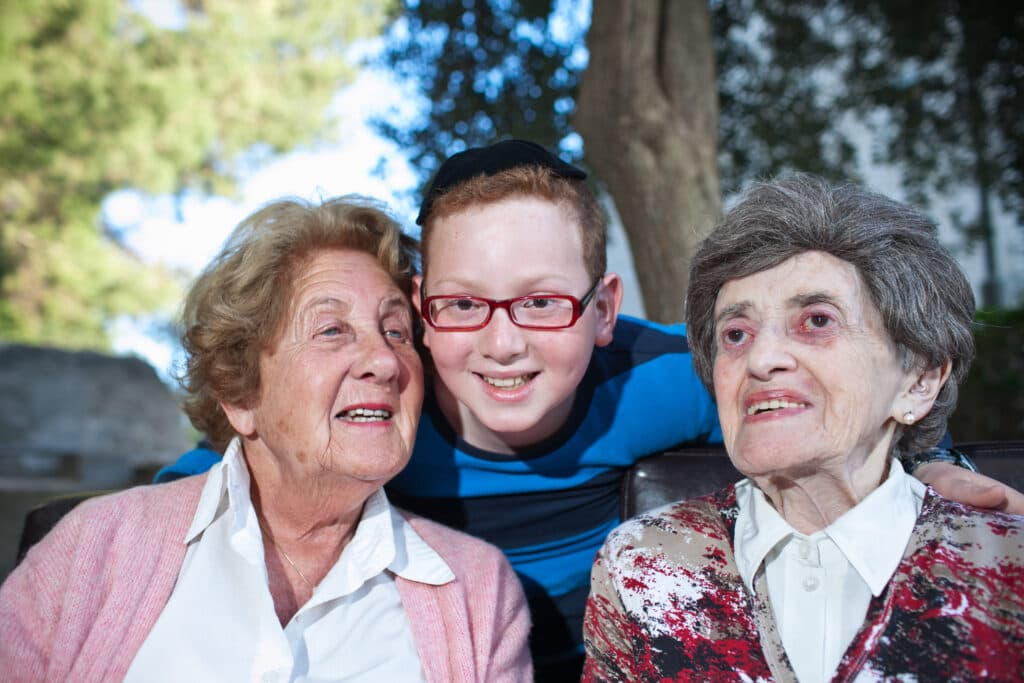
Great-Grandson of Holocaust survivors showing them honor at his bar mitzvah. | Photo by Noam Moskowitz/Flash90
Honoring Parents
We begin with the fifth of the Ten Commandments: honoring one’s father and mother. Elsewhere, the Torah presents a complementary commandment—yirah, or reverence—stating, ‘A person must fear his mother and father’ (Leviticus 19:3). The Talmud notes an intriguing shift in word order: in the Ten Commandments, the father is mentioned first in the command to honor, while in Leviticus, the mother is listed first in the command to fear. Why the change?
The rabbis explain that although both honor and fear must be shown equally to both parents, human nature influences our tendencies. A child often feels a more instinctive love and affection for the mother due to the deep, nurturing bond that begins in infancy and continues throughout life. Therefore, the Torah emphasizes honoring the father first, encouraging the child to be mindful of this obligation even where it may not come as naturally.
Conversely, when it comes to fear and reverence, a child may be more inclined to feel this toward the father, who is often seen as the disciplinarian. To counterbalance this, the Torah gives precedence to the mother in the command to fear, reinforcing the principle of equality in how children treat their parents—with love and respect, fear and honor.
Rabbi Eliezer Melamed is a teacher, writer and codifier of Jewish law, living in Israel’s heartland of Samaria. He offers a profound theological insight into the interconnectedness of honoring parents and honoring God. The commandment to fear one’s parents is intrinsically linked to the commandment “one must fear God”, suggesting a profound spiritual symmetry. This parallel can teach us:
- Honoring parents is not merely a familial obligation but a spiritual practice
- Spiritual devotion and familial love are complementary, not competing, values
- Respecting one’s parents is a pathway to understanding divine reverence
This link reminds us that spiritual growth occurs through both vertical (God-oriented) and horizontal (human relationships) dimensions and that loving and respecting parents is a form of spiritual service. This perspective transforms the commandment from a simple familial duty to a profound spiritual exercise of connection and reverence.
In Biblical law there are four specific mitzvot concerning one’s parents:
- Honoring both
- Fearing both
- Not hitting one’s parents
- Not cursing one’s parents
The Talmud provides specific guidelines for honoring parents, categorizing them into expressions of fear (reverence) and honor (respect). These laws offer practical ways to fulfill the biblical commandment of honoring one’s father and mother.
Expressions of Fear (Reverence)
- Not sitting in their designated seats
- Refraining from calling parents by their first names
- Avoiding the use of disrespectful names or titles
- Not waking parents from sleep
Expressions of Honor (Respect)
- Assisting with physical needs, such as:
- Bringing a glass of water when needed
- Helping with daily tasks
- Providing support in various life matters

These guidelines serve as examples of how to demonstrate respect and care for parents in everyday life. The Talmud emphasizes that honoring parents goes beyond mere gestures, encouraging children to be attentive to their parents’ needs and to offer assistance in both small and significant ways.
Discussion0
No comments yet — be the first to share your thoughts.