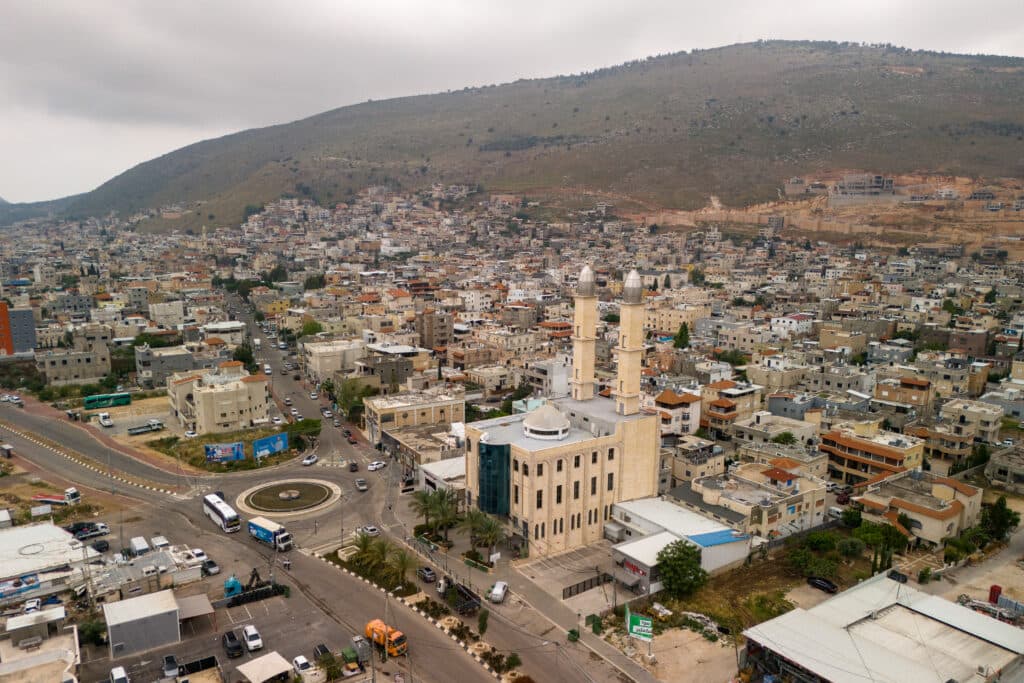
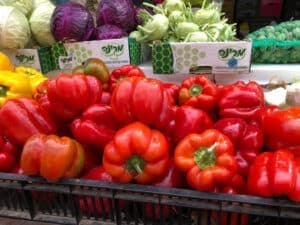

Israeli Produce. | Credit: Leah Bean Bowman
If you want to witness God’s miracles in supporting the Jewish people, read the Bible.
If you want to taste His miracles, eat a tomato. Rabbi Sholom Gold (of blessed memory) often spoke of the agricultural transformation of the Land of Israel since the resurgence of Zionism—a wonder that reflects divine providence.
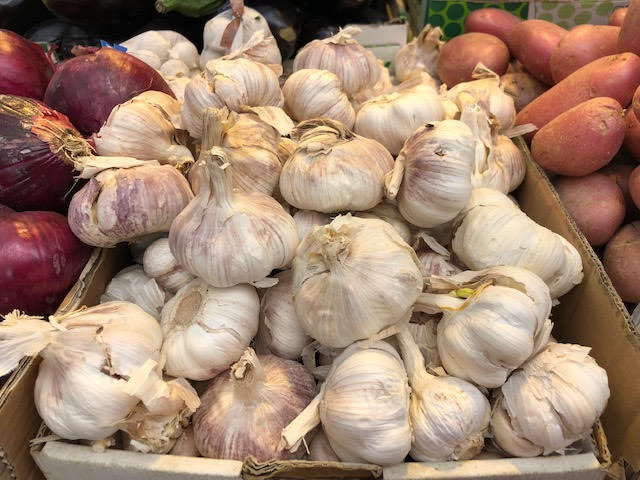
What Happened to Agriculture in the Land of Israel?
After the Bar Kokhba revolt (132–135 CE), the Roman emperor Hadrian enacted a scorched-
earth policy, banishing Jews from Jerusalem and forcing them to live in the most arid and
unarable regions of the land. The Negev Desert was barren, and even the relatively wetter
Galilee posed severe challenges due to its rocky, mountainous terrain, requiring intense labor to
clear and maintain the soil.
Successive rulers imposed oppressive policies on the remaining Jewish inhabitants, further
degrading the land. By the time the Ottoman Turks ruled in the 16th century, the land had been
ravaged. Crusaders used it only as a strategic base, not a home. Local Muslim farmers, mostly
tenant laborers or squatters, struggled to eke out a subsistence living on land owned by
absentee landlords in Lebanon and Syria. Much of the terrain was swampy, fallow, or arid.
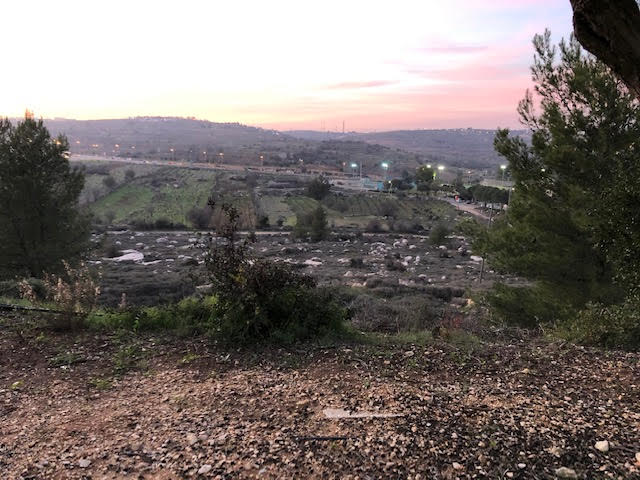
The Resurgence of Modern Zionism
Modern Zionism, beginning in 1882, brought a shift. For centuries, Jews had prayed for Divine
intervention to return to their land or sought to spend their later years there as scholars or to be
buried in its holy soil. But now, young Jewish pioneers returned with a new vision: to rebuild,
live, and thrive in the land of their ancestors. Agriculture became their focus, making the Holy
Land produce, once again.
Biblical Promise
In the Bible, God promises, “If, then, you obey the commandments that I enjoin upon you this day, loving your God and serving [God] with all your heart and soul, I will grant the rain for your land in season, the early rain and the late. You shall gather in your new grain and wine and oil.” And also, “I will also provide grass in the fields for your cattle—and thus you shall eat your fill” (Deuteronomy 14:12–14)
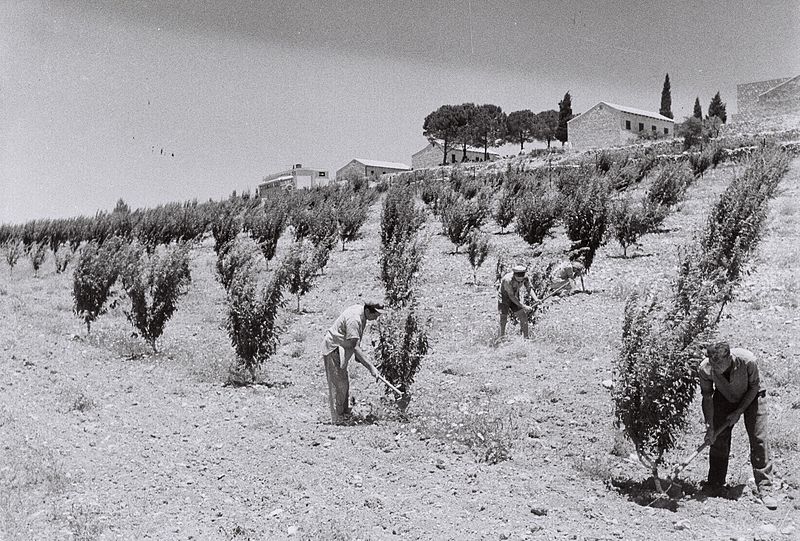
The Fulfillment of Prophecy in Agriculture
The Bible highlights three primary crops: grain, grapes, and olives (in Hebrew, Dagan, Tirosh, and Yitzhar). Modern Israel’s agricultural success in these areas reflects God’s enduring promise.
Grain (Dagan): Though Israel imports about 90% of its grain, domestic wheat production
has steadily increased, reaching 136,000 metric tons in 2023.
Grapes (Tirosh): Israel has over 300 wineries, producing world-class wine. Carmel
Winery, established in the late 19th century, produces 15 million bottles annually, with
half exported to over 40 countries. The Golan Heights Winery, founded after the miraculous Six-Day War of 1967, has earned international acclaim. Smaller boutique wineries also thrive, showcasing the land’s remarkable fertility.
Olive Oil (Yitzhar): Though Israel’s total olive oil production is modest compared to
countries like Spain, a third of its agricultural land is devoted to olive orchards. With
80,000 acres under cultivation, Israel produces 16,000 tons of olive oil annually.
This agricultural transformation is particularly remarkable because Israel cannot rely solely on
rainfall. Instead, innovative technologies like drip irrigation, reclaimed water, and desalination
ensure water security, enabling this once-desolate land to flourish.

A Blessing in the Midst of Reproof
Leviticus 26:32 tell us: “I will make the land desolate, so that your enemies who settle in it shall be appalled by it.” Though written as part of God’s reproof, the 13th-century Jewish biblical commentator Nachmanides saw this as a hidden blessing. He explains that when the Jews were exiled, the land itself refused to yield its bounty to foreign occupiers. Only when the Jewish people returned did the land respond,flourishing under their care.
A Modern Miracle
According to the United Nations Agricultural Forum: “Israel’s agriculture is a phenomenon. It is phenomenal in that low natural potential for the development of the industry is compensated by high intensity and efficiency of innovation. Traditional farming methods do not actually apply in this country.”
This extraordinary success is undeniable evidence of God’s blessing. As you marvel at the fruits of Israel’s labor, consider that these blessings are not just agricultural but deeply spiritual — a fulfillment of God’s promises and a testimony to His enduring faithfulness.
Esti Herskowitz is a licensed guide in Israel. She’s addicted to biblical archaeology, the natural beauty of the Land of Israel, and chocolate. Contact her for tours at Esti.h.tours@gmail.com
Discussion0
No comments yet — be the first to share your thoughts.