As They Were Afflicted, So They Multiplied: How Israel’s Economy Withstood War and Emerged Stronger
When the Bible tells us the story of the Israelites in Egypt, it lays down a principle that is reenacted in reality over and over again down through the generations: “But as much as they would afflict them, so did they multiply and so did they gain strength” (Exodus 1:12). Lies and false gods crumble

Sinai Staff
Opinion contributor··6 min read
When the Bible tells us the story of the Israelites in Egypt, it lays down a principle that is reenacted in reality over and over again down through the generations: “But as much as they would afflict them, so did they multiply and so did they gain strength” (Exodus 1:12). Lies and false gods crumble under pressure, but truth only becomes stronger when subjected to blows, although at times it takes time to see the process unfold.
For the past two years and more, Israel has fought a prolonged and complex war, under intense international scrutiny, condemnation, and censure; a war the length of which it has never fought before. Many predicted economic collapse, but the opposite unfolded instead. In early 2026, a series of financial indicators, currency movements, investment decisions, and credit assessments began telling a different story – one of resilience – that surprised not only Israel’s critics but much of the Middle East.
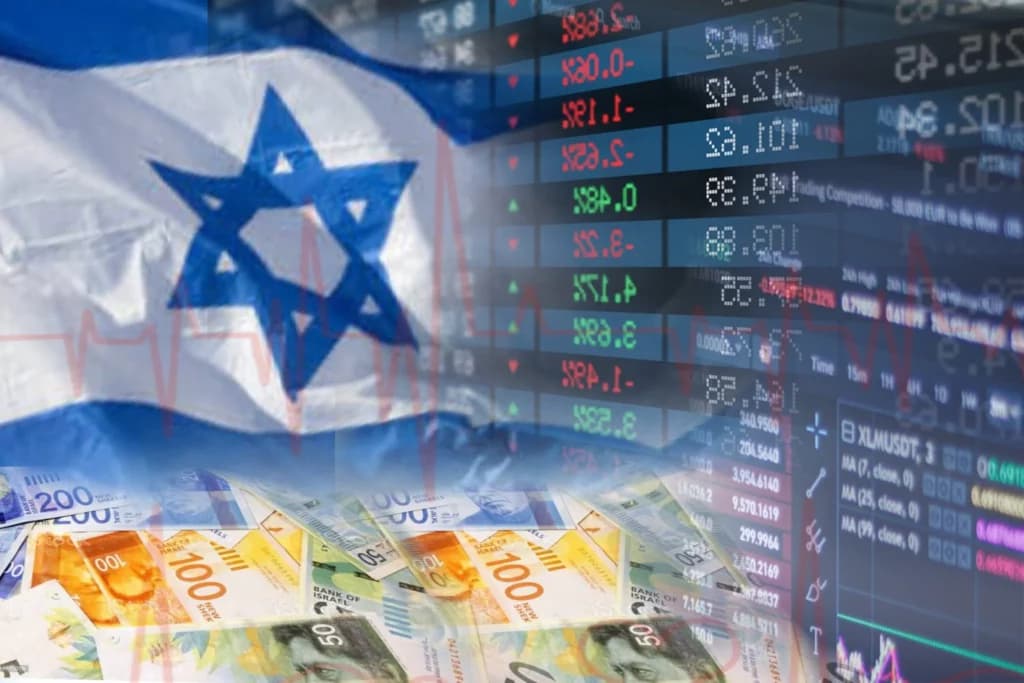
At a time of regional instability and ongoing security pressures, the Israeli shekel climbed to a level not seen in three decades. By late January 2026, the currency was trading around 3.08 shekels to the dollar, its strongest level since the mid-1990s.
Arab financial media closely followed the development, noting that the shekel had strengthened by approximately 3 percent since the start of the year and by roughly 18 percent over the previous year, all while Israel remained at war on multiple fronts. In a region grappling with currency erosion, inflation, and internal pressures, Israel’s monetary stability stood out.
The strengthening of the shekel contributed to moderating inflation, and allowed for some interest rate reductions, which in turn bolstered economic activity. The Bank of Israel Governor Professor Amir Yaron emphasized that the currency’s strength reflected the underlying resilience of the Israeli economy, and the strong performance of Israeli exports. The central bank chose not to intervene in the foreign exchange market, signaling confidence that the market was functioning properly.
Finance Minister Bezalel Smotrich, presenting the 2026 state budget to the Knesset at the end of January, pointed to especially strong macroeconomic data despite the war. Growth for the coming year was forecast at 5.2 percent, inflation had returned to target range, and the strong shekel, he argued, was helping to lower prices and ease the cost of living.
According to the Finance Ministry, the heart of the budget is directed toward strengthening reservists and their families, while continuing robust investment in high-tech, education, and welfare. Smotrich also publicly called on the Bank of Israel to accelerate interest rate cuts, arguing that there was no longer an inflationary threat justifying high rates.

Officials further reported a full recovery in the high-tech sector. Foreign investment in the first three quarters of 2025 reached approximately $19 billion, exceeding levels recorded before the war. The Tel Aviv Stock Exchange reached record highs, the labor market remained tight, and state revenues rose by tens of billions of shekels beyond forecasts.
It Pays to Support Israel
One of the most striking stories illustrating returns on investment emerged in February 2026. Three months into the war, at a time of deep uncertainty, Jewish-American billionaire Bill Ackman chose to invest in Israel out of explicitly Zionist motives, and a desire to support the Israeli economy during one of its most difficult periods.
Ackman invested 92 million shekels in the Tel Aviv Stock Exchange shortly after October 7, acquiring 5 percent of its shares. By early 2026, that investment was valued at approximately 660 million shekels, representing a gain of close to 600 percent.
As journalist Ariel Kahana pointed out, contrast that with Norway’s sovereign wealth fund choosing to sell half of its Israeli holdings in 2025, during the war, citing what it described as ethical considerations. According to published reports, that decision resulted in a missed capital gain approaching one billion shekels, had the shares been retained. The divested stake is now valued at approximately 667 million shekels.
It is impossible not to mention two stories that fill me with pride and satisfaction:
3 months into the October 7 war, @BillAckman decided to invest in Israel specifically and precisely at this time, purely out of Zionist motives and a desire to support the Israeli economy… https://t.co/ef98a8w5df pic.twitter.com/ge3UhFJvw5
— Ariel Kahana אריאל כהנא (@arik3000) February 12, 2026
Moody’s Expresses Confidence
Meanwhile, international credit markets began reflecting a similar reassessment of Israel’s risk profile.
On January 31, 2026, Moody’s announced that it was raising Israel’s credit outlook from negative to stable, while keeping the sovereign rating itself at Baa1. Although this remains the lowest rating level Israel has ever held, the shift in outlook signals that the risk of further downgrade had diminished.
The move followed a similar step by S&P, which in November maintained Israel’s A rating and likewise raised its outlook from negative to stable.
According to Moody’s economists, the reduction in geopolitical risk stemmed from several factors: the absence of broad escalation with Iran, the conclusion of fighting with Hezbollah, and the continued durability of ceasefires in Gaza and Lebanon since the end of 2024.
However, in its report, Moody’s also highlighted several structural strengths in the Israeli economy: a strong high-tech sector, a large and diversified economy, high income levels, credible institutions, and very substantial foreign exchange reserves exceeding $220 billion, which serve as a financial buffer. While noting that the fiscal situation had deteriorated due to war expenditures and rising debt, the agency characterized the position as justified and manageable.
Israel’s Accountant General Yali Rothenberg described the update as part of a broader reassessment of Israel’s economic risk profile. Looking back over the past two years, he said, the economy’s resilience had exceeded expectations. The significant decline in Israel’s risk premium in recent months reflected investor confidence, responsible debt management, and the country’s continued high access to international markets.
For a nation that has endured sustained military conflict, diplomatic isolation in many forums, and intense moral scrutiny on the world stage, the data tells a remarkable story. In the midst of war, Israel did not merely preserve its economic foundations. It strengthened them, projecting stability and confidence in a region long accustomed to volatility. In Israel, such economic stability is not only about prosperity for its citizens, but their capability to maintain the defenses that protect their lives and land both materially and through their image vis a vis their enemies. Spiritually, one can see God’s promise manifest yet again: “But as much as they would afflict them, so did they multiply and so did they gain strength” (Exodus 1:12).
Discussion0
No comments yet — be the first to share your thoughts.