Ali al-Taher Ridge: IDF Clears Hezbollah Stronghold
The IDF secured Ali al-Taher Ridge and cleared a major Iran-funded Hezbollah tunnel network as the group’s media sought to redefine the loss as victory

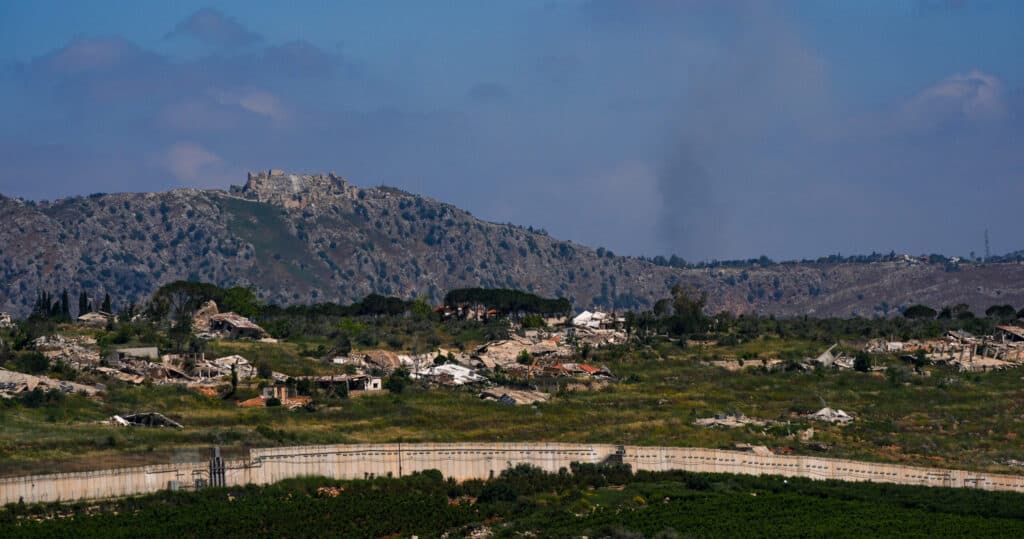
The IDF says it has secured operational control of the Ali al-Taher Ridge in southern Lebanon, ending weeks of fighting over one of Hezbollah’s most heavily defended positions. Israeli forces cleared two underground routes and removed Hezbollah fighters from the area. Some terrorists were killed, while others fled, according to the military.
The announcement came only hours after Hezbollah-linked media began preparing its audience for precisely such an outcome. Manaa Tahini, a correspondent for Hezbollah’s Al-Manar network, argued that Hezbollah fighters would remain “heroes” whether they held the ridge, died defending it, or eventually withdrew. He insisted that even an Israeli capture would remain a “legendary achievement” because Hezbollah had resisted for so long.
That is less a military assessment than a propaganda formula in which defeat becomes impossible by definition. If Hezbollah holds the ridge, it wins. If its fighters die, they win. If they flee and Israel takes control, Hezbollah still claims victory.
Proverbs 21:31 offers a more sober standard: “The horse is prepared for the day of battle, but victory belongs to the Lord.” Preparation matters, sacrifice matters, and courage matters. But none of them erase the outcome of a battle. Hezbollah spent decades preparing Ali al-Taher. Israel now controls the ground and the infrastructure beneath it.
Ali al-Taher Ridge Hid a Two-Decade Network
The importance of Ali al-Taher comes from both its geography and what Hezbollah built beneath it. Reuters described the ridge as roughly 15 kilometers from Israel’s border and about 600 meters high. It overlooks large areas of southeastern Lebanon and offers access toward the Iqlim al-Tuffah region, long considered important to Hezbollah’s military network.
The IDF says its 36th Division gained operational control both above and below ground. Troops then cleared two underground routes that Hezbollah had used to conduct operations against Israel and Israeli forces.
Inside, soldiers found command centers, weapons rooms, generator rooms, living quarters, showers, and a kitchen. The infrastructure allowed Hezbollah fighters to remain underground for extended periods while conducting combat operations.
According to the IDF, Iran funded and planned the complex over approximately two decades. Israeli forces are now working to neutralize the underground infrastructure before adjusting their defensive deployment around the ridge.
Prime Minister Benjamin Netanyahu said Israel had eliminated “a very large number of terrorists” during the operation and recovered equipment and computers from the site.
The scale of the facility helps explain why the fight lasted so long. Ali al-Taher was not simply another hilltop. Hezbollah had transformed the ridge into a fortified military position designed for prolonged war against Israel.
Hezbollah Rewrites the Meaning of Defeat
Al-Manar’s coverage offers another window into Hezbollah’s predicament.
Tahini argued that the ridge’s fate would not determine the war. That point, by itself, is reasonable. No single position decides a regional conflict. But his broader argument went further by declaring every possible Hezbollah outcome heroic.
Such rhetoric protects the organization politically when the battlefield moves against it.
The contrast with the IDF announcement is stark. Hezbollah’s media asks supporters to judge the battle by how long the organization resisted. Israel is judging it by operational results: control of the ridge, terrorists removed, tunnels cleared, weapons infrastructure exposed, and the ability to attack Israelis from those routes neutralized.
Iran itself appeared to recognize the ridge’s importance. Reuters reported Thursday that Tehran had warned Washington it would respond forcefully if Israel launched a full offensive there. Three regional officials said Iran delivered the warning through Oman in August. Reuters also reported claims that Iranian military personnel were present with Hezbollah fighters, although Israel disputed that assertion.
The warning now looks particularly significant. Tehran tried to deter Israel from fully taking the position. Hours after Reuters revealed that message, the IDF announced that it had already established operational control.
The Real Battle Is Over Lebanese Sovereignty
Ali al-Taher also exposes the larger political question facing Lebanon.
Hezbollah spent two decades constructing a strategic underground military complex inside Lebanese territory with Iranian financing and planning, according to Israel. The infrastructure served an armed organization that operates outside the full authority of the Lebanese state.
That reality gives added weight to “Nadim Gemayel: Lebanon Needs Ties With Israel.” Gemayel has argued that Lebanon should build normal international relationships, including eventually with Israel, while restoring national sovereignty and addressing Hezbollah’s independent military power.

Ali al-Taher demonstrates what that sovereignty debate means in physical terms. It means tunnels, weapons rooms, command posts, and foreign-backed fighters operating from Lebanese land while Beirut struggles to determine the country’s own security policy.
The United States has a direct stake in the outcome. Washington is helping mediate between Israel and Lebanon while supporting plans to strengthen the Lebanese Armed Forces and reduce Hezbollah’s independent military role. Iran’s decision to send its warning through the United States further shows how central Washington has become to the effort to prevent another uncontrolled escalation.
America and Israel share a principle that is especially relevant here: sovereign nations should control the armed power inside their own borders. American political tradition places military force under lawful national authority. Israel’s restored Jewish sovereignty rests on the same practical necessity. No foreign-backed militia should possess the power to drag an entire country into war.
That principle ultimately serves Lebanon as much as Israel.
The question after Ali al-Taher is therefore larger than who holds one ridge. It is whether southern Lebanon will remain a landscape of Iranian-financed underground fortresses or return to the authority of the Lebanese state.
Hezbollah can call every outcome a victory. The physical reality is harder to redefine. Its fighters no longer control the ridge, its underground network has been cleared, and Israel is preparing to neutralize infrastructure that took Iran and Hezbollah two decades to build.
For more stories on Israel, faith, and the values behind the headlines, follow Sinai on Facebook and Instagram.
Discussion0
No comments yet — be the first to share your thoughts.