Ahead of Gaza’s Second Phase, Hamas and the PA Work to Gain Control as the New Framework Takes Shape
As Israel moves deeper into the second phase of operations in Gaza, Israeli security officials are warning that Hamas has no intention of relinquishing its grip on the Gaza Strip, despite the emerging plans for alternative civil governance and increased international involvement. Earlier this week, the Rafah Crossing reopened for limited entry and exit from

By Adi Neiman
Opinion contributor··4 min read
As Israel moves deeper into the second phase of operations in Gaza, Israeli security officials are warning that Hamas has no intention of relinquishing its grip on the Gaza Strip, despite the emerging plans for alternative civil governance and increased international involvement.
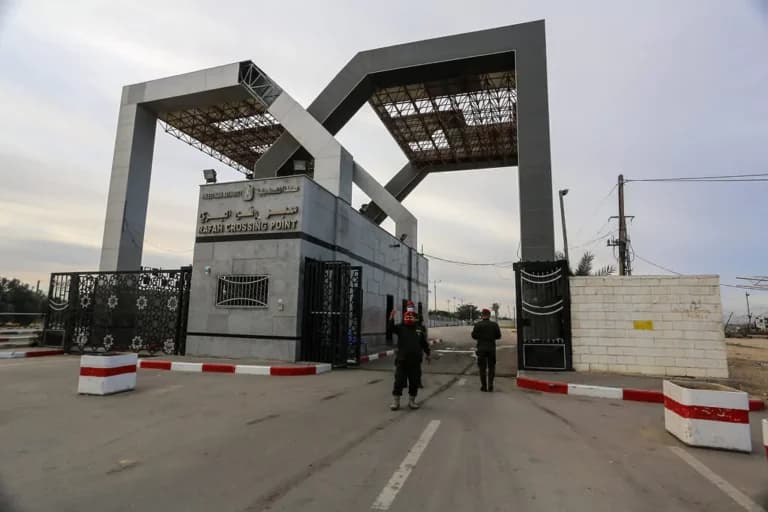
Earlier this week, the Rafah Crossing reopened for limited entry and exit from Gaza under strict conditions and intensive security screening.
Israeli forces established a new inspection compound in the area, designed to tighten oversight of all movement through the crossing. All entrants are checked against security-approved lists, and their belongings undergo thorough inspection as part of Israel’s broader effort to prevent the rearming of terrorist groups.
Hamas’ Efforts to Retain Control
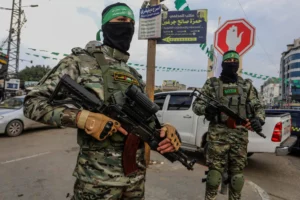
Senior Israeli defense officials assess that Hamas has developed a structured strategy to preserve its rule in Gaza, both militarily and administratively, even if a technocratic government is formally established to manage civilian life. The assessment was first reported by Israeli journalist Yoni Ben Menachem.
According to the Israeli security sources, Hamas does not view a proposed technocratic committee as a genuine threat. Committee members are expected to be Gazan residents, many of whom remain vulnerable to pressure through their families – a form of leverage that Hamas has historically exploited.
Moreover, the committee is expected to rely heavily on existing Gaza civil institutions, including roughly 40,000 civil servants who continue to receive their salaries directly from Hamas. This reality, officials say, allows the terror organization to maintain de facto control of the Strip even while formally transferring civilian authority to another body.
Security officials further assess that Hamas is attempting to draw Israel and the United States into negotiations over disarmament as a stalling tactic rather than as a step toward demilitarization.
Under this scenario, Hamas would likely seek international mediation, particularly through Qatar and Turkey, in an effort to soften the position of U.S. President Donald Trump. The organization’s goal would be to retain light weapons and anti-tank arms while potentially surrendering limited quantities of short-range rockets, explosives, or outdated weaponry.
Israeli intelligence believes Hamas may even expose a small number of tunnels west of the “yellow line” temporary border, while concealing additional underground infrastructure, unknown weapons stockpiles, and clandestine production capabilities.
See for example such a tunnel recently dismantled by the IDF
This assessment is reinforced by a report from journalist Elior Levy, who revealed the existence of an internal Hamas directive circulated among the organization’s leadership and Gaza-based civil officials. The document lays out detailed instructions on how to continue managing the Gaza Strip after the entry of a technocratic government – without allowing the new authority to realize that Hamas remains firmly in charge.
According to the document, officials are instructed to continue their work as usual, avoid public criticism of the technocratic government on social media, and refrain from forming personal relationships or sharing information with its members. Any interaction is to take place solely through Hamas-designated channels.
PA Involvement Confirmed at Rafah Crossing
At the same time, new documentation has also confirmed the Palestinian Authority’s involvement in operating the Rafah Crossing, something that is also widely considered problematic. Despite the fact the PA are not officially recognized as a terrorist organization, its history is replete with involvement and incitement to terror, denial of Israel’s right to exist and resistance to a peaceful resolution to the conflict.
An official document issued by the “National Committee for the Administration of Gaza” published in Egypt explicitly thanks the Palestinian Authority for its role in managing the crossing. The statement notes that Rafah’s operation is part of President Trump’s “20-point plan” and is being carried out “in full coordination with the Palestinian National Authority and the Peace Council.”
Dr. Ali Shaath, chairman of the committee, confirmed that the crossing is being operated in “direct coordination with the Palestinian Authority.”
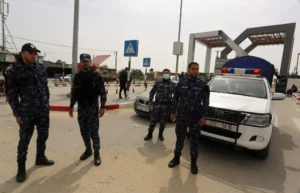
Photo: Abed Rahim Khatib / Flash90
The development has drawn sharp criticism from Israeli reservist groups, among others, who argue that reintroducing the Palestinian Authority into Gaza—under any rebranding—undermines Israel’s stated war goals and risks repeating past security failures.
Under the Providence of G-d
Taken together, the picture seems clear: The second phase in Gaza is shaping up for Israel as not only a military challenge, but a decisive test of whether the structures that emerge will truly dismantle Hamas’s rule, merely disguise it or reintroduce the Palestinian Authority as the governing force. Hamas is signaling that it has no intention of vacating power in Gaza. Whether through shadow governance, manipulation of civilian mechanisms, or diplomatic delay tactics, the terror organization is positioning itself to survive the war and carry on both politically, and militarily.
However, amid diplomatic maneuvering and attempts to repackage old threats in new forms, one enduring truth remains unchanged: “He who watches over Israel will neither slumber nor sleep” (Psalm 121:4). While nations debate governance and security arrangements, and terrorist entities plot, Israel continues to stand – not by chance, military might or political ingenuity, but under the providence of a faithful G-d whose covenant and purposes are not subject to negotiation.
Discussion0
No comments yet — be the first to share your thoughts.