Will There be a Revolution in Iran?
Iran has long been considered the foremost threat to the State of Israel, with its leaders vowing to destroy the Jewish state and its proxies in and around Israel waging a terrorist war on the country. In the aftermath of October 7, Israel has been at war with these proxies in Lebanon and Syria, Gaza

Iran has long been considered the foremost threat to the State of Israel, with its leaders vowing to destroy the Jewish state and its proxies in and around Israel waging a terrorist war on the country. In the aftermath of October 7, Israel has been at war with these proxies in Lebanon and Syria, Gaza and Yemen, but as it has since the day it was founded, Israel looks to the days of peace promised in Scripture: “They will beat their swords into plowshares… Everyone will sit under their own vine and under their own fig tree, and no one will make them afraid.” (Micah 4:3–4).
Yesterday Prime Minister Benjamin Netanyahu stated: “We all hope that the Persian nation will soon be freed from the yoke of tyranny, and when that day arrives, Israel and Iran will once again become faithful partners in building a future of prosperity and peace.”
Should the Islamic rule in Iran fall, there is hope for a renewed alliance between the Jewish and Persian people. How possible is such a future?
A Revolution Brewing in Iran
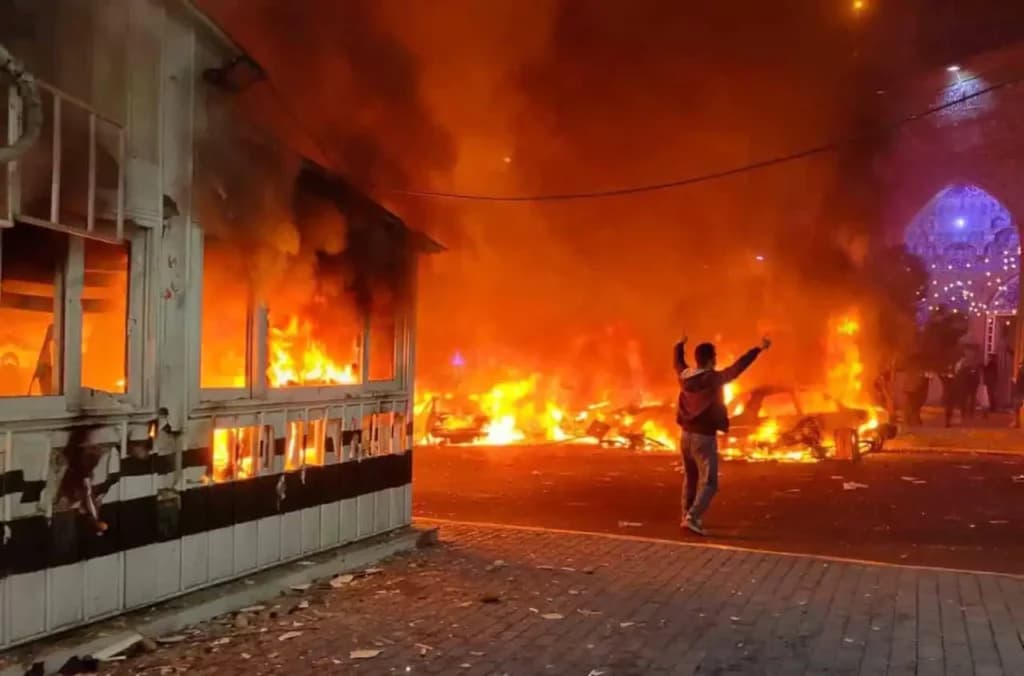
In Iran, masses are flooding the streets with protests, demonstrations, and violence. The Iranian regime is trying to contend with a new wave of opposition that combines economic fury with an explicit desire to overthrow the regime. According to U.S. reports, more than 500 people have been killed in the protests and over 10,000 have been arrested, as of today (Monday).
According to Oded Ailam, a researcher at the Jerusalem Center for Security and Foreign Affairs (JCSFA), the current protests signal a new reality taking shape in Iran: “After years in which repression relied on collective trauma and memories of bloody crackdowns, a collapsing economy and the shattering of the regime’s image of power are creating a deep psychological fissure.”
Ailam explains that despite the repression, today’s reality presents the regime with an equation it has never faced before. “Iran is not only under political siege – it is in existential bankruptcy. With inflation approaching 60 percent and a severe energy shortage in the oil-rich state, the government has lost the tools to manage the crisis. The reinstatement of the international ‘snapback’ mechanism has tightened the noose around the economy, turning the country into a pariah, an isolated island. Even allies like China and Russia are standing aside.”
Part of what is undermining the order is also perception. The collapse of Iran’s regional proxies – Syria, Hezbollah, Hamas, and now even Venezuela – has shaken the image of the regime’s omnipotence. Ailam explains that the regime’s all-powerful aura has cracked after the blows it has absorbed from Israel and the United States.
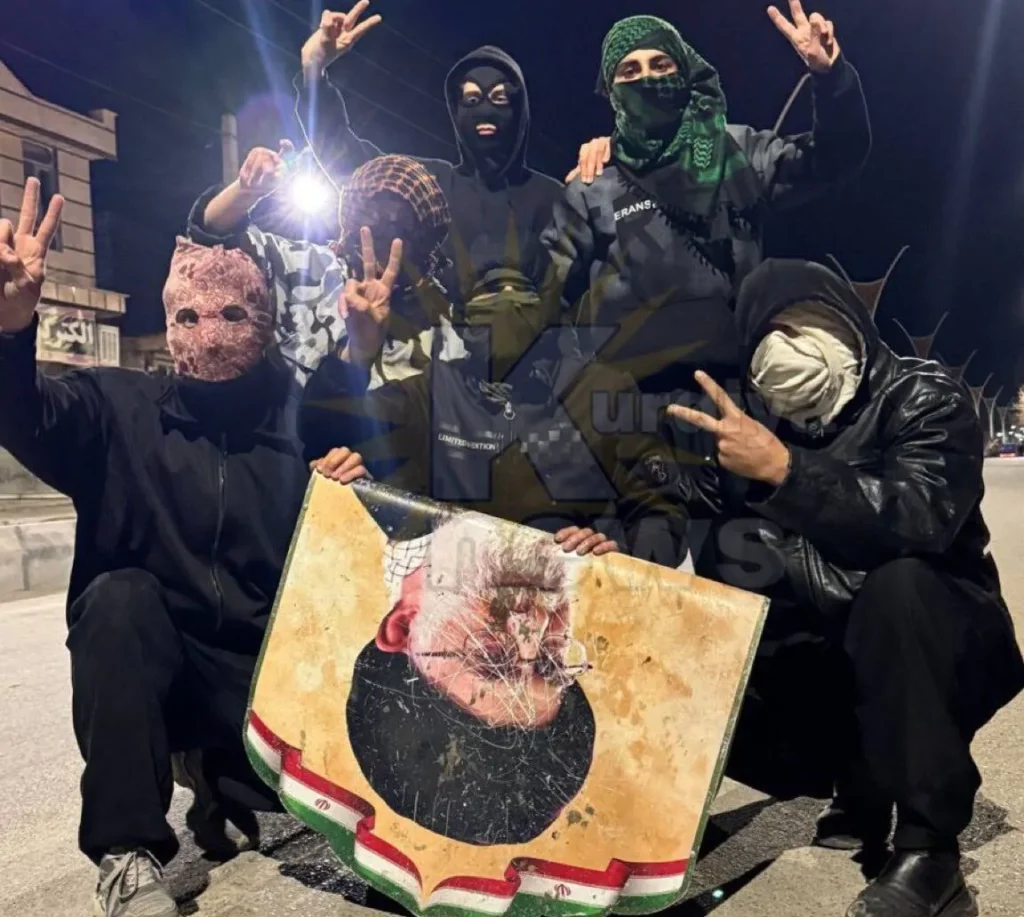
“The protests have indeed spread to 31 provinces, but the silence of the majority is still the loudest sound in Tehran. We are not seeing mass defections of officers or key figures in the religious establishment; there are no strikes by sectors such as the petrochemical industry or organized walkouts by bus drivers. The older generation is still watching from the balcony, and the key to stability remains in the hands that hold the guns and the money,” he explains.
At the center of the regime’s stability stand the Islamic Revolutionary Guard Corps (IRGC), fighting not for ideology but for economic survival. “For the IRGC, the fall of the regime is not only an ideological loss, it is personal bankruptcy,” Ailam writes, emphasizing that without unified leadership, the protest movement may once again fade. “The protesters’ central problem is what might be called ‘a river that has burst its dams.’ This protest has the power to wash everything away, but without political embankments – without leadership to channel and direct the flow – the waters simply spread across the plain, lose momentum, and are ultimately absorbed into the parched ground. Without unified leadership, the protest remains a beautiful but fragile chaos.”
Regarding the possibility that Reza Pahlavi, the exiled figurehead, could lead the movement, Ailam says he is “perceived as elitist nostalgia for a corrupt monarchic past, irrelevant to the slums.” Figures such as soccer star Ali Karimi, “the Asian Maradona”, or Hamed Esmaeilion, the charismatic dentist and social activist, possess “symbolic capital” but not command over an armed force. “To topple the fortress,” he says, “a critical mass of millions in the streets over time is required, enough to make repression logistically impossible.”
Israel Should be “The Shadow Behind the Curtain”
In the intelligence world, conspicuous presence is often harmful, Ailam argues. “Israel must internalize that it is still perceived as an enemy among broad segments of the Iranian public. Public action would allow the regime to paint the protests in the colors of a ‘Zionist conspiracy’ and regroup its ranks.” Instead, he proposes that Israel operate in the shadows through several strategies:
- Cognitive warfare and cyber operations: Surgical strikes against regime systems and the direct delivery of incriminating information about corruption among senior IRGC officials to citizens’ phones.
- Encouraging defections: Creating clandestine channels to mid-level officials within the establishment, with promises of immunity in the day after, to create cracks within the security apparatus.
- Arming and fostering separatism: Covert support and targeted arming of separatist groups on the periphery – Kurds in the west and Baluchis in the southeast – forcing the regime to split its forces and stretch supply lines to the breaking point.
- Technological support: Using satellites and cyber technologies to ensure continuous internet access for protesters, even as the regime tries to pull the plug on the country.
The US Angle
A particularly significant player in this story is, of course, the United States. JCSFA President Dr. Dan Diker assesses that the U.S. is currently in an even more forceful position than in the period following September 11, 2001, and that President Trump’s determination is altering the global balance of power – especially the mood within Iran.
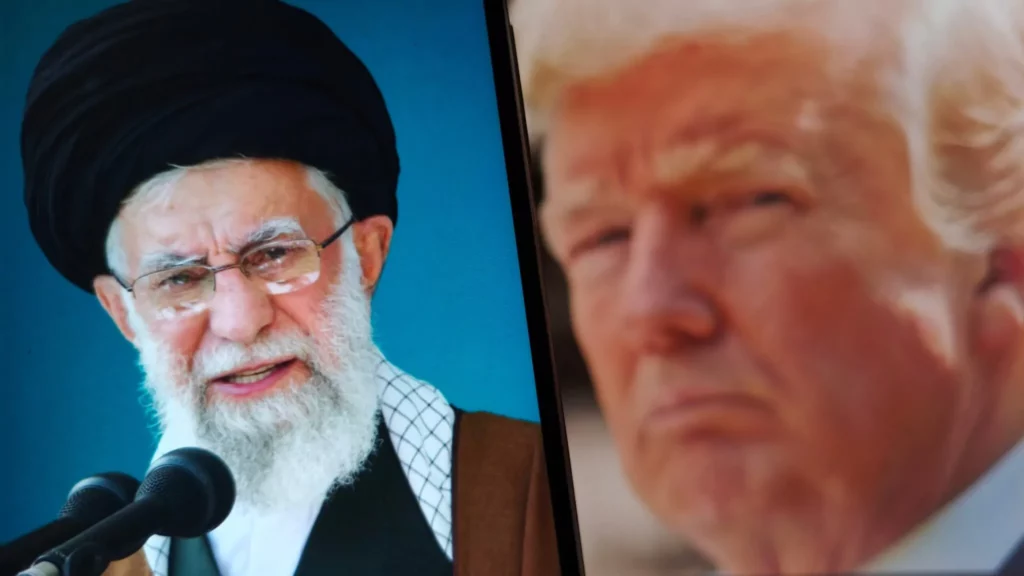
“Trump demonstrates tremendous power, internationally, at every level,” Diker says. “The Iranian people see him as the strong horse to back – not only in the Middle East, but in the world.” He emphasizes that American resolve provides the Iranian people with unprecedented encouragement and motivation to continue their uprising against the regime, despite the heavy price of thousands killed by security forces.
Regarding the question of when Trump might intervene directly, Diker says the West erred in its past assessments: “They did not understand the depth of support for the Shah, the rapid disintegration of loyalty within the security forces, and the cracks in elite unity – the three pillars of the regime.” According to him, Iran is approaching a “breaking point,” but American involvement is expected to be primarily through cyber operations, psychological warfare, and behind-the-scenes assistance – “without American boots on the ground.”
This article is indebted to Roni Siani
Discussion0
No comments yet — be the first to share your thoughts.