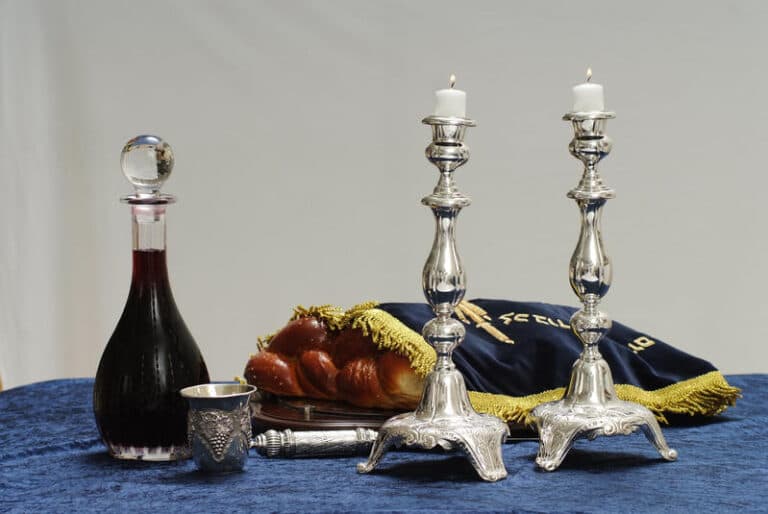

Shabbat table with the customary wine, “challah’ bread and candles which will all be blessed before the meal. Photo: Mendy Hechtman/FLASH90
Key Takeaways
- Shabbat is the Jewish day of rest. It’s observed from Friday sunset to Saturday night
- Shabbat seems to have a lot of restrictions, but they’re actually liberating
- Using a camera or phone involves electrical activity, prohibited in Jewish law
- Taking a photo creates a permanent record or image, prohibited in Jewish law
What Is the Jewish Shabbat? Just a bunch of restrictions?
Ever wondered why observant Jews seem to completely switch off once a week? No phones, no cameras, no rushing around. First, let’s take a look at what is Shabbat in Judaism.
Shabbat is the Jewish day of rest, starting at Friday sunset and ending on Saturday night. But, something usually surprising to outsiders, is that it is not simply a day off work. Far from being a day off, It’s actually a day on, a divinely appointed time, separated from everything ordinary. It’s a day meant for rest, holiness, family, friends, and devotion to God. It’s even got it’s own blessings, prayers, songs, clothing and traditional food. The Orthodox Jewish Sabbath customs are truly beautiful to behold.
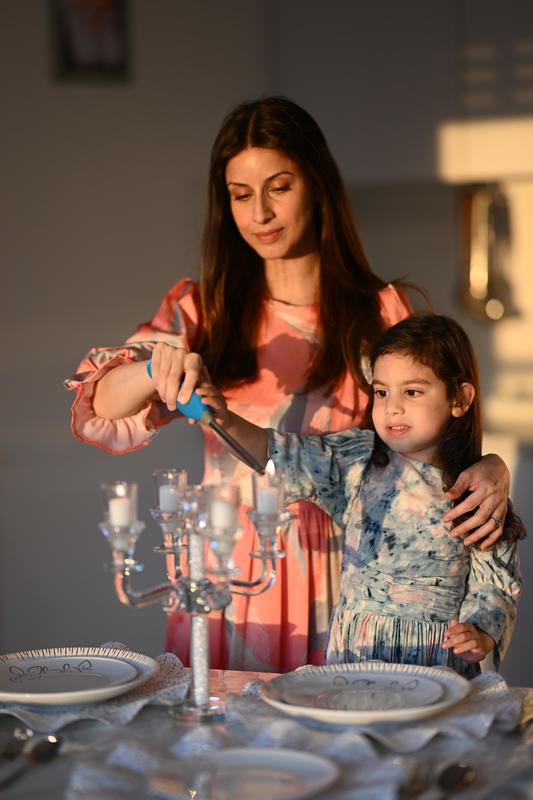
Candles are lit, the table is set, and for roughly 25 hours, the world carries on while Jews enjoy their time unplugged (off the grid, but into the soul!). Outsiders can look at Shabbat and see a list of things Jews cannot do, restrictions. But for the Jew actually living it, orthodox Jewish Shabbat is liberation. Think of the rest of the week as a stormy sea of deadlines, pressure to produce, pinging phones and constant demands. Shabbat is the island in the middle of the chaos. The restrictions (delineated in the Talmud) are not the point; they’re the fence protecting something precious and holy.
📖 For a deeper look at how Shabbat connects to Jewish spiritual life, this article is a great place to start
Why Is Photography Off the Table?
So why exactly don’t Jews take pictures on Shabbat? The short answer is this: photography is avoided because it can involve doing melacha, the kind of “work” Jewish law prohibits on Shabbat. In Jewish law, the concern isn’t only the camera operator’s action, but also the subject’s participation if they pose or help make the photo happen. If you encounter Jews avoiding being photographed on Shabbat, just realize that they’re not trying to be rude. They’re simply trying to be reverent. Can Orthodox Jews be photographed on Shabbat is a question with a pretty firm answer: no.
- Cameras and phones involve electrical activity. Jewish law forbids actively using electricity (completing or breaking electrical circuits) on Shabbat. Something as small as pressing a shutter button or turning on a screen is still completing an electrical circuit. That puts photography firmly in the category of melacha (prohibited work). By contrast, electricity that was already set in motion before Shabbat, or that runs automatically on a timer, is often treated differently. That’s why things like a refrigerator, a timed air conditioner, or lights left on before Shabbat may be allowed.
- A photograph creates something lasting. In Jewish law, photography is also seen as prohibited because it produces a permanent image. The concern is not only that a picture captures a moment, but that it creates a new permanent record, which is also a form of melacha (prohibited work).
As we can see, Shabbat restricts more than heavy physical work; it also limits actions that create, transform, or preserve something in a lasting way.
📖 This piece highlights how Jews usher in the Shabbat and what follows, the spiritual treasure of Shabbat that permeates the home.
If you ever find yourself wandering through an Orthodox neighborhood on a Saturday, just be aware of what’s going on around you. Here’s a bit of Shabbat photography etiquette: consider putting your camera away or ask observant Jews politely if they mind being photographed. In summary, Jews don’t just see Shabbat as a day of restrictions, they genuinely see being offline as a way to align with what’s important in life.
Want to keep reading? If any of this has sparked your curiosity, read more about the two fascinating dimensions of Shabbat here. Explore more on faith, values, and the Land of Israel at Sinai Project.
Discussion0
No comments yet — be the first to share your thoughts.