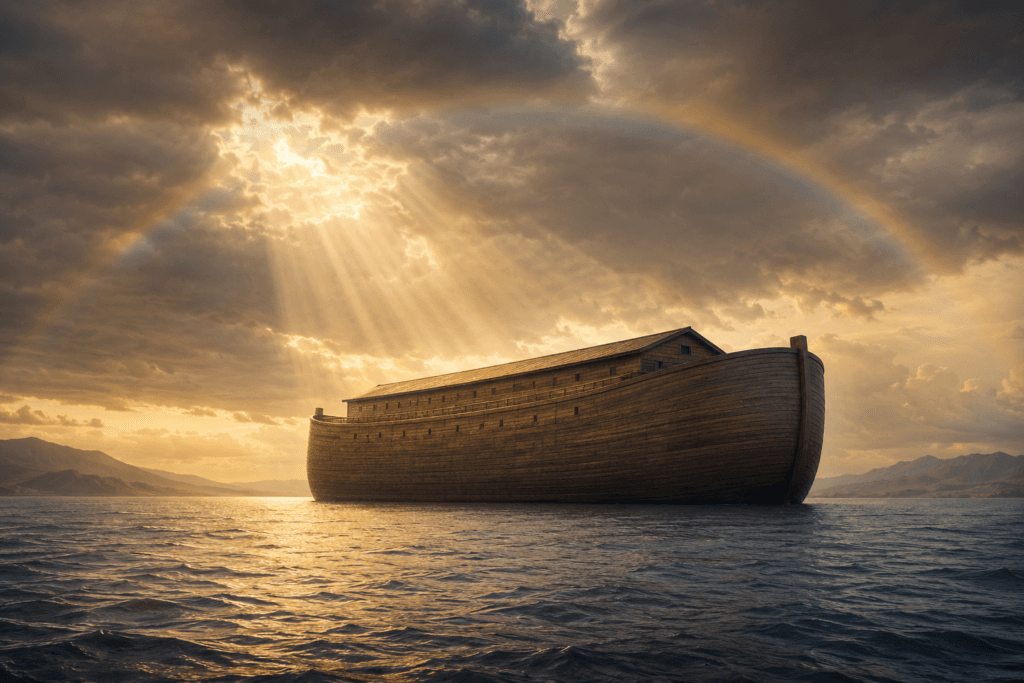

Noah’s ark with rainbow| Photo: AI illustrative
Takeaways
- Noahides are non-Jews who follow seven universal laws that traditional Judaism traces back to Noah.
- Estimates put the global movement at roughly 20,000 people, spread across dozens of countries.
- The largest concentrations show up in the Philippines, the United States, Nigeria, Latin America, and Russia.
- Most Noahides connect through online study groups, virtual yeshivahs, and Chabad or independent rabbis, not physical synagogues.
- Some keep loose ties to churches for family reasons, but the movement’s own leaders describe it as distinct from Christian identity.
In a small church near the Georgia-Tennessee border, a Baptist minister began questioning core teachings of his own faith in the 1980s. Over time roughly half his congregation followed him into a different practice entirely. The building was renamed Frazier’s Chapel B’nai Noah Study Center, and the members inside began calling themselves Noahides.
That single congregation is a small piece of a much larger, scattered movement. Reporters, rabbis, and researchers have started paying closer attention to it in recent years. Here is what the record actually shows.
What Exactly Is a Noahide?
The term comes from Noah, the biblical figure who survived the flood. After the waters receded, God’s covenant came with a promise attached: “I now establish my covenant with you and your descendants after you” (Genesis 9:9).
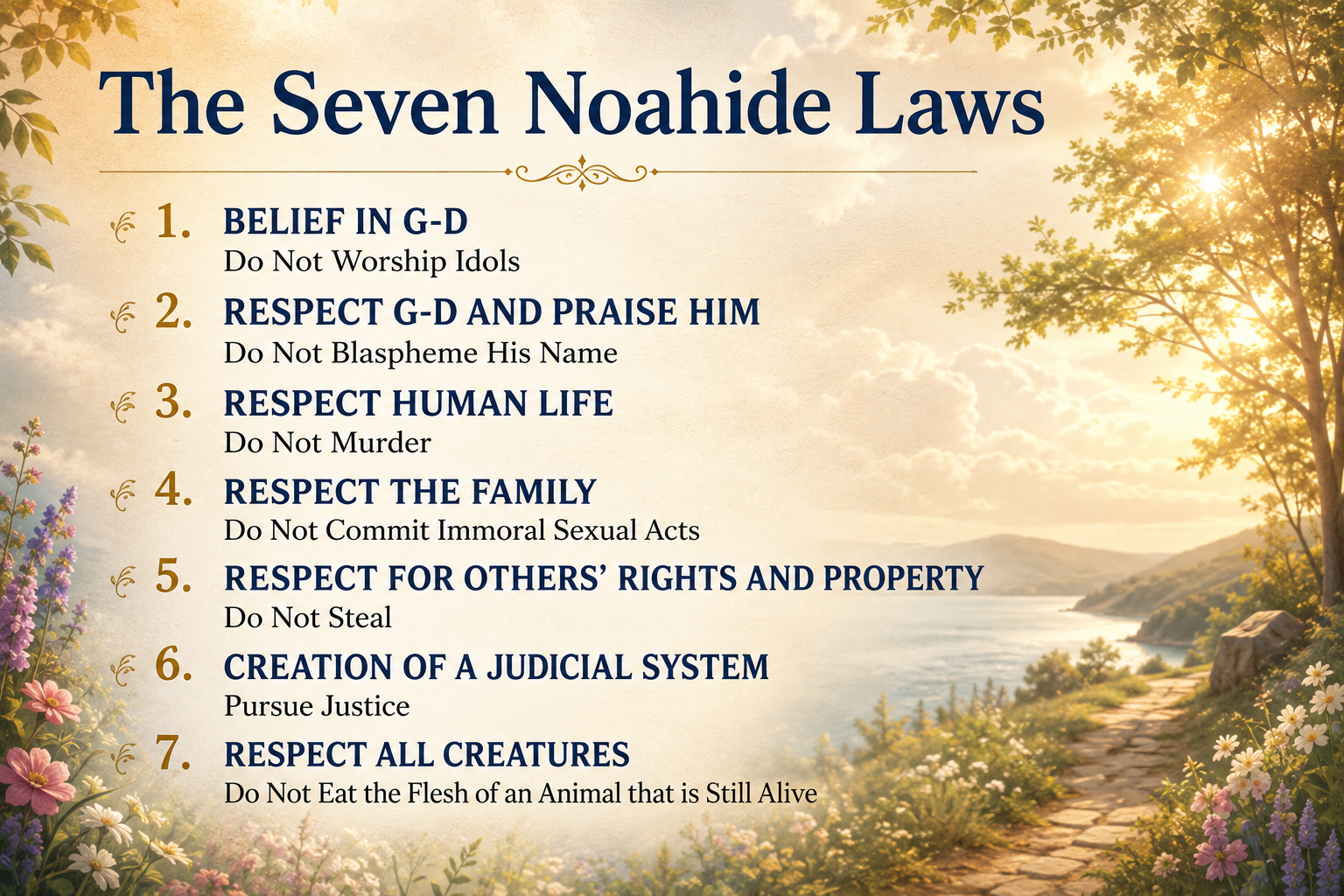
Traditional Jewish sources hold that within that same covenant, God gave humanity seven basic laws: prohibitions on murder, theft, sexual immorality, blasphemy, idolatry, and eating a limb from a living animal, plus a duty to establish courts of justice.
Traditional Judaism describes these as the pillars of human civilization, binding on every person regardless of nationality or background. The laws are formally recorded in the Talmud (Jewish oral tradition) in a text Jewish scholars have studied for over a thousand years.
A Noahide does not convert to Judaism. There is no ceremony that changes legal or religious status the way conversion does. A person simply takes on the obligation to keep these seven laws because God commanded them, according to the traditional teaching on the subject.
📖This piece highlights a Swedish Christian influencer standing with Israel and the biblical conviction behind his message that God will protect the Jewish state.
How Many Noahides Are There, and Where Do They Live?
Reliable numbers are hard to pin down, since there is no central registry most of the movement’s history. The most commonly cited estimate puts the global Noahide population at around 20,000 people as of 2018, spread across the Philippines, the United States, the United Kingdom, Latin America, Nigeria, and Russia.
The Philippines reportedly has the largest single national group, with close to 2,000 people identifying as Noahides. Smaller clusters exist in India, across Europe, and in scattered communities throughout Africa.
Growth has tracked closely with internet access. Before online forums existed, individual Noahides often had no idea others like them existed, according to reporting on the movement’s history. Websites, virtual study groups, and email lists changed that.
What Do Noahides Actually Do?
Scripture ties the weight of these laws directly to human dignity. “For in the image of God has God made mankind” (Genesis 9:6) is the verse traditional sources point to as the anchor for the prohibition against murder. Daily practice centers on the seven prohibitions themselves: not committing murder, theft, sexual immorality, blasphemy, idolatry, or cruelty to animals, and supporting courts of justice.
Beyond that, Chabad-affiliated teachers note that the framework leaves room for charity, honoring parents, prayer, and study, even though those specific acts fall outside the seven core laws.
Some Noahides keep kosher-adjacent dietary habits, mark certain Jewish holidays in modified form, and pray using Noahide-specific prayer books developed in recent years. Homeschooling networks exist for Noahide families raising children, complete with curricula built around biblical stories rather than a specific denominational framework.
There is no single required liturgy or ritual calendar. Practice varies significantly from one Noahide community, or one individual, to the next.
How Do Noahides Connect With Each Other?
Before the internet era, most Noahides operated in isolation, often unaware that similar communities existed elsewhere. That has changed substantially since the 2000s.
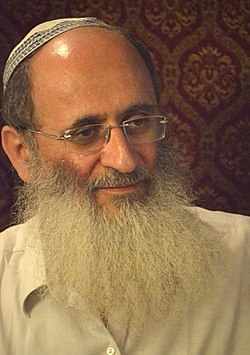
Online platforms now host Noahide study groups, matchmaking services for Noahide singles, and homeschooling associations. Organizations such as Brit Olam, also known as the Noahide World Center, run programs connecting communities across continents under the guidance of Orthodox rabbis, most notably Rabbi Oury Cherki in Jerusalem.
Some reporting indicates the movement has begun organizing more formally in recent years, including efforts toward international gatherings and shared governance structures. Details of these efforts are still developing, and outside verification of specific claims remains limited.
Do Noahides Identify as Christian?
This varies by individual, but the movement’s own leadership generally describes Noahides as distinct from Christian identity, not a subgroup within it. Reporting on the movement notes that many Noahides arrived at this path after leaving Christian doctrine behind.
That said, individual practice varies. Some people who identify as Noahides retain family or cultural ties to churches they grew up in, even while rejecting the theological claims at the center of that tradition.
What Is Their Connection to Rabbis and Jewish Authority?
Most organized Noahide communities operate under the guidance of an Orthodox rabbi, either through in-person relationships or increasingly through online instruction. Rabbi Oury Cherki, who leads Brit Olam in Jerusalem, has become one of the most visible figures associated with formal Noahide outreach.
Chabad-Lubavitch has separately promoted awareness of the seven laws for decades, including efforts that led to recognition of Noahide teachings in past U.S. presidential proclamations. Individual Noahides without access to an organized community often rely on published material from Chabad.org and Aish.com, along with online correspondence with rabbis willing to answer questions.
The prophet Isaiah described a house of worship with a far wider reach than one nation alone. “For my house will be called a house of prayer for all nations” (Isaiah 56:7) is a verse frequently cited in discussions of where non-Jews fit into biblical religious life.
Where the Movement Stands Today
That Baptist minister from the Georgia-Tennessee border is not an isolated case. Similar stories have surfaced in homeschooling networks, online forums, and small congregations scattered from Nigeria to the Philippines. Some communities have kept their original buildings and simply changed what happens inside them. Others meet only online, connected by shared study material and a rabbi willing to answer questions over email.
The movement remains small by any measure, difficult to count precisely, and largely unfamiliar to the public. What the record shows clearly is a consistent pattern: individuals and small groups, independently arriving at the same seven laws, and organizing their lives around them without ever becoming Jewish.
Want to keep reading? If any of this has sparked your curiosity, read more about a U.S. congressman’s visit to Judea and Samaria here. Explore more on faith, values, and the Land of Israel at Sinai Project.
Discussion0
No comments yet — be the first to share your thoughts.