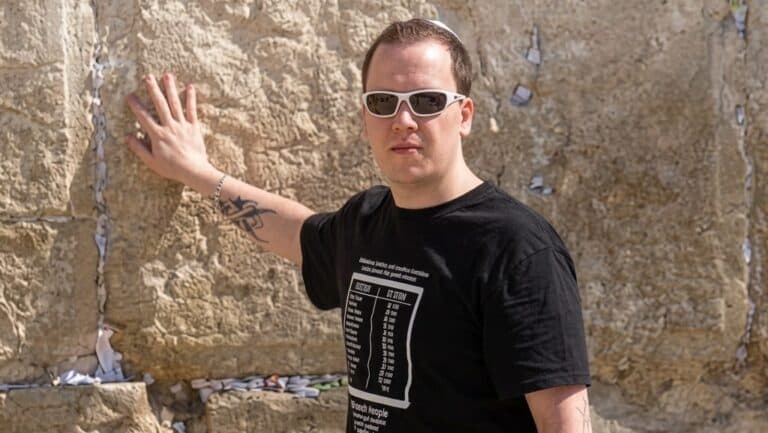
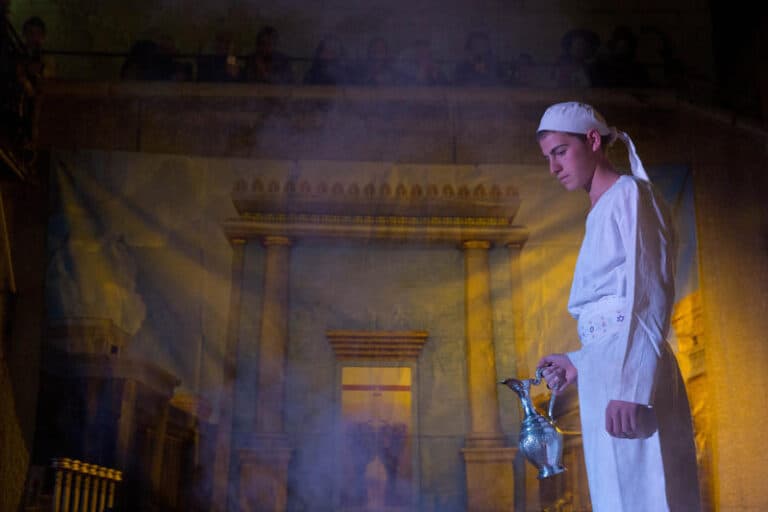

Recreation to learn about the Temple Service. | Photo by Nati Shohat/Flash90
The Sacred Rhythm: How Sabbath Complements Human Creativity
What is more important, building a house of God or resting on the Sabbath? At first glance, we might think that building the house is much more significant. After all, an abode for the Lord’s presence should take precedence. Yet, the Bible believes differently! We will learn that while human creativity is essential in developing civilization, humility and cessation from that creative act acknowledging the One true Creator must come first.
Chapter 31 in Exodus consists of two segments; one seems essential to the narrative flow, the other, an apparent aberration.
The first eleven verses present the climax of laws relating to building the Tabernacle. Chapter 25 begins with a call to open hearts and contribute to God’s dwelling place, culminating in a simple directive: “Everything I show you, the form of the Tabernacle, the form of the vessels, you shall create”.
But how? Who will create God’s vessels? Who will fashion the Lord’s actual house? The verse is ambiguous, leaving us wondering: Can a mere mortal create God’s house?
Six chapters later, we get our answer—Betzalel. “Look, I have called Betzalel, filled with God’s spirit, wisdom, understanding, and knowledge.” Most importantly, he’s commanded “to think thoughts”.
Betzalel isn’t superhuman; he’s one of us, perhaps the best, but we can aspire to follow his example. His mastery of creative powers, channeled ideally towards God, teaches us about creativity’s role in shaping our religious identity.
We are Partners in the Divine Drama
The message is clear: God’s house and vessels result from human creativity. Our unique efforts, thoughts, and creative acts help us partner in the divine drama.
Yet, verse 12 brings this to a screeching halt! All we’ve learned crashes down as we read the stern warnings about Sabbath laws. God tells Israel:
“BUT, guard my Sabbath; it is holy. Violate it by working, and you’ll surely die, cut off from your people. Work six days, but the Sabbath is for God.” No work, no physical actions, no creating—cease and desist from all creative activities.
Lest we overindulge in external accomplishments, Sabbath reminds us of our inner creative dimension. Sometimes, developing our inner core matters more than outward actions.
We often take our personalities, traits, strengths, and weaknesses for granted. We marvel at spaceships but ignore true brotherhood. How much time do we devote to ‘inner space’? When do we remove distractions to enhance our values, ethics, and interpersonal obligations?
Sabbath perfectly complements our human creative experience. Six days, we should strive to be Betzalel; on the seventh, we must focus inward and unveil our inner creativity.
This juxtaposition in Exodus 31 isn’t coincidental. It profoundly states the balance between external and internal creativity, doing and being. While building the Tabernacle is crucial, it can’t supersede Sabbath’s sanctity.
This dichotomy reflects a fundamental spiritual tension. We’re called to actively participate in the world, using God-given talents to create and improve. Betzalel, whose name means “in God’s shadow,” embodies this, channeling divine inspiration into tangible form.
Conversely, we’re commanded to pause on Sabbath, stepping back from creativity for spiritual reorientation. It’s about shifting from external to internal, from doing to being.
Sabbath Becomes a Powerful Tool for Growth and Reflection
Sabbath becomes a powerful tool for growth and reflection, a weekly chance to recalibrate morally, nurture relationships, and cultivate inner spirituality. This inner work is arguably more crucial than our weekly creative acts.
Placing the Sabbath commandment right after Tabernacle instructions reminds us of our priorities. Even building God’s dwelling must yield to Sabbath’s sanctity, teaching that our relationship with God is more about who we become than what we do for Him.
The message is clear: spiritual growth isn’t just about external actions, no matter how lofty. It’s equally, if not more, about internal development. The Tabernacle may physically manifest God’s presence among people, but Sabbath is where we most fully experience that presence within ourselves.
This balance between external and internal creativity, action and contemplation, is a recurring Jewish theme. The Talmud states that “Torah study is greater because it leads to action,” but also emphasizes regular self-reflection and character development.
In our productivity-obsessed world, Sabbath’s message is more relevant than ever. It reminds us to pause, look inward, nurture relationships, and reconnect with core values. It’s a weekly reset, refocusing us on what truly matters.
The interplay between Tabernacle-building and Sabbath observance highlights spiritual growth’s cyclical nature. We create, pause to reflect and internalize, then return to work with renewed purpose. This action-reflection cycle is fundamental to our spiritual journey.
This juxtaposition in Exodus teaches a profound lesson about spiritual priorities. While building God’s house—literally or metaphorically through creativity—is important, it can’t come at the expense of inner spiritual work. Sabbath, focusing on rest, reflection, and inner renewal, necessarily counterbalances our creative impulses.
Ultimately, we see a holistic vision of spiritual life. It’s not about choosing between external creativity and internal growth, building and resting. It’s about finding the right balance, recognizing both as essential to a rich, meaningful spiritual existence. In this delicate equilibrium lies the path to true divine partnership, becoming not just builders of God’s dwelling, but embodiments of His presence in the world.

Discussion0
No comments yet — be the first to share your thoughts.