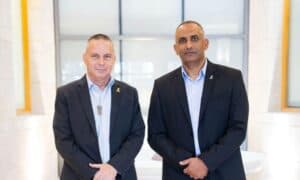

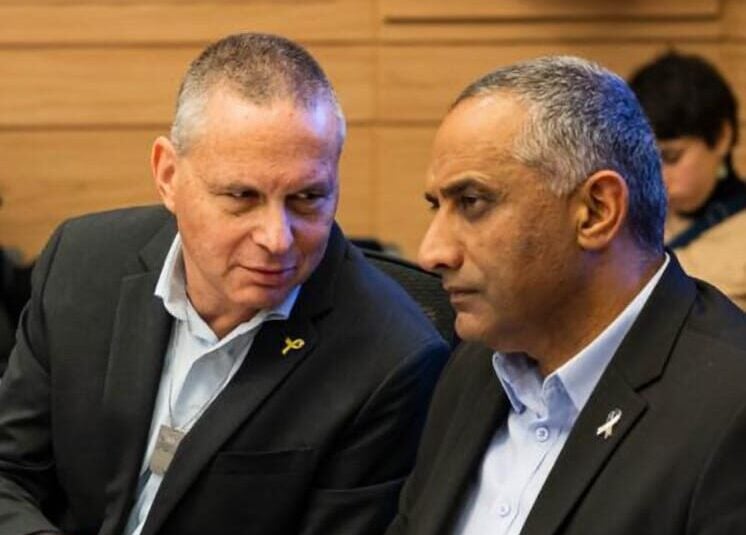
Dedi Simchi (right) and Yizhar Shai (left) | Photo: Private
Beyond the complex security situation, the State of Israel is undergoing challenging days regarding its social cohesion. Initiatives are needed that will promote unity and bring hearts closer.
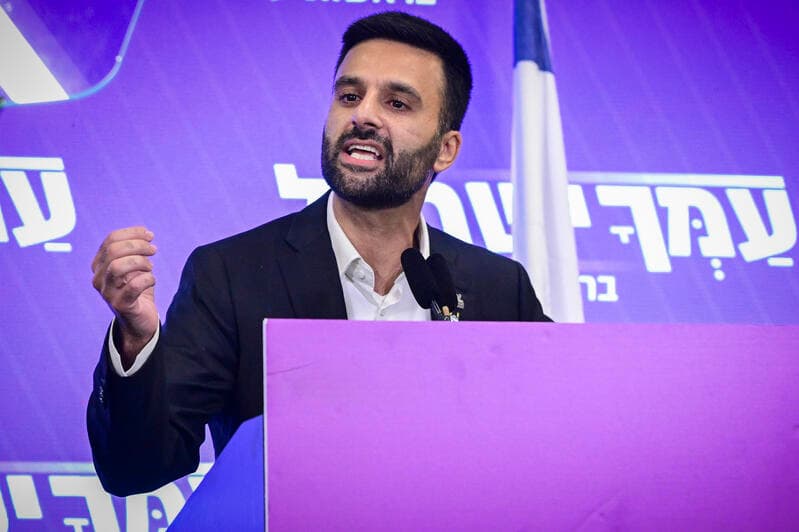
Recently retired Brigadier General Dedi Simchi and former Knesset Minister Yizhar Shai have become a go-to address for such initiatives. The two, who built the compromise framework for judicial reform together, are currently working on a consensus framework around the issue of the commission of inquiry for October 7, and are primarily focused on developing a unifying and understanding dialogue within Israeli society.
Guy Charged at One of Them with His Bare Hands
Before diving into the discussion about issues in Israeli society, we opened with a more personal point. Both Simchi and Shai are bereaved fathers. Their sons, Guy and Yaron, fought bravely and saved lives on October 7.
“Guy is our youngest son,” says Simchi. “He was a soldier in the Paratroopers reconnaissance unit. An amazing leader, charismatic, handsome, and brave. He went to a party on Friday. On Saturday morning, when the missiles were fired, he gathered 30 boys and girls and brought them to the protected rooms.”
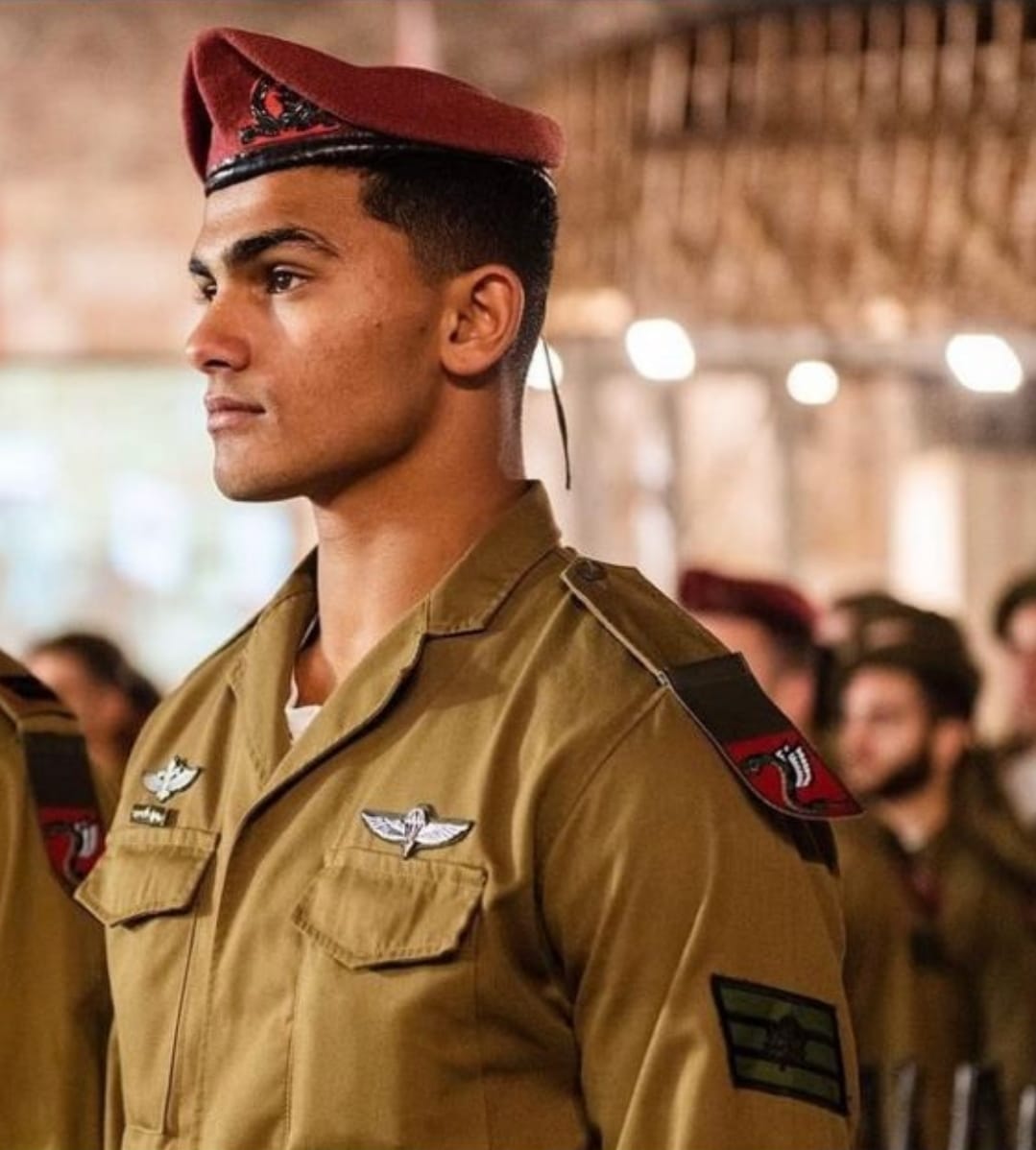
Guy, who was unarmed, remained outside the protected room with a friend who held a weapon to protect everyone, despite their requests for him to come inside. “Five terrorists arrived at the scene. Guy charged at one of them with his bare hands, choked him, and killed him. The second terrorist was shot by his friend, but a third terrorist threw grenades that severely wounded Guy, and eventually, he fell from a terrorist’s bullet. Guy was an amazing boy like all the sons and daughters of the people of Israel. For them, giving their lives for the state is a given.”
Prevented Dozens of Nukhba Terrorists from Entering Kibbutz Kerem Shalom
In Shai’s family, Yaron was also the youngest son. “He was a handsome boy, charismatic, a volunteer by nature,” shares Shai. He volunteered for the Nahal Brigade and that Saturday he was at the operations headquarters of the brigade. “They took up positions in Kerem Shalom,” Yizhar recounts, “and together with two other heroic fighters, Captain Yoav Levinson and Omer Batito, they prevented dozens of Nukhba terrorists from entering the kibbutz.”

The three fighters physically prevented the terrorists from entering, actually saving the fate of other kibbutzim in the border area. Yaron activated the alert team of the nearby base, thus saving all the observers at the base. Yaron was critically injured in the battle and arrived at the hospital lifeless. “We lost a beloved child and a loyal friend. A boy so talented in music, sports, and many other fields.”
“Social Conception”
RegaNEWS: The current situation in the country is one where there are many barriers between sectors and groups. How do we change the “social conception” amongst sectors and manage to get closer to each other and truly see the other?
“I think the first thing is to have a calm, and genuine dialogue among everyone,” Simchi opens. “We should not frighten anyone with the end of democracy, end of governance, and all such things, but rather sit down and talk.”
“I think the model that Yizhar and I have is a correct model. There are things we don’t agree on, but we both have a common denominator that is stronger than anything else, we must not dismantle the State.” According to him, if each side gives a little and does not emerge with “all their appetite in hand,” it is possible to find common ground even on significant issues.
Aspiration for the Victory of Unity
“I completely identify with Dedi’s words,” says Shai, adding: “Judaism is built on study in pairs and debate, on disagreements that create interesting discussions, new insights, and wisdom. Judaism has existed for so many years, among other reasons, due to the ability to recognize the value of discussion around disagreements.”
He further adds that in recent years, a mistaken perception has established itself in Israeli society that compromise is a weakness, a kind of retreat in front of the other side. “Indeed, there are debates around social issues, and there are debates around religion and state or security. I also see from the very harsh criticism I receive from my camp, from the liberal camp, that people really perceive the issue of compromise as some sort of weakness and as a kind of giving up on values.”
For exactly this reason, Shai wants to demonstrate that compromise is actually a strength. “Agreements are a victory of principle, that despite the disagreements among us, there is much in common regarding our differences.”
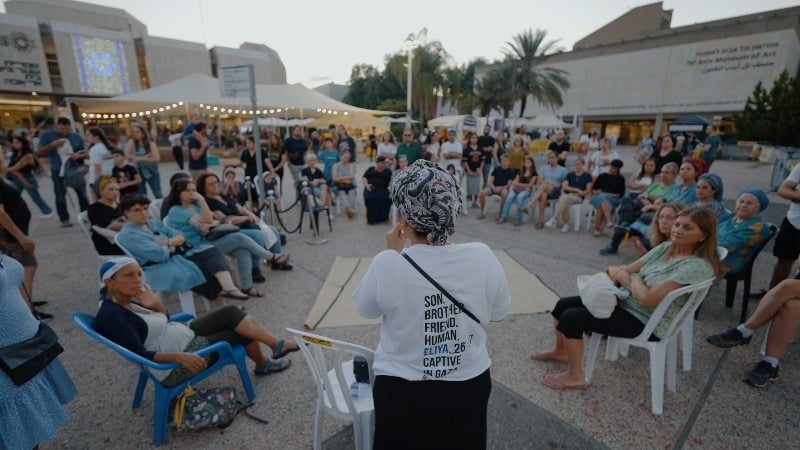
Shai hopes and prays that Israel after October 7 will be one where the dialogue will be conducted with the inclusion of the other side. “The striving for agreements is an aspiration for the victory of unity and the connection between us over everything else,” he concludes.
Agreeing on the Principle
RegaNEWS: How does this look in practice? How, for example, does the preparation process for the judicial reform framework appear?
“Look, we understood several things before anything else,” Simchi responds. “One, both of us greatly value the judicial system and believe that it should be independent, professional, and diverse. Once we agree on that, we can sit and discuss whether the system will be this way or that way. Whether there will be five judges, seven judges, or 20 judges, and all those other things. Once you agree on the basic principles, everything else is much simpler.”
Establishment of the Committee
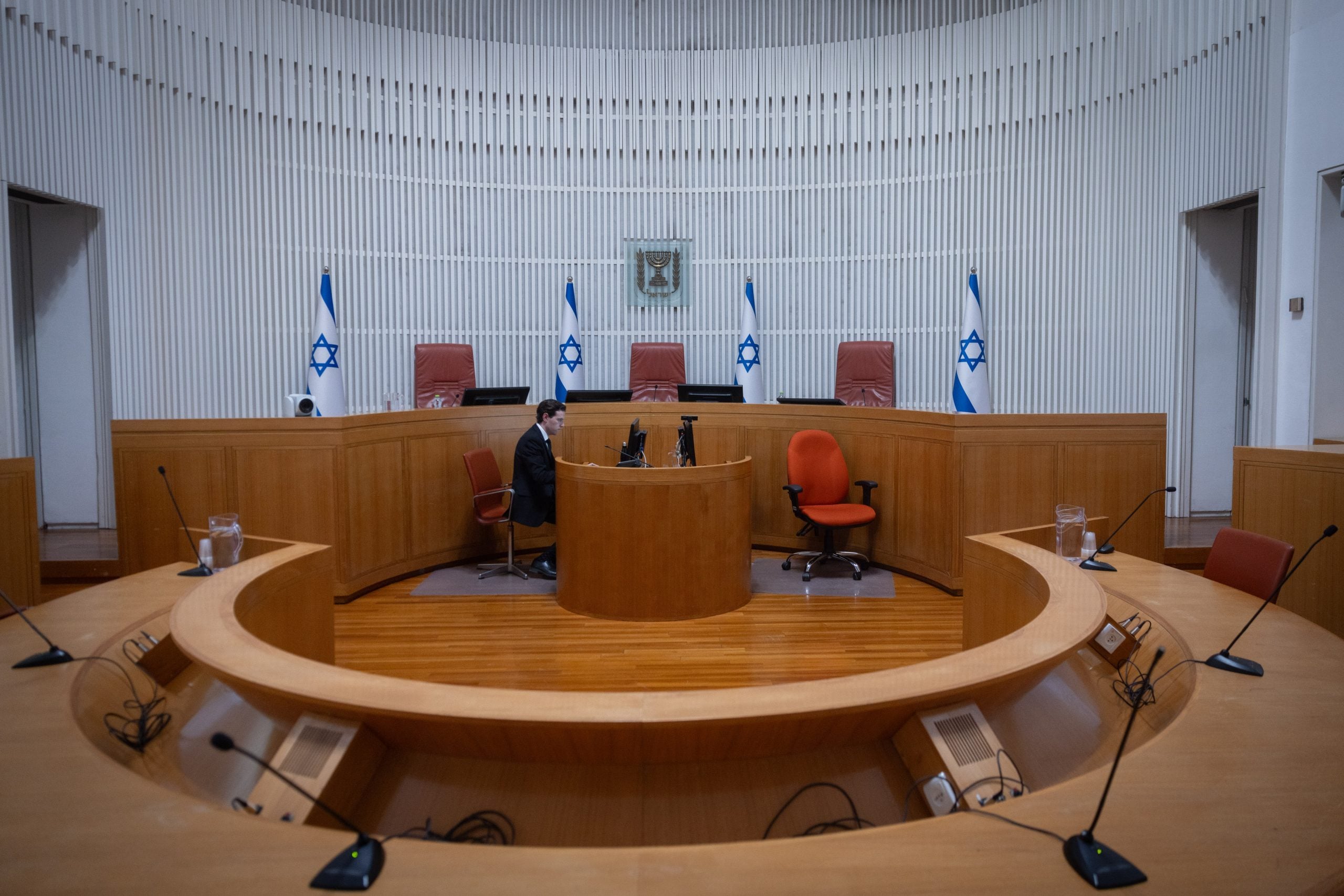
In exactly the same manner, Simchi suggests solving the crisis surrounding the establishment of the State commission of inquiry. “I think we need to achieve the truth, to understand what happened there in a genuine and professional way. If you ask me, having a Supreme Court judge in the commission of inquiry is not a “must”.
“Nevertheless,” he emphasizes, “I understand that for Yizhar, for example, this is very important. Therefore, if we ultimately uncover what happened on October 7th, I will have no problem if that happens this way or that. If there is agreement on the essential matters, a bridge and solutions can be found with each side conceding a little.”
Yizhar and Dedi Reveal: Finding a Formula for a State Commission of Inquiry
Yizhar also chose to elaborate on this sensitive issue. “The law dictates that whoever heads a commission of inquiry is a Supreme Court judge. Although I personally do not agree with this, I recognize that there are significant worries among a considerable segment of society regarding one Supreme Court judge versus another.”
“Therefore,” Shai clarifies, “despite my complete confidence, it doesn’t matter who the selected judge might be to head the committee, whether it is Amit, Solberg, Elron, Chait, or anyone else, I firmly believe that they would conduct their work cleanly, impartially, and would strive to get to the truth and also arrive at real and correct conclusions.”
“Since I understand there are significant concerns and distrust among parts of Israeli society, I say, let’s appoint a judge to head such a committee who will raise no doubts for anyone.” Such a judge, according to Shai, will solve the issue for both sides: those who are worried about the Supreme Court and those who fear there won’t be a judge at the head of the committee.
“Therefore,” he reveals, “Dedi and I have been working on this for many months, finding a formula for a state commission of inquiry that will be built by consensus.”
“Agreement,” Shai explains, “does not only relate to who stands at the head of the committee but also to the rest of the team that the chair will appoint. They should have relevant experience and not be biased to one side or the other. And you see, this way we found a starting point for a particularly sensitive issue.”
Not Planning to Give Up
RegaNEWS: Is your direction for a solution already laid out on the table? Is this the next step after the judicial compromise framework?
“If the intention of laying on the table is to present an organized position paper, then not yet,” Simchi answers, but immediately talks about progress on the matter: “We invested many hours in discussions with coalition and opposition members, with the president, government officials, and significant figures in the judicial system to advance the process. I hope that eventually, we will find the time to put our paper on the table. I can tell you that we recently met with many bereaved families. They all want one thing, an objective and reliable commission of inquiry.”
Simchi mentions that the initial connection between him and the former minister started precisely because of the attempt to formulate a framework for an inquiry committee by consensus. And regarding these two demands: a commission of inquiry and agreement, they do not intend to give up.
“We recently met with many bereaved families. They all want one thing, an objective and reliable commission of inquiry.”
Building Trust
RegaNEWS: If we try to examine the points that might be in the most dispute, there is a significant element of distrust in all of them. The feeling is that each side, both in the public itself and among public figures, feels a significant lack of trust toward the other side. How do we resolve such a situation?
“I think it boils down to a very simple but dramatic and very important point,” Yizhar argues, “Leadership. Leaders are those who need to show an exemplary personal example, their ability to elevate themselves to the occasion and connect the different parts of Israeli society around common goals.”
“If we look at famous leaders throughout history,” Shai continues, “we can see negative leaders who use the principle of ‘divide and rule.’ Divide and rule has come from leaders seeking the easiest way to govern their subjects and tried to break and create rifts between them for that purpose.”
In complete contrast to ‘divide and rule,’ Shai proposes a different approach. “Instead of this divisive principle, we need something else: to be together and to serve. Don’t rule over us, but serve us as public leaders. This should be the perception of public leaders in the State of Israel. Unfortunately, the result stands before us. A long line of leaders and public figures over the last 20 years or so have not only failed to connect us but have actually emphasized the divisions.”
According to him, the result was seen by Hamas leaders before October 7. “A weakened Israeli society due to internal strife, due to gaps, because of right vs. left and government vs. opposition and opposition vs. coalition. This is not a cliché—it weakens the state.”

Need to Demand from Leaders
Here, Shai turns to Israeli society and states: “We all need to demand from our leaders. The leadership must be unifying and connecting, not divisive and inflammatory.”
“I want to add one more thing,” says Shai. “A public leader is a leader for all of us. Whether I voted for him or not, he is our Prime Minister. He is our Minister of Justice. He is the President of the Supreme Court for all of us. They are for all of us. Although every four years we go to vote for public representatives, from the moment they are elected, they need to represent us, they need to work hard for us, they should not separate and rule.”
“I agree with every word,” Simchi responds. “The word here is leadership and leaders,” he says. Simchi emphasizes another point: “This means leadership from both sides. From both the right side and the left side. From both the coalition and the opposition. Not to start from one side by yelling that every small issue is the end of democracy. On the other hand, also not to purposely do things and poke fingers in the eye of the other side. The State is in a very complex position. There is heavy sorrow and mourning here. We have hostages and we likely have more wars ahead.”
Rising to the Occasion
In these moments, Simchi emphasizes the need to rise to the historical moment and occasion. “This is the time when everyone needs to rise to the moment of historic significance and act together. It is true that according to the rules of the game there is a coalition in power right now, but on one hand, I expect the coalition not to act oppressively and on the other hand, I expect the opposition not to act in a screaming manner claiming it’s the end of democracy.”
“A solution can be found,” he states with optimism. “A solution can be found because, in the end, the State of Israel continues to exist and continues to move forward and do amazing things. There is an amazing people here. I truly hope that the leaders will connect to the greatness of this people,” he concludes.

Shai also chooses to conclude his remarks on this significant point. “The duty is upon all of us. And I say all of us because I mean the right, the left, everyone. A blessing is to be worthy of the unimaginable sacrifice of our heroes. It’s not just Guy the hero and Yaron the hero, the sons of Dedi and myself, but all those fighters who heroically prevented massacres and perhaps significant destruction. The bravery of the citizens who defended and fought with their bodies and did not give up. The heroic families of soldiers who are now on the front lines and genuinely worry around the clock, sacrificing their dearest ones.”
The path to being worthy, Shai explains, runs through our unity. “I think it starts with being connected and united. We need to demand from ourselves to be the society for which these heroes gave their lives. It is a responsibility that falls on our shoulders, and we must fulfill it.”
Discussion0
No comments yet — be the first to share your thoughts.