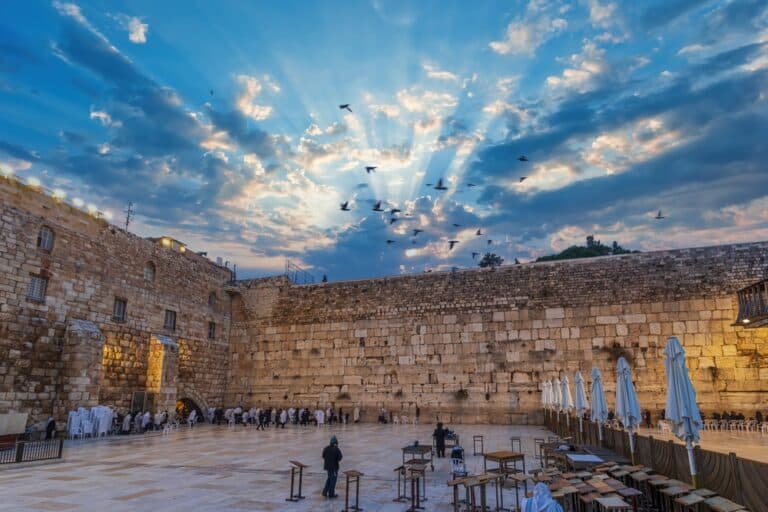

Sunrise over the Western Wall, Jerusalem, the last remaining wall of the Holy Temple | Photo: Shutterstock
Takeaways
- Jerusalem shows up over 600 times in the Old Testament, by name alone.
- Tradition holds 70 different names for this one city.
- Prayer has faced this city for thousands of years.
- Psalm 122 still gets recited today.
- The Western Wall isn’t the Temple, but it’s the closest thing left.
Few places on Earth carry the spiritual weight that Jerusalem does. This isn’t just a city with old buildings and historic streets. It’s the beating heart of faith for billions of people across the globe.
One thing that makes Jerusalem so special is that it’s sacred to not one, not two, but three of the world’s major religions: Judaism, Christianity, and Islam.
Each of these faiths traces deep roots back to this city, tying it to their prophets, their holiest moments, and the sacred texts that shape how they see the world.
It’s rare that a single city that means everything to so many different people, for so many different reasons. And that’s exactly why Jerusalem has earned its title as the Holy City.
Here we’ll explore what makes Jerusalem ‘holy’ according to Jewish tradition.
Jerusalem in the Hebrew Bible
The Hebrew Bible doesn’t always spell out “Jerusalem” by name. It talks about “the place that God will choose,” and tradition connects that phrase directly to this city. The prophets go further and call it Zion, the place where Torah goes out to the world.
Micah wrote that the law would go forth from Zion, and the word of God from Jerusalem.
Zechariah recorded God’s own promise to dwell in the middle of the city.
Psalm 122 tells congregants to pray for the peace of Jerusalem, a line still sung and spoken today.
📖 Ever wondered what the Holy Temple was really built for? This article breaks it down.
A Portable Tent First, Then a Permanent City
Long before Jerusalem entered the picture, God’s presence traveled with a portable structure called the Mishkan, the Tabernacle the people carried through the wilderness. It was always meant to be temporary.
Deuteronomy 12:11 already pointed ahead to something else: “the place God, your God will choose to establish His Name.”
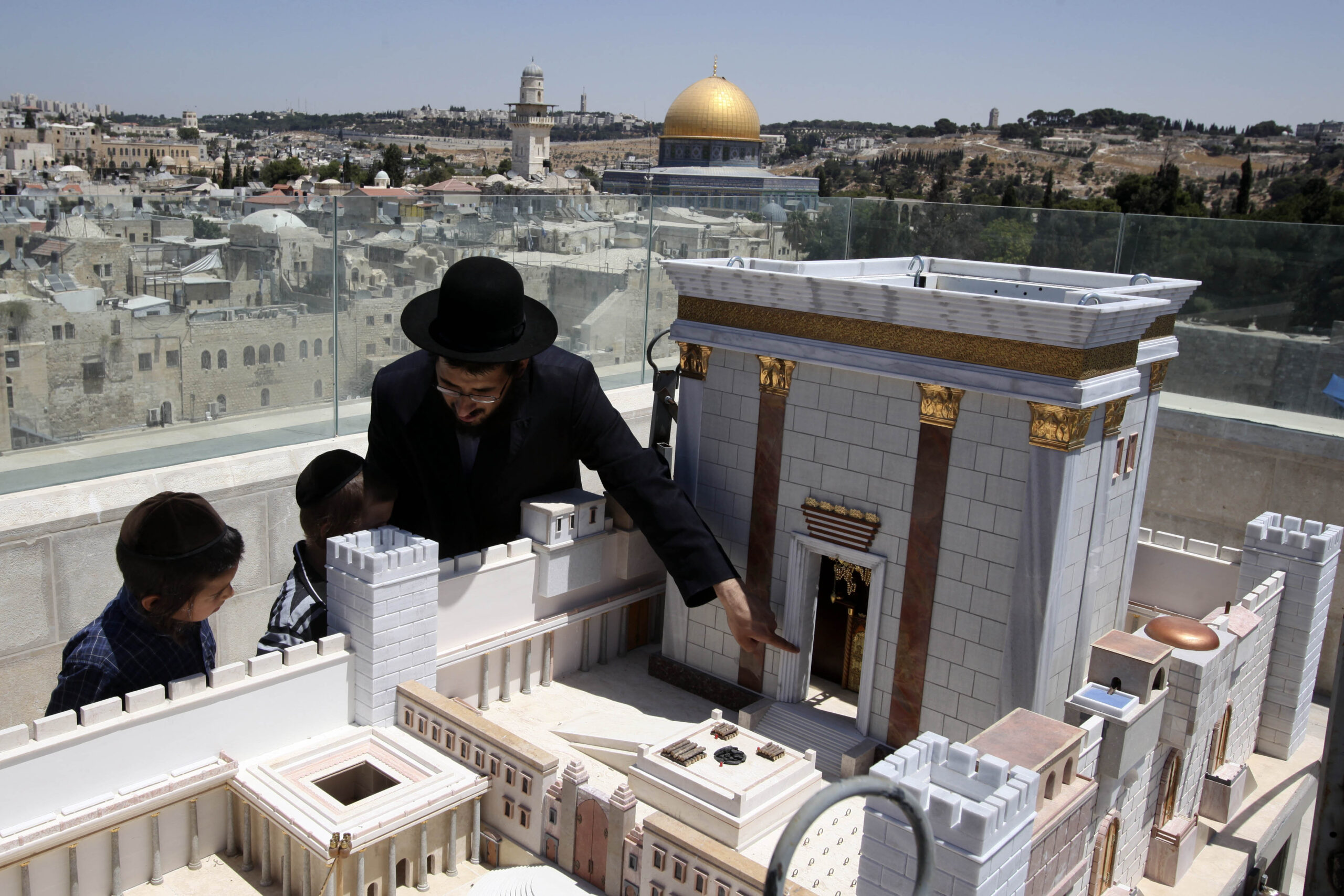
That promise landed on a specific hill. King David purchased the site, a threshing floor on Mount Moriah, in one of only a handful of real estate transactions recorded in detail in the text.
His son Solomon built the Temple there, and the city became the Holy City in more than just title. Certain tithes and sacrifices could only take place inside its boundaries once the Temple stood.
The City Within the City
The holiness in Jerusalem isn’t one flat layer. It works in concentric circles that get more intense the closer you move toward the center.
The Holy of Holies sat at the middle, the one spot only a single person (the High Priest) could enter, once a year. Around that came the Temple itself, then the city of Jerusalem, then the wider land of Israel.
So while the entire Land of Israel carries holiness, Jerusalem carries an extra measure of it. That’s part of why, even now, the city holds a different weight than anywhere else on the map.
70 Names for One City
There’s an old idea that certain cultures need dozens of words for something because it matters that much to daily life. Jewish tradition treats Jerusalem the same way. Tradition counts 70 different names for this single city, among them Shalem, Moriah, Neve Tzedek (City of Truth), and Ir Ha’Elokim (City of God).
Jerusalem itself is mentioned more than 600 times across the Hebrew Bible, and that number doesn’t even include the other 69 names layered on top.
What Makes This City Different From Every Other City
Most famous cities got that way through trade routes, armies, or wealth. Jerusalem didn’t need any of that.
This is the place the text itself identifies as where God chose to make His own presence dwell, not just visit. It’s just a promise that stuck for millennia, and a people who never stopped facing East toward it in prayer.
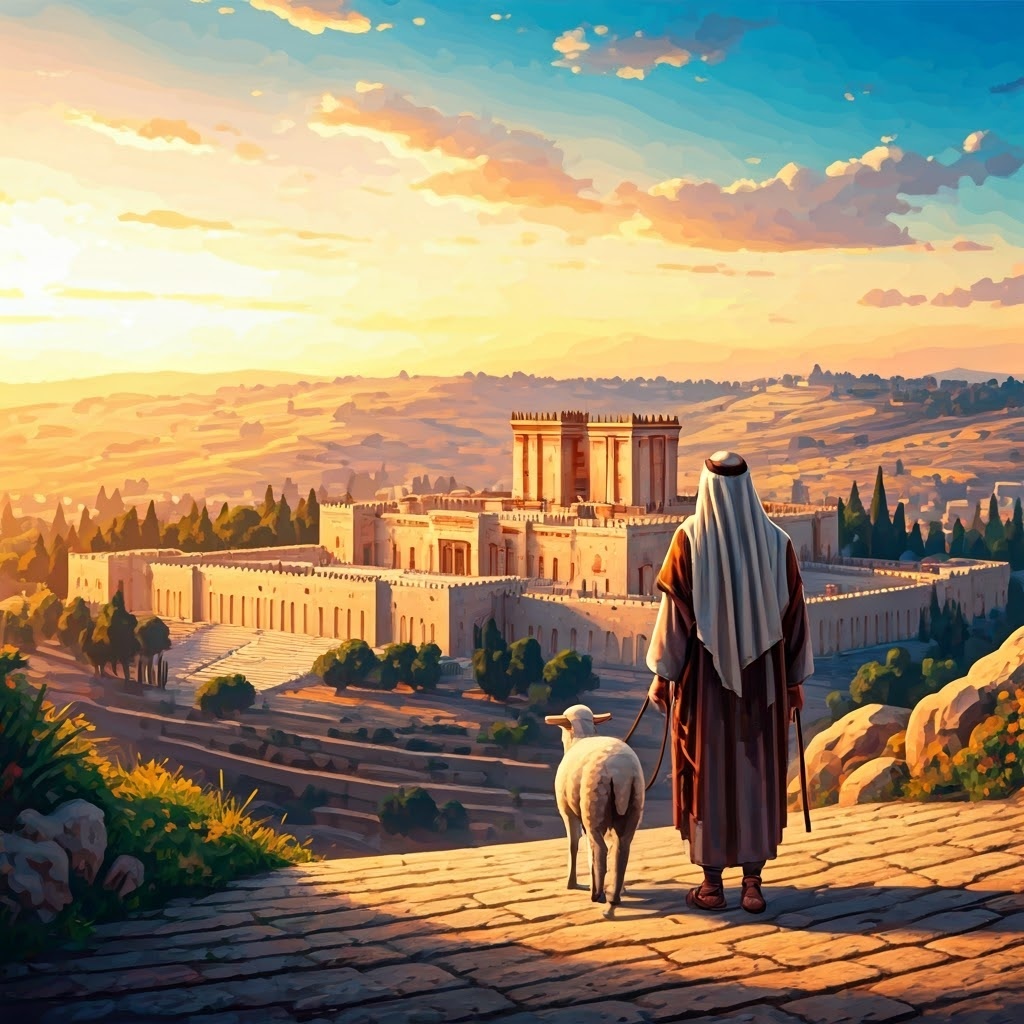
Add Depth to Your Faith
Jerusalem earned its title through memory, worship, and a promise recorded thousands of years ago. For readers who love the Bible and love Israel, understanding that foundation adds real depth to every mention of the city in the Bible.
Want to keep reading? Jerusalem’s gates and the Psalms share a hidden connection. Click here for the fascinating breakdown and a tour of each gate. Explore more on faith, values, and the Land of Israel at Sinai Project.
Discussion0
No comments yet — be the first to share your thoughts.