Trump Says Iran Is “Begging” For A Deal
Trump said Iran is “begging” for a deal as talks pause during Khamenei’s funeral, signaling pressure, restraint, and major implications for Israel and America

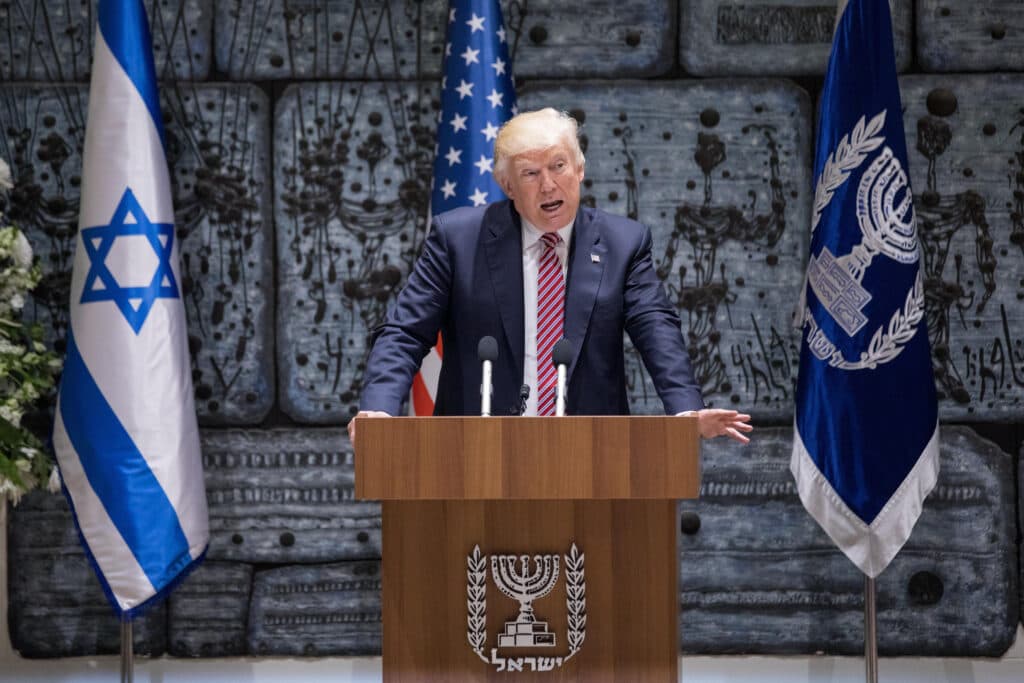
Trump Iran negotiations entered a new phase Saturday as President Donald Trump said he is closely following the funeral of former Iranian Supreme Leader Ali Khamenei.
Trump told Axios that the Iranians “are begging to make a deal,” adding that both sides agreed to pause negotiations for a week until the funeral concludes.
He also said that, during that period, neither side would fire on the other.
The Tanakh says, “By wise guidance you shall wage your war.” That verse captures the balance now facing Washington and Jerusalem: strength must remain visible, but strategy must control the moment.
Trump Iran Negotiations Pause
Referring to the funeral gathering, Trump said Iran’s senior figures were assembled in one place.
“They are all there,” Trump said. “One shot [and we can take them all out], but we are not going to do that because then we would have nobody to negotiate with.”
The comment was blunt, but it revealed Trump’s strategic message. The United States wants Iran to understand that its leadership is vulnerable, while also keeping negotiations alive.
Trump also said he was surprised to see mourners crying at the funeral.
“Maybe it’s fake tears,” he said, adding that he believed many Iranians hated Khamenei.
For Iran, the funeral is a regime event, a public show of mourning, power, and continuity. For Trump, it is also a pressure point.
Impact For Israel And America
For Israel, Trump’s remarks matter because Iran is not only a diplomatic challenge. It is the center of the threat network that arms Hezbollah, Hamas, Islamic Jihad, and other terror forces.
A pause in negotiations may lower immediate fire. However, it does not remove the Iranian threat.
For the United States, the moment tests whether deterrence can force a deal without another round of war. Trump is signaling that America can strike, but is choosing leverage over immediate escalation.
That point also connects to “Trump Blasts New York Times: ‘That’s What’s Changed.’” President Trump attacked The New York Times over a war headline, arguing that major military, economic, and strategic changes had been ignored.
Here too, Trump is arguing that the strategic reality has changed. Iran is wounded, its leadership is under pressure, and negotiations are taking place in the shadow of American and Israeli force.
A Shared Moral Calling
The United States and Israel share a direct stake in what happens next. If Iran uses the funeral pause to regroup, Israel faces renewed danger from Tehran and its proxies. If Washington uses the pause to extract real concessions, both countries gain strategic breathing room.
The United States and Israel also share a covenantal understanding before God. Both nations, at their best, see liberty as a moral calling, not only a political system.
In this story, that shared calling means using strength with discipline. It means confronting a regime that threatens Israel, sponsors terror, and chants death to America, while refusing to confuse restraint with weakness.
For Israel, that duty includes defending Jewish life against Iran’s terror network. For America, it includes protecting its forces, standing with Israel, and ensuring diplomacy does not become cover for Iranian recovery.
Trump’s message was therefore simple: America sees Iran’s weakness, but will use that leverage for a deal if possible. For Israel and the United States, the question is whether that deal will truly weaken the regime, or simply give it time.
For more stories on Israel, faith, and the values behind the headlines, follow Sinai on Facebook and Instagram.
Discussion0
No comments yet — be the first to share your thoughts.