The Roar of the Lion, the Shelter of His Wings: Weekend of War
As the war with Iran entered its sixth day over the weekend, Israel’s multi-front campaign continued to expand, with sustained airstrikes deep inside Iranian territory, heavy attacks on Hezbollah infrastructure in Lebanon, and intensified security operations in Judea and Samaria. Despite repeated missile launches toward Israeli cities, the vast majority were intercepted, and no significant

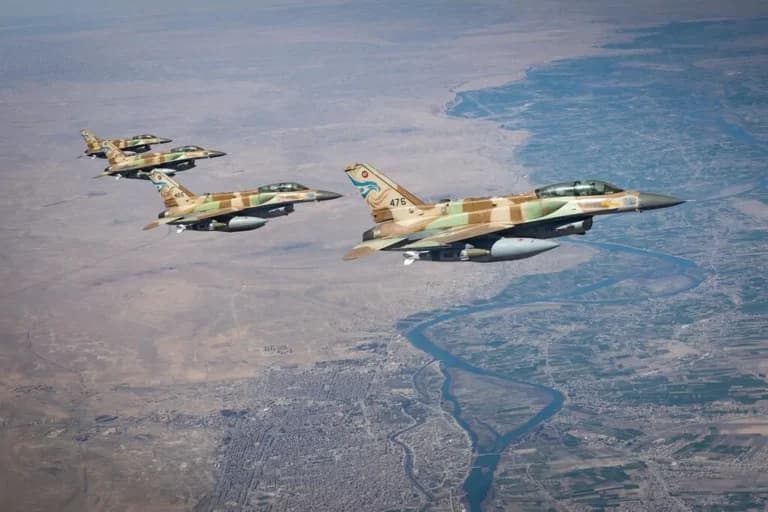
As the war with Iran entered its sixth day over the weekend, Israel’s multi-front campaign continued to expand, with sustained airstrikes deep inside Iranian territory, heavy attacks on Hezbollah infrastructure in Lebanon, and intensified security operations in Judea and Samaria. Despite repeated missile launches toward Israeli cities, the vast majority were intercepted, and no significant civilian casualties were reported.
Scripture promises: “With His wing He will cover you, and under His wings you will take refuge” (Psalm 91:4). Over the weekend, as sirens echoed across Israel and fighter jets roared toward targets deep inside Iran, many Israelis felt the truth of those ancient words in real time. Missile barrages struck from multiple directions and the war expanded across several fronts, yet once again most threats were intercepted and cities were spared major harm, even as Israeli forces carried the fight deep into enemy territory.
Roaring Over Iran
The weekend began with continued large-scale Israeli operations inside Iran as part of Operation “Lion’s Roar.” The Israeli Air Force carried out additional waves of strikes overnight and into the morning against regime targets in Tehran and the Alborz province, including internal security headquarters, Revolutionary Guard facilities, and sites connected to Iran’s missile array.
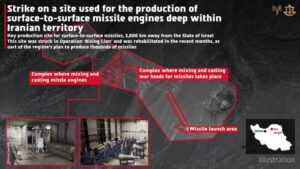
According to Israeli defense officials, the scale of the campaign has already reached unprecedented levels. Since the beginning of the operation, Israeli pilots have conducted roughly 2,500 strikes and dropped more than 6,000 munitions. Military officials estimate that around 80 percent of Iran’s air defense systems have been destroyed and more than 60 percent of the regime’s ballistic missile launchers have been neutralized or rendered inoperable. The achievement of air superiority has allowed Israeli aircraft to operate freely over large parts of the country and strike strategic infrastructure.
The world’s two greatest Air Forces (🇺🇸 + 🇮🇱) continue to dominate the skies over Iran. pic.twitter.com/Irmfb1JEEx
— U.S. Central Command (@CENTCOM) March 7, 2026
During one operation, Israeli aircraft identified an Iranian team attempting to launch an anti-aircraft missile at Israeli planes. Within moments the launcher and the crew operating it were destroyed, preventing the attack in real time.
In another unprecedented development, the Israeli Air Force released documentation showing an Israeli F-35I “Adir” stealth fighter shooting down an Iranian YAK-130 combat aircraft over the skies of Tehran, a rare air-to-air engagement in the current campaign.
🎥WATCH: Footage from the historic shoot down of an Iranian Yak-130 fighter jet by an IAF “Adir” F-35I fighter jet pic.twitter.com/o6BAqiaNXk
— Israel Defense Forces (@IDF) March 5, 2026
Missile Fire with No Hits
While the air war intensified inside Iran, missile fire toward Israel continued intermittently throughout the day. Sirens sounded across multiple regions, including central Israel, Jerusalem, and northern communities in the Galilee, the Golan Heights, and the Haifa area. Most of the incoming rockets and missiles were intercepted by Israel’s defense systems, and in several cases debris or interceptor fragments fell in open areas. In one instance in central Israel, a projectile landed in an open field without causing injuries.
Taking on Hezbollah in Lebanon
At the same time, Israel expanded its operations in Lebanon, targeting Hezbollah infrastructure in Beirut’s Dahiyeh district. Following evacuation warnings issued in Arabic by the IDF spokesperson, Israeli aircraft struck command centers, military facilities, and a warehouse used to store unmanned aerial vehicles. Ten high-rise buildings housing Hezbollah operational infrastructure were destroyed in the strikes.
Israel’s navy also announced the elimination of Wissam Atallah Ali, a Hamas commander in Lebanon responsible for the organization’s training and preparation infrastructure.
Footage from Beirut:
Airstrikes in Beirut, Lebanon pic.twitter.com/ixNpl3Qjy4
— Faytuks Network (@FaytuksNetwork) March 5, 2026
Since the start of the campaign, the Israeli Air Force has conducted 26 waves of attacks in the Dahiyeh area alone. The fighting has also led to a large-scale civilian evacuation in southern Lebanon, with more than 420,000 residents leaving their homes, including tens of thousands from Dahiyeh itself.
As part of IDF activities in Lebanon, IDF special forces operated at night in an attempt to locate the body or related information of long-missing navigator Ron Arad. However, although the operation was carried out successfully, nothing was found. “The IDF will continue to operate relentlessly, day and night, out of a deep commitment to bringing all of Israel’s sons, the fallen and the missing, back home to Israel” the IDF posted on their X account.
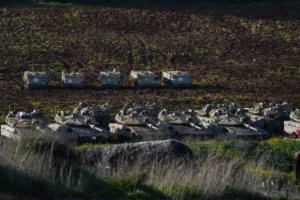
Along Israel’s northern frontier, IDF forces continued ground operations in the Mount Dov area aimed at exposing enemy infrastructure and reinforcing Israel’s defensive line along the border.
Judea and Samaria Operations
Even as the war expanded on multiple fronts, Israeli security forces moved to ensure that terror groups in Judea and Samaria would not exploit the situation. The IDF reinforced the region with eight additional battalions and carried out hundreds of counterterrorism operations over the course of the week.
More than 200 suspects involved in terror activities were arrested, including bomb manufacturers, weapons traffickers, Hamas operatives, and individuals suspected of planning attacks. Security forces also confiscated roughly 30 weapons, including M16 rifles, pistols, improvised firearms, and equipment used to manufacture weapons. Two lathes used to produce firearms were seized, along with approximately 380,000 shekels in funds intended for terrorist financing.
Separate operations in Jericho, al-Fasil, and al-Auja led to the arrest of additional suspects, while Israeli intelligence monitored and detained a woman in her twenties from the village of Shuyukh who had allegedly used social media to incite violence and encourage attacks against Israeli civilians during the war.
IDF activity in Judea and Samaria | IDF Spokesperson
The End of the Weekend
By Saturday evening, the fighting intensified once again across multiple arenas. Hezbollah launched anti-tank fire in southern Lebanon, wounding two Israeli soldiers from the Givati Brigade who were conducting a defensive mission near the border.
Israel responded with additional airstrikes against Hezbollah targets in Beirut while continuing to strike Iranian assets. For the first time since the beginning of the war, Israeli forces also reportedly targeted national infrastructure in Tehran, striking approximately 30 oil tankers connected to the regime’s fuel supply.
Throughout Saturday night, missile and drone alerts sounded repeatedly across Israel. Sirens were heard in northern communities, Haifa and the surrounding Krayot, central Israel, Jerusalem, and later in the south near Beersheba. Several incidents involved suspected hostile aircraft infiltrations near the northern border.

Despite the intensity of the barrages, Israel’s air defense systems successfully intercepted most threats. Medical teams reported no physical injuries, though several people were treated for shock.
Amid the ongoing exchanges, the United States signaled increased military support for the regional campaign. President Donald Trump issued a sharp message to British Prime Minister Keir Starmer after reports that Britain was considering sending two aircraft carriers to the region, remarking that such reinforcements were unnecessary because the war was already being won.
Help is from God
As the weekend concluded, Israeli forces continued their coordinated campaign across Iran, Lebanon, and additional fronts, maintaining pressure on the Iranian regime and its proxies while defending Israeli cities from ongoing missile fire. The operation, Israeli officials say, remains far from over, but the momentum of the campaign has already begun reshaping the strategic balance across the Middle East.
And the phenomenal feats of both the American and Israeli militaries should not make us forget: “I shall raise my eyes to the mountains, from where will my help come? My help is from the Lord, the Maker of heaven and earth” (Psalm 121:1-2).
Discussion0
No comments yet — be the first to share your thoughts.