“The Feet of the Herald”: Major Steps Forward in Judea and Samaria
In a series of significant developments over the past week, the Israeli government has advanced concrete measures to formalize land status, strengthen Jewish communities, and deepen administrative recognition across Judea and Samaria. From the renewal of land registration for the first time since 1967, to the official recognition of long-contested communities, leaders are describing the

In a series of significant developments over the past week, the Israeli government has advanced concrete measures to formalize land status, strengthen Jewish communities, and deepen administrative recognition across Judea and Samaria. From the renewal of land registration for the first time since 1967, to the official recognition of long-contested communities, leaders are describing the moment as a turning point in governance and national resolve.
Today (Sunday), the government approved the launch of a comprehensive land registration process in Judea and Samaria, marking the first such move since the Six-Day War. The decision authorizes the registration of extensive tracts of land belonging to the state in the state’s name, a step officials say will bring legal clarity and operational certainty.
Under the plan, the Authority for Land Registration and Settlement of Rights within the Ministry of Justice will be empowered to carry out the process in the field. Dedicated funding and staffing will be allocated for the effort. Officials explain that formal land settlement procedures will allow for transparent and thorough clarification of property rights, helping resolve long-standing legal disputes while enabling regulated infrastructure development and orderly land marketing.

Defense Minister Israel Katz described the renewal of land settlement in Judea and Samaria as “a vital security and governance measure designed to ensure full control, enforcement, and operational freedom for the State of Israel in the territory.” He added that regulating land status prevents unilateral action on the ground, reduces illegal takeover attempts, and undermines terror infrastructures that threaten stability and security. “This is a necessary step,” Katz said, “to create both operational and legal certainty, enabling the IDF and the security establishment to act decisively to defend Israeli citizens and safeguard national interests.”
Finance Minister Bezalel Smotrich emphasized that for the first time since 1967, Israel is restoring order and governance to land management in Judea and Samaria. A regulated land settlement, he said, prevents disputes, creates legal certainty, blocks unilateral actions, and allows for lawful and responsible development. “The State of Israel is taking responsibility for its land and acting according to law, with transparency and determination.”
Deputy Prime Minister and Justice Minister Yariv Levin called the approved proposal “a true revolution in Judea and Samaria.” Declaring that “the Land of Israel belongs to the people of Israel,” Levin said the government is committed to deepening its hold on every part of the land, and that the decision reflects that commitment.
In a First Since the Disengagement, Homesh Returns to the Israeli ID Card
Alongside the broader land policy shift, symbolic yet powerful changes are unfolding on the ground. Also today, a resident of the renewed community of Homesh officially updated his address at the Interior Ministry, becoming the first since the 2005 Disengagement to list Homesh as his place of residence on an Israeli ID card.
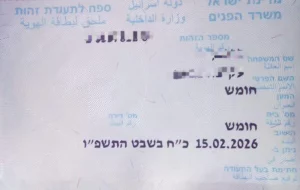
The move became possible after the community recently received an official settlement symbol from the state. Benny Gal, expelled from Homesh and among the founders of the “Homesh First” initiative, moved back to Homesh with his family around two years ago. Today he came to renew his ID card and formally change his registered address, marking a small but historic moment.
Yossi Dagan, head of the Samaria Regional Council and himself expelled from the other Samarian community of Sa-Nur during the Disengagement, called it “another step on the road back home.” He said, “We are privileged to amend the history of the people of Israel. Homesh will be four times larger than it was before the Disengagement. Those who sought to uproot Homesh will receive a larger, stronger Homesh, firmly planted in the soil. We have returned home.”
Gal described the development as another stage in the full return of Jewish settlement to Homesh and northern Samaria. “For the first time in 20 years, it is possible to transfer an address back to Homesh,” he said. “With God’s help, we will continue to put down roots. Our vision is to establish a flourishing community that lives a life of Torah and pioneering spirit.”
In recent days, families in the renewed community have called on additional families to join them and take part in rebuilding settlement in the area. Preparations are underway for additional families to move to the site in the coming period in order to establish a new neighborhood. Just last week, families held a tree-planting ceremony near the future neighborhood site, joined by students of the Homesh Yeshiva and Rabbi Elishama Cohen.
Havat Gilad Closure, After 24 Years
Last week, another milestone in the region was reached. The town of Havat Gilad also received an official settlement symbol, 24 years after its founding and eight years after the murder of resident Rabbi Raziel Shevach. Havat Gilad was established on privately owned land belonging to Moshe Zar, in memory of his son Gilad Zar, the Samaria Regional Council security officer who was murdered in a shooting attack while on duty.
Over the years, the community endured dozens of evacuations and repeated attempts to remove it from the land. In January 2018, Rabbi Shevach was murdered near the community, and his widow Yael set as her goal the formal regulation of the settlement, working together with local leadership.
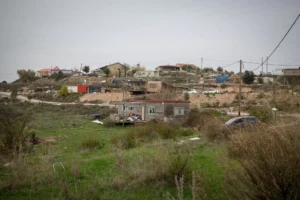
Receiving a symbol constitutes formal governmental recognition, after more than two decades. Practically, it means direct state budgeting, recognition by all government ministries, connection to the national water system, regulated electricity infrastructure, an official security coordinator position, the eligibility of its residents to carry personal firearms, postal services and formal educational institutions.
In a letter to Dagan, residents wrote that “a historic and moving moment in the story of settlement was sealed yesterday. Havat Gilad, seasoned by challenges and upheavals, has received a settlement symbol, a step that will enable growth and progress at standards we have not yet known.” They thanked him for his years of dedication to Samaria and its residents, concluding with the aspiration to reach one million residents in the region.
Dagan responded by calling the recognition “an emotional closure, and historical justice for the heroic pioneers who have clung to the land for so many years.” He added, “This is tremendous news that will allow us to transform the place into a thriving community with proper infrastructure and broad construction. We are not stopping here. This is another stage on the path to realizing the vision of one million residents in Samaria. We will continue to build, to develop, and to deepen our roots throughout Samaria.”
Taken together, these developments reflect a coordinated push, both administrative and symbolic, to solidify Israel’s presence in Judea and Samaria. Supporters view the steps not merely as bureaucratic adjustments, but as historic acts of restoration and national responsibility, shaping the legal and physical landscape for generations to come. And the historical and national are woven with the Biblical, as the movement towards greater sovereignty and settlement heralds even better things to come:
“How beautiful are the feet of the herald on the mountains, announcing peace, heralding good tidings, announcing salvation, saying to Zion, “Your God has manifested His kingdom”. (Isaiah, 52:7)
Discussion0
No comments yet — be the first to share your thoughts.