Shabbat Part 7: The Sabbath Continues to Give us Joy, Peace, Love, Spirit and Purpose

Rabbi Avi Baumol
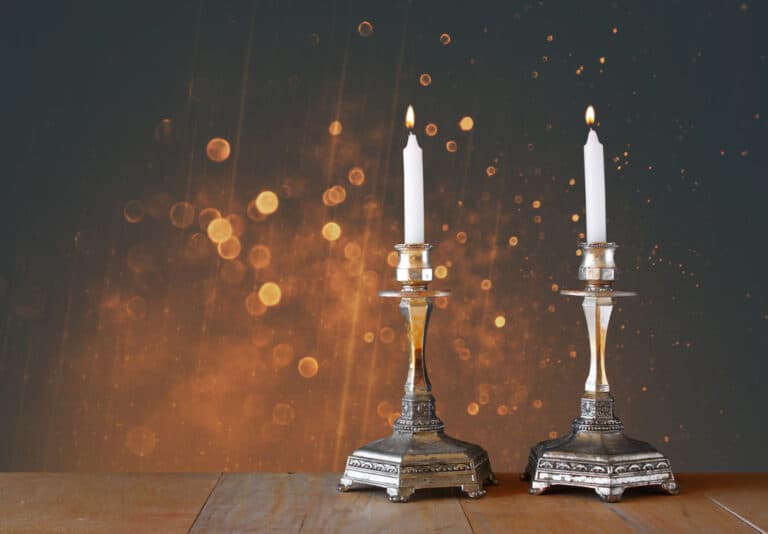
Shabbat candles. | Photo: Shutterstock
Creating Light
Melacha as defined by the rabbis means ‘creative’ work. Work can be very labor intensive and yet not create something new, this is not prohibited on Shabbat. For example: one may rearrange one’s dining room furniture to prepare for the shabbat meal even if it means doing a lot of strenuous activity. Moving items from one place to another does not entail creativity; rather, one must make something new, alter something from its original state, or enhance something to the point of it feeling like a completely different vessel—that is called melacha.
Thus, simply flipping a light switch may seem like the least physically strenuous thing and yet, doing so must take into account thousands of years of civilization’s attempt to defeat nature by making artificial light. True, cavemen at some point used fire but in the most primitive of ways. The more individuals learned to harness the resources on earth and create a more sustainable and comfortable existence, the more they evolved. Today, that evolution manifests itself in LED light, wireless lighting, and creating ‘smart’ homes with lights being controlled by one’s smartphone.
The answer to the question, ‘but why should flipping a light switch be prohibited as work’ on Shabbat is to simply appreciate how far humanity has progressed in order to defeat the natural elements and maintain light and warmth constantly. By all means, turning on a light is one of the greatest feats of the human intellect in millennia!
The subject of each melacha, each prohibition and their applications, requires another essay to do them justice. This represents only an introduction to the Shabbat prohibitions as they enable us to focus on the spirit, on rest, on family, Torah, God and preparing ourselves body and soul for the week ahead.
Saying Goodbye to Shabbat
Just as there is a ceremony to welcome Shabbat replete with wine and blessings, so too there is one at its end. Shabbat ends as three stars emerge in the night sky which signals the end of Saturday and the biblical beginning of tomorrow. At that point we are once again permitted to do creative work and start making our way to returning to the business of the work week. But the rabbis said that just as we accepted Shabbat with the recitation of kiddush, so we must escort the Shabbat queen out with the recitation of Havdalah.
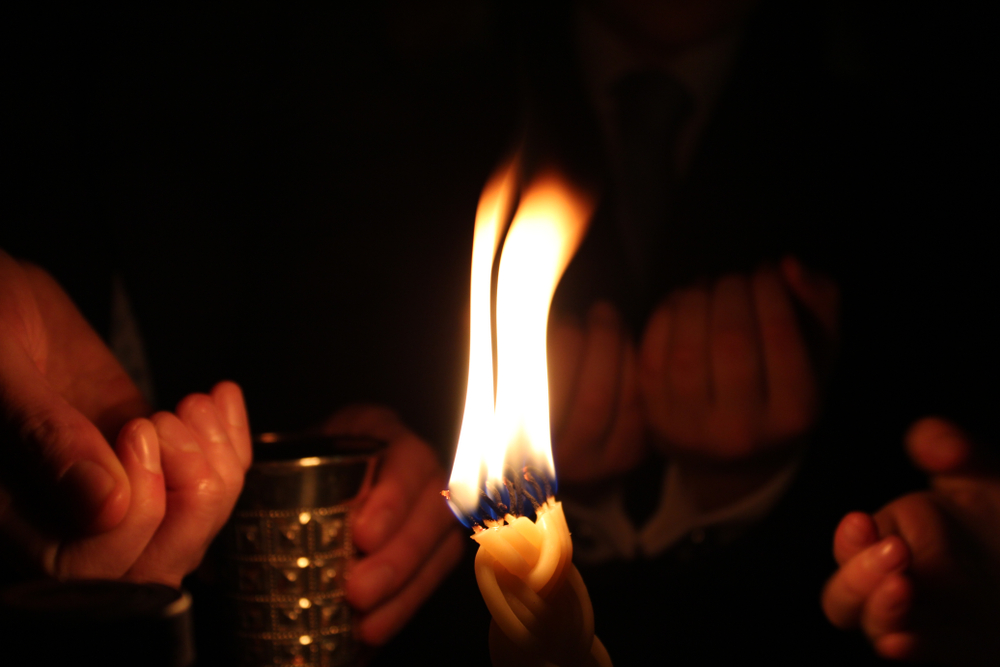
Havdalah literally means a separation—from Shabbat to the regular week. It is a prayer which involves four blessings and uses three different things in order to give Shabbat the respectful send off it deserves. We stand together and one person fills a cup of wine as well as lights a special three-wicked candle. A spice with a fragrant smell is also prepared for the blessing.
The leader of the prayer begins by reciting special verses preparing for this special service. After, the blessing on the wine is recited and the cup is set down (and not yet drunk). The reason wine is chosen relates to the general idea we find in the Bible that ‘wine gladdens the heart of people’. We use wine to add some physical joy to what will be a spiritually joyous occasion.
When shabbat begins we start with wine; when it ends too; when a couple chooses to get married the ceremony begins with wine; when a baby is born the ceremony of thanksgiving begins with wine. Wine in Judaism is not an end unto its own; it is not there for the purpose of getting people high and removed from consciousness; rather, it is there to complement an experience that is already metaphysically joyous, with physical happiness. Thus at Havdalah we recite the blessing on the wine ‘bore pri hagefen’, God who created the fruit of the vine.
The leader then picks up the spices (usually cloves, although it can be any nice smelling spice, even a nice smelling fruit) and makes a blessing on the spice. Everyone answers amen and the spice is handed around for everyone to smell. The idea behind this blessing is that after Shabbat we might be overcome with sadness and our spirits might sink. After all, on Shabbat we are so close to God and once it ends, we have to return to our everyday lives. For this reason, sweet-smelling spices raise our spirits.
The third blessing in the havdalah service is the blessing on fire. This blessing is unique in that the symbol of ‘work’ is fire. In fact, the Torah goes out of its way to prohibit igniting a fire on Shabbat to teach of the importance of fire in advancing civilization. Fire not only provided warmth and light but also changed cooking procedures and enhanced food consumption, helped make major innovations in creating tools, created the world of art and helped society develop. Thus, fire represents the future where human beings control their destiny; for this reason fire is prohibited on Shabbat to remind ourselves that God above created us and is the ultimate creator.
Upon completion of Shabbat, we kindle a fire and benefit from its light. We raise up our hands to the flame and notice the shadow we create by bending our fingers halfway. We also look at the light through our fingernails and enjoy the ability to create once again. The Talmud teaches that in the garden of Eden Adam was concerned that the sun was disappearing over the horizon and that surely meant the end of the world. At that moment God instructed him to rub two stones together in such a way as to make fire. From that point on our world has never been the same. The candle is supposed to have more than one wick as only a few wicks together produce a flame which shines brightly. It is customary for the one reciting the Havdalah to hold up the wine in one hand and the fire in the other for the conclusion of the Havdalah blessing.
The final blessing of Havdalah is the conclusion, and the essence of what Havdalah is about—separation. It is the definition of both the word Havdalah and the word kiddush! This is because shabbat is meant to be a separation from the rest of the week where we treat the day differently, and treat ourselves differently as well.
Distingushing Between Holiness and the Mundane, Light and Darkness
The blessing reads: “He who separates between holiness and secular, between light and darkness, Israel and the nations, between the seventh day and the six days of creation, Blessed are you God who separates between holiness and secular.”
The rabbis knew this and therefore prohibited electricity (though not without major debate) on Shabbat. By refraining from implementing electricity on Shabbat we acknowledge the giant strides humanity has made in technology while at the same time we humbly recognize our limitations. God provided us with fire, but more importantly, he gave us the wisdom to harness that fire and create the most magnificent technologically advanced world. But only for six days out of the week! On Shabbat, we rest. Rest from our activities, but mostly, we rest from ourselves as creators and acknowledge God who created everything around us in this world.
Shabbat, as stated, is a gift from God; one, which must be cherished and guarded throughout history. Observant Jews throughout the world are comforted by the same traditions in homes and synagogues: the same candle lighting, the same kiddush wine and Challah, the same songs and prayers. In doing so we perpetuate the same spirit of Shabbat handed down by Moses through each generation.
Shabbat continues to give us joy, peace, love, spirit and a renewed sense of purpose to face the week ahead. We feel sad at the end of every Shabbat and excitedly think and prepare for the next one approaching. On a day when God rested from creative work, we too, rest, and follow God’s ways, recharging ourselves through food, song, family and prayer, and feel a glimpse of the eternal ideal of the heavenly Shabbat.

Discussion0
No comments yet — be the first to share your thoughts.