Schrader Calls Out Egypt Gaza Border Double Standard
Emily Schrader criticized Egypt’s Gaza border posture after Egypt coach Hossam Hassan waved a Palestinian flag, pointing to a wider double standard against Israel


Emily Schrader criticized what she described as an Egypt Gaza border double standard after Egypt national team coach Hossam Hassan waved a Palestinian flag following Egypt’s World Cup win over Australia.
Schrader, an advocacy activist, responded by pointing to Egypt’s own border policy toward Gaza.
“Egypt ‘loves’ the Palestinians so much that it built a fortress of border walls just to keep them from entering the country,” Schrader wrote. “So humane and caring. Islamic virtue-signaling is breaking records.”
The Tanakh says, “Keep far from a false matter.” That command matters in a debate where Israel often receives blame for realities that also involve Egypt, Hamas, the Palestinian leadership, and the wider region.
Egypt Gaza Border Questions
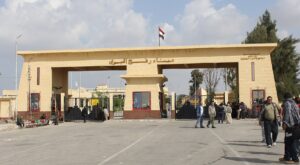
The issue is not whether Egypt has a right to control its border. Every sovereign country has that right.
Israel controls its crossings for security reasons after years of Hamas terror, rocket fire, hostage-taking, and the October 7 massacre. Egypt also controls its side of Gaza’s southern border and has its own security concerns in Sinai.
However, the double standard appears when Israel faces intense global criticism for border restrictions, while Egypt’s restrictions often receive far less attention.
The Rafah crossing has long served as Gaza’s main gate to Egypt. Yet Egypt has not opened its territory for mass entry, permanent resettlement, or citizenship for Gazans.
Cairo has argued that Gazans moving into the Sinai peninsula would create serious security and political dangers. That position may reflect Egypt’s national interest, but it also proves a point: Gaza’s border issue is not Israel’s alone.
Aid, Security And Selective Outrage
Many activists demand that Israel absorb responsibility for Gaza while ignoring Egypt’s decisions at Rafah.
That does not mean Palestinians should suffer. Civilians need aid, protection, and a future free from Hamas. However, moral clarity requires looking at the full map, not only the Israeli side of it.
Israel is expected to provide aid routes, electricity, medical access, and security guarantees while fighting the terror organization that governs Gaza. Egypt, meanwhile, often receives diplomatic space to say no to permanent responsibility.
That contradiction matters because Hamas exploits it. It turns Gaza into a weapon against Israel while avoiding accountability for what it did to both Israelis and Palestinians.
That same border reality gives deeper meaning to “Israel’s Answer to October 7: New Gaza Border Town to Be Named for Ofir Libstein.” Israel is not answering October 7 by abandoning the border. It is answering by rebuilding Jewish life next to it.
A Shared Moral Calling
For the United States, the Egypt-Gaza border question is not distant. Washington has deep ties with both Israel and Egypt, supports regional diplomacy, and plays a major role in humanitarian and security policy around Gaza.
That is why the double standard matters. If American leaders, media figures, and activists demand that Israel carry responsibility for Gaza’s borders, aid, security, and civilian future, they should also ask why Egypt receives a different standard at Rafah.
The United States and Israel also share a covenantal understanding before God. Both nations, at their best, see liberty as a moral calling, not only a political system.
In this story, that calling means telling the truth even when the truth is inconvenient. It means defending civilians without pretending Hamas has no responsibility. It also means refusing to single out the Jewish state while ignoring the choices of neighboring governments.
For Israel, that duty includes defending Jewish life near the Gaza border and rebuilding communities attacked on October 7. For America, it includes standing with an ally that faces terror while demanding honest standards from every regional partner, including Egypt.
Schrader’s post was sharp, but it pointed to a real question. Why does the world demand that Israel carry Gaza’s entire burden, while Egypt’s border policy receives a very different standard?
For more stories on Israel, faith, and the values behind the headlines, follow Sinai on Facebook and Instagram.
Discussion0
No comments yet — be the first to share your thoughts.