
Sabich: The Real Israeli Street Food Nobody Talks About (And You’ll Be Craving By Paragraph Three)

Magazine
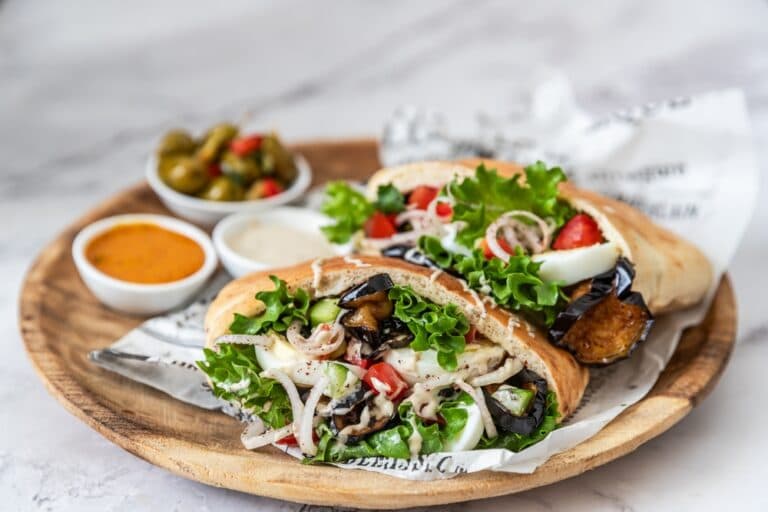
Traditional Sabich Sandwhich, Israel’s ‘true’ original street food | Photo: Shutterstock
Takeaways
- Falafel, hummus, and shawarma didn’t originate in Israel. Sabich did.
- Sabich started as a Sabbath breakfast among Iraqi Jews in Baghdad.
- A man literally named Sabich turned it into a pita sandwich in Ramat Gan in the 1960s.
- The name likely comes from an Arabic word for “morning.”
- You can make an authentic sabich at home tonight, and we’re giving you the full recipe.
The Question That Started This Whole Thing
My friend Rachel asked me a question over coffee last week that stopped me mid-sip. “If falafel isn’t originally Israeli, what actually is?”
I didn’t have an answer. So I went looking, and what I found actually made my mouth water.
Turns out, the foods most people call “Israeli” have passports from somewhere else. Hummus and falafel trace back to the wider Levant and Arab world. Shawarma comes from the Ottoman and Turkish tradition. Delicious, yes. Israeli in origin, no.
There’s exactly one sandwich that was actually born on Israeli soil. It’s called sabich, and once you know its story, you’ll never look at a pita the same way again.

So What Is Sabich, Exactly?
Picture a warm pita stuffed with silky fried eggplant, rich hard-boiled eggs, a bright, lemony Israeli salad, creamy hummus and tahini, and a tangy pickled mango sauce called amba. Now add a little heat from zhug, a green chili paste that Israelis practically drink by the spoonful.
Sound like a lot? It is. And that’s exactly the point. Every bite hits something different: creamy, crunchy, smoky, bright, rich. Have you ever eaten a sandwich that felt like five separate flavors having an argument in your mouth, in the best way possible? That’s sabich.

Where Did Sabich Actually Come From?
Sabich actually began as a traditional Shabbat breakfast among Iraqi Jews in Baghdad. Since cooking isn’t permitted on the Sabbath, families would prepare everything on Friday: slow-cooked eggs, fried eggplant, potatoes, and fresh salads. Then they’d eat it cold or at room temperature Saturday morning.
When more than 120,000 Iraqi Jews immigrated to Israel in the early 1950s, they brought this breakfast tradition with them. Wow. An entire community carried a recipe across a continent, through resettlement, through building an entirely new life, and it survived. Food remembers what people sometimes forget to write down.
Meet the Man Who Invented the Sandwich
In the 1960s, an Iraqi immigrant named Sabich Tzvi Halabi opened a small kiosk in Ramat Gan, right outside Tel Aviv. He took every ingredient from that leisurely Sabbath breakfast and did something nobody had done before: he stuffed it all into a single pita so drivers and workers could grab it on the go.
Yep. The sandwich may have been named after the guy who invented it. Sabich Halabi fed hungry commuters a portable version of his family’s holy day meal, and it exploded into a national obsession.
Trivia break: the name “sabich” likely comes from the Arabic root S-B-Ḥ, the same root behind “sabah,” the everyday Arabic word for “morning.” A nod to its breakfast roots. Some people joke it’s an acronym for salat (salad), beitzah (egg), and ḥatzilim (eggplant). The morning story fits best, but either way, you now know something most tourists never learn.
Time to Make It Yourself
Ingredients (makes 4 pitas):
- 2 medium eggplants, sliced into ½-inch rounds
- 1 tsp salt
- ½ to ¾ cup vegetable oil for frying
- 4 large eggs, hard-boiled
- 2 medium cucumbers, finely diced
- 2 medium tomatoes, finely diced
- ¼ cup chopped fresh parsley
- 2 tbsp lemon juice
- 1 tbsp olive oil
- Salt and pepper to taste
- ½ cup hummus
- ½ cup tahini sauce, thinned with lemon juice and water
- ¼ cup amba (pickled mango sauce)
- ¼ cup pickled cabbage
- Zhug, optional (see note below)
- 4 pita breads
Steps:
- Salt the eggplant slices and let them rest 10 minutes, then pat dry.
- Fry the eggplant in oil over medium heat until golden, about 3 minutes per side. Drain and keep warm.
- Hard-boil the eggs, cool, and peel.
- Toss cucumber, tomato, parsley, lemon juice, olive oil, salt, and pepper for the Israeli salad.
- Warm the pitas so they’re soft and pliable.
- Spread hummus inside each pita, then layer eggplant, quartered eggs, salad, and pickled cabbage.
- Drizzle with tahini and amba. Add zhug only if you want the heat.
- Fold and eat immediately, while the eggplant is still warm.
A note for sensitive palates: if you’re not used to spicy food, skip the zhug entirely or use just a tiny dab. Amba has tang but very little heat, so it’s safe for almost everyone. The sandwich is every bit as glorious without the heat.
Back to That Coffee With Rachel
I told Rachel the whole story a few days later. She went quiet for a second, then said, “I want to book a ticket to Tel Aviv and google ‘best Sabich stand in Israel’.”
Sabich is not just a sandwich, it’s a doorway into a story about a people who carried their traditions across the world and turned them into something new without losing what made them holy. Walk the streets of Ramat Gan, Tiberius, Jerusalem, Haifa or Tel Aviv today and you can still find stands serving it, decades after Sabich Halabi first folded that pita.
So here’s my challenge to you. Make this recipe this week. Then start planning the trip where you eat the real thing, standing on the same streets where it all began.
Want to keep reading? Read here about why Jews don’t eat shrimp or cheeseburgers: Kosher 101. Explore more on faith, values, and the Land of Israel at Sinai Project.
Discussion0
No comments yet — be the first to share your thoughts.