U.S. Hits Strategic Iran Railway Bridge
Iranian media report a U.S. strike hit a strategic railway bridge near Ak-Qala, targeting a corridor tied to Iran, Russia, China, and post-Hormuz trade pressure

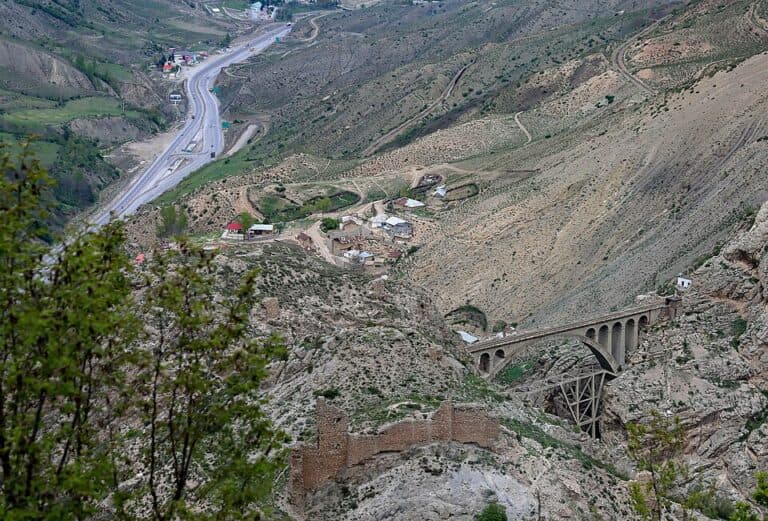
Iran railway strike reports say the United States hit a strategic railway bridge near Ak-Qala in Golestan Province.
According to Iranian media, the bridge struck this morning is part of a key corridor for moving goods between Iran, Russia, and China.
The report identified the target as the “Ak-Take-Khan” railway bridge in the China-Turkmenistan-Iran railway corridor, located in Ak-Qala district.
Iranian media said cruise missiles struck the bridge early this morning.
The Tanakh says, “Counsel is mine, and sound wisdom.” In war, wisdom means understanding that power does not only move through missiles. It also moves through ports, rail lines, fuel routes, and trade corridors.
Iran Railway Strike
According to the report, the bridge sits on a route that Iran uses for transportation ties with China and Russia.
The same report said Russia has shipped goods through this route since November of last year.
It also claimed that, after the U.S. maritime blockade in Hormuz, train traffic from China along the corridor tripled.
If accurate, that makes the strike more than a tactical hit.
It targets an economic artery that helped Iran reduce pressure from maritime disruption in the Strait of Hormuz.
When sea routes face danger, countries look for land routes. Iran, Russia, and China all have reasons to strengthen alternatives that reduce American leverage at sea.
Economic Pressure After Hormuz
The strike follows growing pressure around the Strait of Hormuz.
That same concern shaped “Five Tankers Reportedly Attacked Near Hormuz.” OSINT sources reported five tankers attacked near the Strait of Hormuz, raising new concerns for U.S. deterrence, Gulf energy routes, and Israel’s security.
The railway strike appears to widen the battlefield.
If Iran attacks shipping, then the United States may target not only military sites, but also infrastructure that supports Tehran’s ability to absorb economic pressure.
For America, the message is strategic. Washington can use military force to protect sea lanes, but it can also hit the networks that help Iran bypass pressure.
For Israel, the strike matters because Iran’s economy funds the same regional threat system that surrounds the Jewish state. That includes Hezbollah, Hamas, Islamic Jihad, the Houthis, and other Iranian-backed forces.
Weakening Iran’s economic corridors can reduce its ability to rebuild, rearm, and sustain proxy warfare.
A Shared Moral Calling
The United States and Israel both understand that security depends on more than the battlefield.
A regime that attacks tankers, arms terror groups, and works with Russia and China should not enjoy easy strategic depth.
The United States and Israel also share a covenantal understanding before God.
America’s covenantal tradition is rooted in liberty under God, ordered justice, and the belief that power must serve moral purpose. Israel’s covenant is older and unique, rooted in God’s promise, Jewish peoplehood, Torah, and the return to the land of Israel.
Those covenants are not identical. However, they meet in a shared calling: defend freedom, resist tyranny, and prevent violent regimes from turning global systems into weapons.
In this story, that shared calling means protecting shipping lanes while also recognizing the economic architecture behind Iran’s war machine.
For Israel, that duty includes weakening the regime that arms its enemies. For America, it includes defending global commerce and denying Iran, Russia, and China easy routes around U.S. pressure.
The strike near Ak-Qala therefore carries economic and strategic meaning. It shows that the U.S. response may now reach beyond Hormuz and into the land corridors Iran uses to keep its war economy connected.
For more stories on Israel, faith, and the values behind the headlines, follow Sinai on Facebook and Instagram.
Discussion0
No comments yet — be the first to share your thoughts.